 English
 中文简体
 日本語
 한국어
 русский
 Español

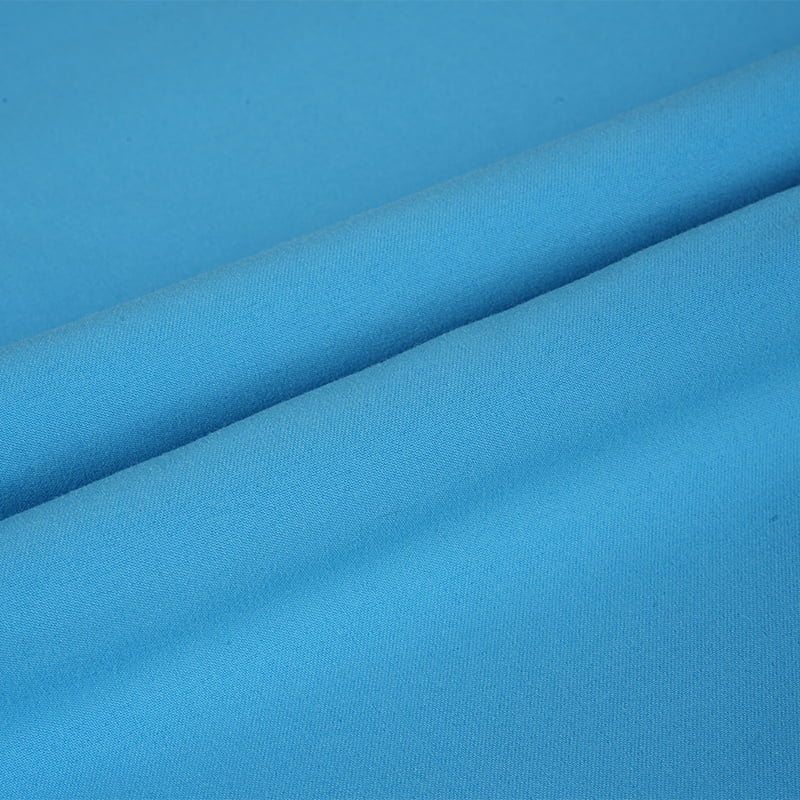
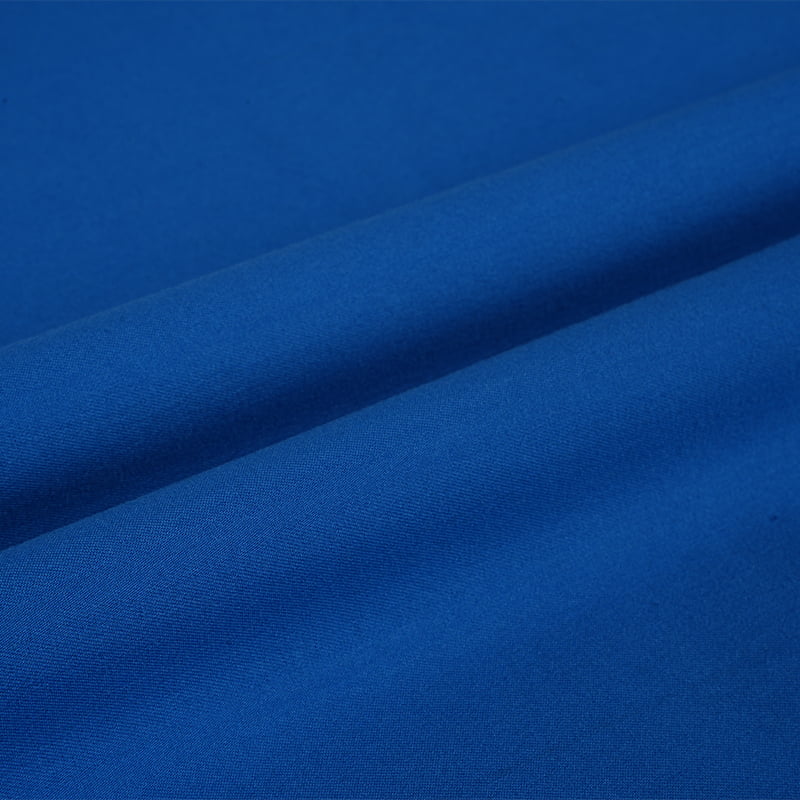
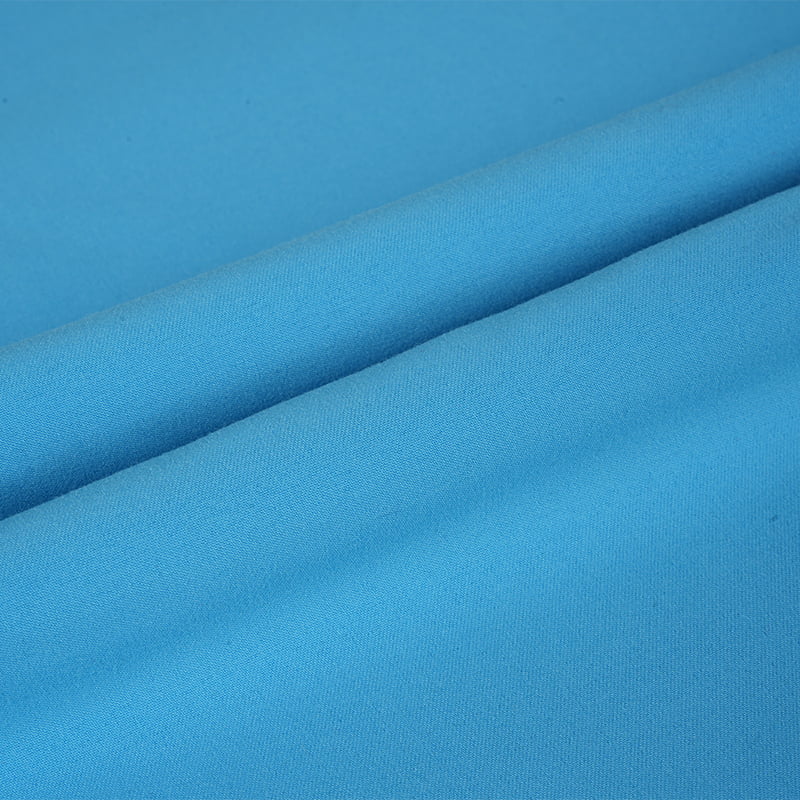
Shaoxing Fuxing Textile Technology Co., Ltd. was founded in 2002 and is located in Keqiao, Shaoxing — one of China‘s most dynamic textile hubs. We operate a 50,000㎡ modern facility equipped with 128 imported Italian rapier looms, supported by a dedicated team of 150+ professionals including textile engineers, quality control specialists, and customer service staff.
We are a specialized China OEM Medical Apparel Fabric Manufacturer and ODM Medical Apparel Fabric Factory, we deliver high-quality, professional-grade fabrics for suits, trousers, blazers, and uniforms. we deliver high-quality, professional-grade fabrics for suits, trousers, blazers, and uniforms. By controlling everything from yarn procurement to finished fabric, we guarantee consistent dye lots, reliable quality, and seamless re-orders.
With the innovation of science and technology, Fuxing Textile has developed more and faster and now we annually provide over 10 million meters of fabric for designers, brands, and terminal purchasers.

Medical Apparel Fabric Manufacturer
Our reusable woven medical fabrics deliver fluid repellency and antimicrobial performance, tested to international standards. Breathable, soft, and durable through 75+ industrial washes.
About Us
Shaoxing Fuxing Textile Technology Co., Ltd.
-
50,000㎡Factory Area
-
128+Imported Weaving Machine
-
150+Current Employees
-
20+Countries and Regions
Certificate Of Honor
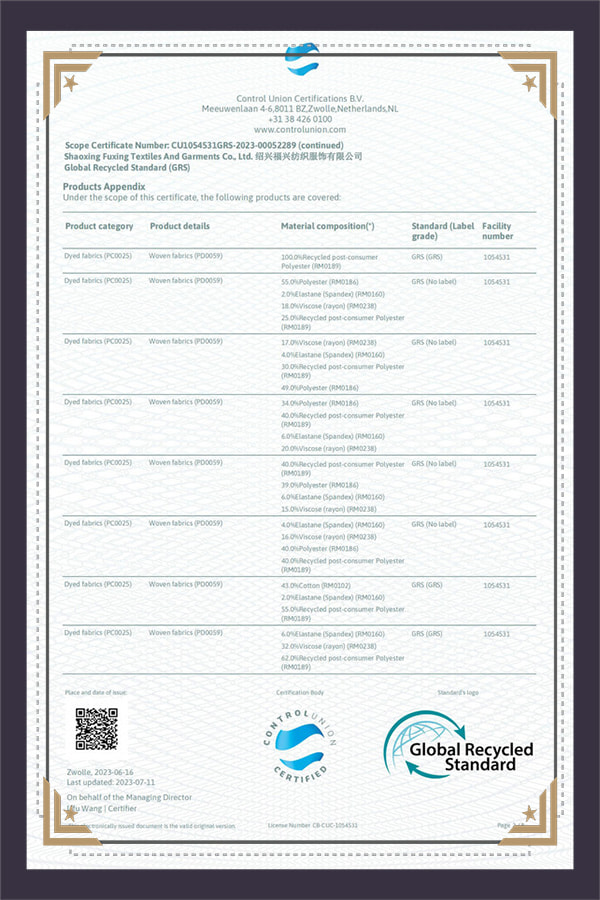
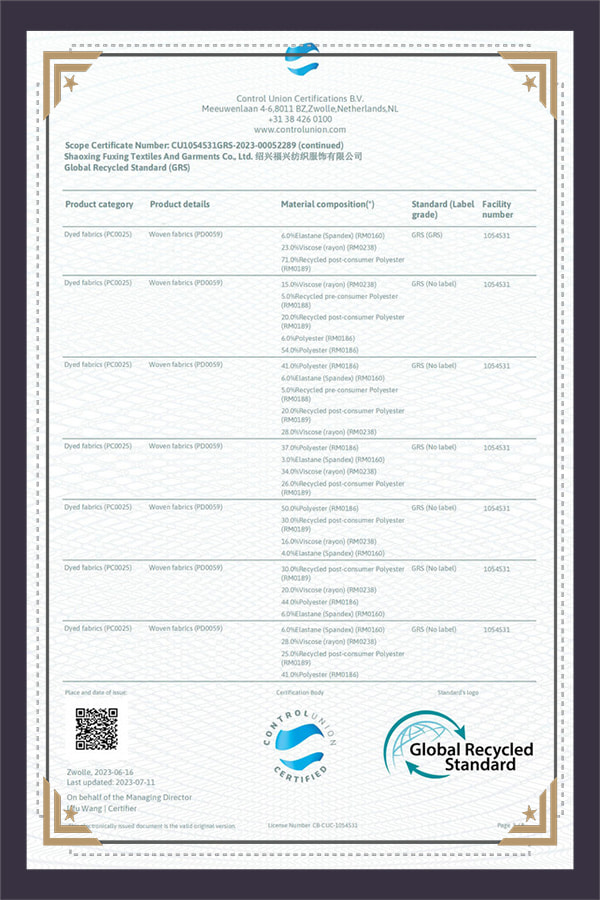
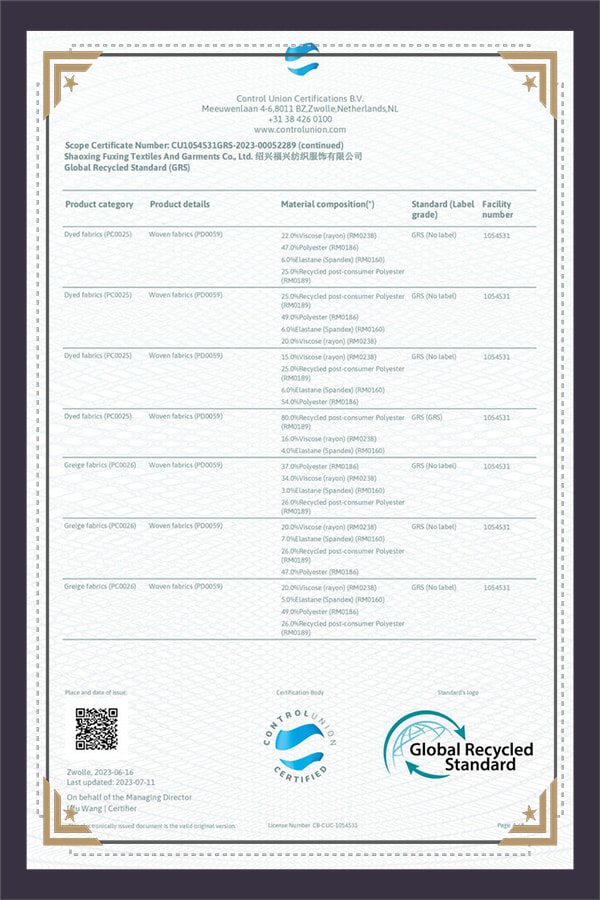
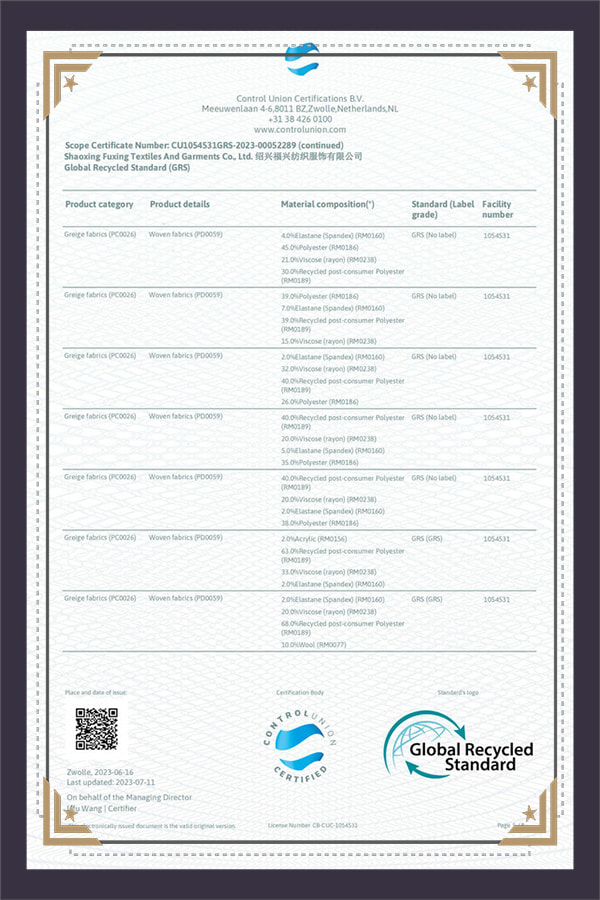
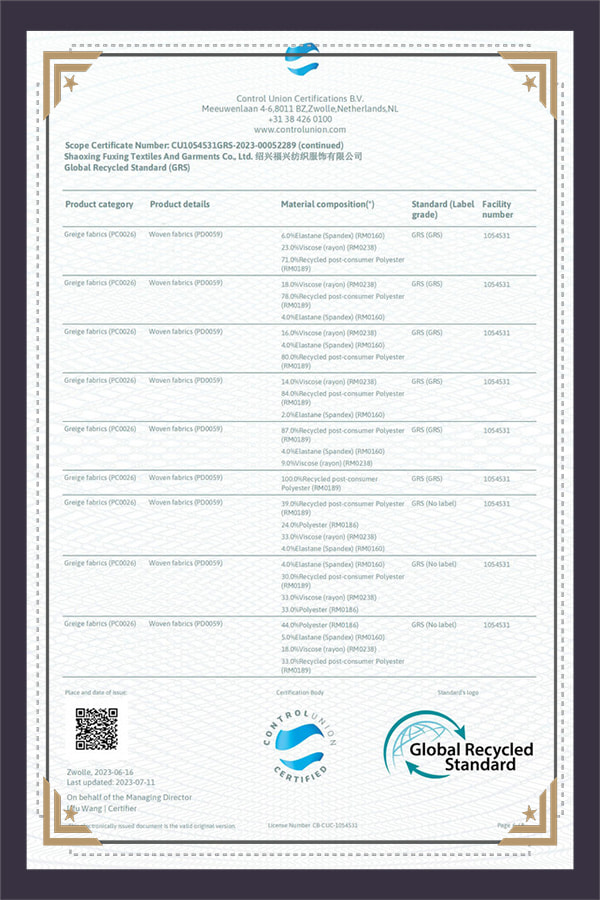
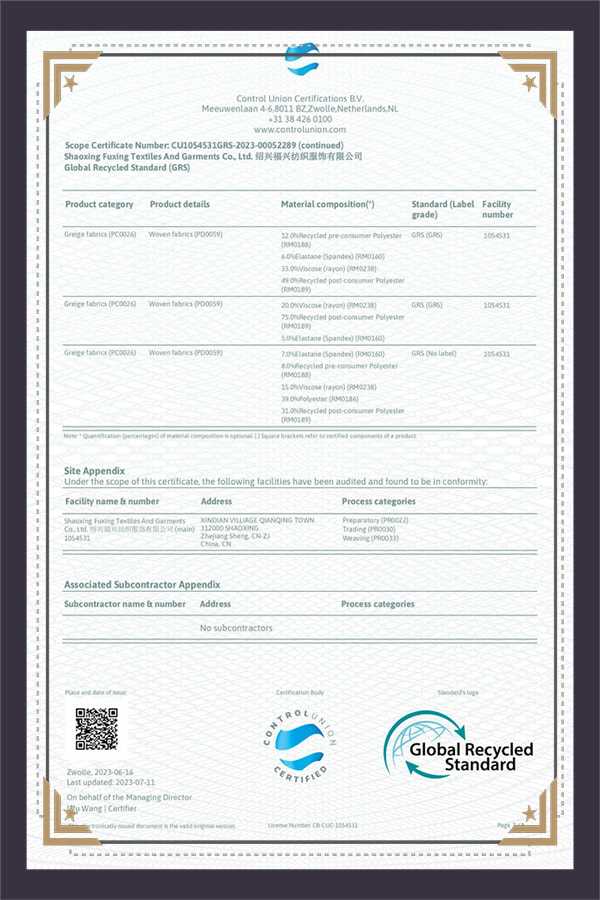
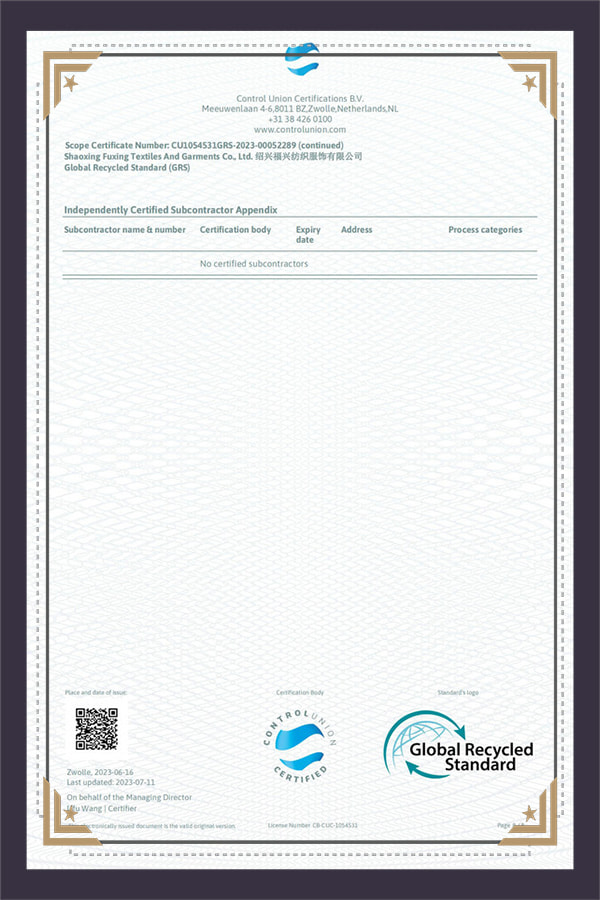
Medical Apparel Fabrics Industry knowledge
Shaoxing Fuxing Textile Technology Co., Ltd. is a Medical Apparel Fabric manufacturer based in Keqiao, Shaoxing, Zhejiang Province, China. Founded in 2002, we operate a 50,000 m2 facility with 128 imported Italian rapier looms and a team of 150+ textile engineers, quality specialists and customer service staff, producing more than 10 million meters a year for customers in 20+ countries and regions. Our medical range is reusable woven cloth for scrubs, hospital uniforms, lab coats and surgical apparel, engineered to return to service through repeated industrial laundering instead of being discarded after a single shift.
Woven Medical Fabric, Built for Repeat Laundering
The medical side of our business is organized as one category with a dedicated child range, and every fabric in it carries a defined garment role rather than serving as generic healthcare cloth. We weave, dye, finish and inspect on the same loom floor that runs our apparel fabrics, which keeps one quality system behind the whole medical program.
Three properties decide whether a uniform program holds up in service: fluid repellency, antimicrobial performance and dimensional stability after wash. A repellent finish applied to a loosely woven greige will not hold a rating, and a dense cloth with poor recovery will fail in the laundry before it fails on the ward. We build both the base cloth and the finish against those points, and we quote against the protection level, garment type and laundering regime you specify.
- Reusable, not disposable - woven constructions intended for 75+ industrial washes and repeated high-temperature sterilization
- Finish and base cloth developed together - repellency, antimicrobial treatment and pre-shrinking sequenced so hand feel is not sacrificed
- Protection level treated as a configuration - the same cloth family can be finished for daily care, low-risk procedures or surgical settings
- One quality system - medical fabrics and our Women's Suiting Fabric range share weaving, dyeing and inspection controls
Our Medical Apparel Fabric Range
The range is delivered through our Scrubs Fabric child category, which covers the everyday clinical wardrobe: scrub sets, tunics and tops, medical uniforms and lighter-duty healthcare workwear. Each construction below answers a different service condition rather than a different color card.
FX50316 - Soft Hand Feel Polyester Rayon 4-Way Stretch Twill
A piece-dyed polyester rayon twill with four-way stretch and a soft hand feel, developed for scrubs and medical uniforms. The twill face gives a clean, dense surface for printing, embroidery and badge placement, with fluid repellent and antimicrobial finishing applied to the required AAMI PB70 level. Technical detail sits on the FX50316 polyester rayon 4-way stretch twill page.
FX56470 - Hospital Uniform Fabric
A woven hospital uniform construction for ward, nursing and support uniforms that pass through institutional laundries. It is specified where garment shape has to survive repeated high-temperature washing cycles without the cloth going slack or losing color depth.
FX55527 - Moisture-Wicking Scrubs Fabric
A moisture-management woven for clinical roles with sustained physical activity, including theatre support, emergency departments and ward staff on long shifts. Moisture transport is combined with antimicrobial and fluid repellent finishing so comfort does not come at the cost of protection.
Matching Fabric to Garment and Clinical Setting
Garment type, protection level and laundry regime move together. The matrix below shows how our standard constructions map to garment roles and to the finishing we apply.
| Fabric | Construction and composition | Typical medical garments | Performance configuration |
|---|---|---|---|
| FX50316 | Polyester rayon twill, four-way stretch, piece dyed, soft hand feel | Scrub sets, medical uniforms, clinic tunics | Fluid repellent finishing and antimicrobial options to the required AAMI PB70 level |
| FX56470 | Woven hospital uniform construction, piece dyed | Ward and nursing uniforms, hospital workwear, lab coats | Repellency, antimicrobial finishing and dimensional stability for industrial laundering |
| FX55527 | Woven moisture-wicking construction | Scrubs for long shifts and active clinical roles | Moisture management combined with antimicrobial and repellent finishing |
| Custom development | Composition, weave, weight and stretch set against your reference | Program-specific uniforms, isolation apparel, surgical gowns | Protection level, antistatic construction and color configured to the standard you name |
Performance Engineered Into Cloth and Finish
Fluid repellency and antimicrobial function
Our medical fabrics are tested to AAMI PB70 and reach Level 1 to Level 3, with the achievable level set by fabric construction and the finishing applied. We select that level against the clinical setting rather than applying one specification across the whole range. Antimicrobial performance uses silver-ion technology, with bacterial reduction above 99% against S. aureus, E. coli and K. pneumoniae, retained through 75+ industrial washes.
Antistatic constructions for operating environments
- Conductive carbon yarns woven into the cloth rather than applied as a surface coating
- Antistatic series tested to EN 1149-5 to prevent electrostatic charge accumulation
- Specified for operating room and procedure environments where static discharge is a risk
Dimensional stability, color and wearability
Fabrics are pre-shrunk with shrinkage controlled within 2% under AATCC 135, so garments keep size and seam integrity across the wash cycle and sizing stays consistent across a uniform pool. Colorfastness testing covers washing, rubbing, light, perspiration and chlorine bleaching, which matters where chlorine-based disinfection is used. Breathability, softness and stretch where the garment needs it remain part of the specification, because a uniform that is uncomfortable in hour ten is replaced long before it wears out.
Composition, Weave and Hand Feel
Medical fabrics are woven on rapier looms from polyester and rayon blends, with spandex added in the weft where four-way stretch is specified. Polyester contributes strength, color retention and wrinkle recovery; rayon contributes softness and drape against the skin. Because the cloth is woven rather than bonded, it holds seam strength and shape through repeated laundering.
- Twill face - smooth, durable surface for printing, embroidery and badge placement
- Stretch placement - recovery set so scrub trousers and tunics do not bind during movement
- Finishing balance - too much surface softness reduces repellency, too little makes a stiff garment staff resist wearing
- Piece dyeing - color developed against your reference or a nominated color standard, with dye lots held consistent from yarn procurement to finished fabric
Hand feel is tuned at finishing and set against the sample you approve, so the balance between comfort and repellency is a decision on the table rather than a fixed property of the cloth.
Compliance Evidence and Documentation
Medical fabric programs are audited on paperwork as much as on cloth. Technical datasheets, samples and compliance documentation are supplied with quotations and orders, and we test to the standards below where the fabric is intended for those applications.
| Standard | What it addresses | Application in our range |
|---|---|---|
| AAMI PB70 | Fluid repellency classification for protective apparel | Level 1 to Level 3, set by construction and finishing |
| AATCC 100 | Antibacterial efficacy | Silver-ion treated fabrics tested against S. aureus, E. coli and K. pneumoniae |
| EN 13795 | Surgical gowns and drapes | Fabrics intended for surgical settings |
| EN 1149-5 | Electrostatic properties | Antistatic series with woven conductive carbon yarn |
| AATCC 135 | Dimensional stability after laundering | Pre-shrunk fabrics, shrinkage within 2% |
| OEKO-TEX Standard 100 | Restricted harmful substances | Applied across the medical range |
Third-party test reports are arranged where a program requires them, in addition to the internal testing carried out on every batch.
Custom Development, Sampling and Order Configuration
We work as an OEM and ODM supplier on this category. Our in-house sample development center replicates a fabric you already run or develops a new construction from a brief, and it is equipped with sample weaving, sample warping and dyeing prototype machinery so trials do not wait for a production slot. Regular sample lead time is 5-12 days, with urgent requests negotiated at inquiry stage.
- Ingredient adjustments, weave and yarn organization changes, and color customization handled as sample work
- Weight, width, stretch level, surface structure and finishing set against your garment specification
- Protection level configured per clinical setting rather than fixed across the range
- Antistatic construction and chlorine-resistant shades addressed at the yarn and dyeing stage
Bulk production lead time is typically 25-30 days, planned against the confirmed sample and order quantity. Annual capacity above 10 million meters supports both recurring uniform programs and new range launches, and repeat orders are matched against the approved sample and previous dye lots.
Production Control and Traceability
Each meter passes eight main processes with at least three intermediate inspections, and an ERP system records production data at every stage so each batch can be traced back through the line.
- Raw material procurement and incoming detection
- Warping and sizing
- Weaving on imported Italian rapier looms
- Fabric inspection
- Post finishing, including pre-shrinking, repellent application and antimicrobial treatment
- Finished product inspection and packing
Our own laboratory tests every batch internally. Physical testing covers abrasion, pilling, breaking strength and tear strength; color fastness and dimensional stability are checked alongside functional testing for liquid penetration resistance, antibacterial performance and antistatic behavior on medical fabrics. Composition analysis confirms fiber content against the approved specification.
Information We Use to Configure Your Fabric Proposal
A useful quotation on this category depends on knowing how the garment will be used, not only how it should look. These are the inputs we work from when selecting a base cloth, setting the finishing route and planning production.
- Garment type and styling: scrub set, hospital uniform, lab coat, surgical gown or isolation apparel
- Clinical setting and required protection level, including whether antistatic performance is needed
- Composition preference and any existing fabric reference to match or improve on
- Weight in GSM, width, stretch direction and level, and required hand feel
- Color, color standard, and any chlorine or disinfection exposure in the laundry
- Order quantity, expected repeat order size and the delivery schedule the program runs on
- Testing requirements, including nominated standards and whether third-party reports are needed
- Packing, labeling and shipment destination requirements
Send these details with your inquiry and we respond within 24 hours with a suitable construction, sample plan and production timing.
Frequently Asked Questions
Are your medical fabrics reusable or disposable?
They are reusable woven fabrics. Unlike disposable nonwovens, they are built to withstand 75+ industrial washes and repeated high-temperature sterilization, which suits nurse uniforms, lab coats, scrubs and surgical gowns in programs where garments are laundered and returned to service.
Which AAMI PB70 levels can you supply?
Our medical fabrics are tested to AAMI PB70 and reach Level 1 to Level 3. The achievable level depends on fabric construction and the finishing applied, so we set it against the clinical scenario you describe, from daily care through to low-risk procedures and surgical use.
How long does the antimicrobial function last?
We use silver-ion antimicrobial technology, and the function is retained through 75+ industrial washes with bacterial reduction remaining above 99% against S. aureus, E. coli and K. pneumoniae. Uniform replacement cycles are normally planned around wash frequency and the institution's hygiene policy.
Can you match a scrubs or uniform fabric we already use?
Yes. Our sample development center replicates customer references and develops new constructions from a brief. Ingredient adjustments, weave changes and color customization are handled as sample work, with regular samples delivered in 5-12 days.
Will the fabric shrink or deform after industrial washing?
Fabrics are pre-shrunk with shrinkage controlled within 2% under AATCC 135. After 75 industrial washes the cloth retains dimensional stability and appearance without significant deformation or surface fuzzing, which is what keeps garment sizing consistent across a shared uniform pool.

Can Supply Mature And Stable Products.
Choose Us, Contact Us
Choose Us, Contact Us
Contact Us
-

Tel: +86-575-81176657
+86-18857538666 -
 E-mail: martin@fuxing-tex.com
-
 Xindian Village, Qianqing Street, Keqiao District, Shaoxing City, Zhejiang Province, China.
Quick Links
Products
Get In Touch
Copyright © Shaoxing Fuxing Textile Technology Co., Ltd. All rights reserved. Custom Medical Apparel Fabric Manufacturer OEM/ODM Medical Apparel Fabric Factory
