 English
 中文简体
 日本語
 한국어
 русский
 Español


Poly Rayon vs TR vs Wool Blend Suiting Fabric: Which Is Right for Women's Suits?
Poly Rayon, TR or Wool Blend: The Short Answer
Choose poly rayon with spandex for easy-care, stretchy suits across most of the year, a TR blend for a smooth, budget-friendly everyday suit, and a poly rayon wool blend when you want warmth, luster and a more tailored look for autumn and winter. A quick note on names: TR stands for polyester and rayon (viscose), so poly rayon and TR describe the same fiber family. The real differences are the ratio, whether spandex is added, and whether any wool is in the blend.
Poly RayonPolyester-led, often with spandex. Wrinkle-resistant and easy care.
TRPolyester plus rayon, classically about 65:35. Smooth, soft, affordable.
Wool BlendPoly rayon with a small share of wool. Warmer, more luster.
What Each Fabric Is Made Of
All three are woven suiting fabrics, and they share polyester as the main fiber. The differences come from what is added.
Poly rayon
Polyester for strength and shape, rayon for softness and drape, and usually a little spandex for stretch. FX50226 is listed at 75% polyester, 20% rayon and 5% SP.
TR
The fuxing-tex.com guide to TR fabric describes a typical ratio of about 65% polyester to 35% rayon, with 70/30 and 60/40 also common. Many TR suiting fabrics now include spandex too, such as FX50182 at 65% polyester, 30% rayon and 5% spandex.
Wool blend
A poly rayon base with some wool. FX55642 is 65% polyester, 24% rayon, 9% wool and 2% spandex, and FX54869 is 62% polyester, 28% rayon, 8% wool and 2% spandex.
Side-by-Side Comparison
| Feature | Poly Rayon (with Spandex) | TR Blend | Poly Rayon Wool Blend |
| Main fibers | Polyester, rayon, spandex | Polyester, rayon (spandex optional) | Polyester, rayon, wool, spandex |
| Wrinkle resistance | Strong, the FX50226 page cites 75% polyester | Good, polyester helps shape retention | Good, with a wrinkle-resistant finish on FX55642 |
| Hand feel | Soft and elastic | Smooth and soft | Drape, warmth and natural luster from the wool |
| Warmth | Light to medium | Light to medium | Warmer, listed for autumn and winter |
| Weight example | 200 GSM (FX50226) | 220 GSM (FX50182) | 310 GSM (FX55642, FX54869) |
| Stretch | 4-way stretch on FX50226 | Stretchy on FX50182 | Spandex 2% on FX55642 and FX54869 |
| Care | Easy to maintain | Easy to maintain | Easy to maintain, per the product pages |
| Cost position | Moderate | Lowest of the three, as the TR guide states affordability | Higher, due to the wool content |
The cost row reflects the usual market pattern, in which wool content raises fabric cost. No prices are given on the product pages.
Poly Rayon: The All-Rounder for Women's Suits
Poly rayon with spandex is the fabric to choose when a suit has to look sharp through a long working day. The FX50226 crepe page says its 75% polyester gives stronger wrinkle resistance and shape stability than standard TR fabrics, with a soft, elastic hand and good drape. It is listed as 4-way stretch at 200 GSM.
- Best for: business suits, trousers and blazers worn all day.
- Season: spring, autumn and indoor year-round wear.
- Watch for: lighter weights may feel less substantial than wool blends.
TR: Smooth, Soft and Practical
TR is the classic suiting blend. Polyester brings strength and shape, rayon brings softness, moisture absorption and a fluid drape, and the pair costs less than wool or high-grade cotton. The Fuxing TR guide notes two limitations: TR is not inherently flame retardant without treatment, and it is less breathable and less biodegradable than natural fibers.
The FX50182 TR suiting crepe at 220 GSM is described as light and balanced, wrinkle resistant and easy to maintain, with good drape for women's outerwear and year-round indoor professional wear. For the basics of the fabric, read our guide to TR fabric.
Wool Blend: Warmth and a Tailored Look
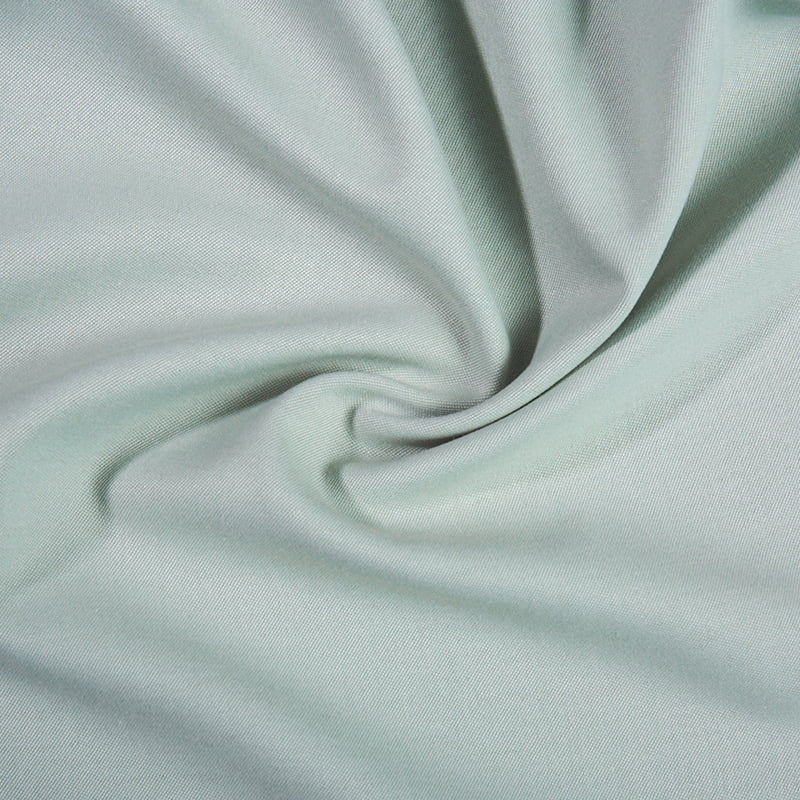
A small share of wool changes how a suit looks and feels. The FX55642 page says the wool content adds drape, warmth and natural luster compared with standard TR fabric, and the fabric is warm, breathable and wrinkle resistant. At 310 GSM it is listed for autumn and winter suiting and trousers.
FX54869 adds a herringbone pattern at the same weight, and FX55874 is a plain-dyed polyester rayon 4-way stretch wool suiting. Wool content is low, at 8% and 9% in the two compositions given, so these are poly rayon fabrics with a wool touch, not pure wool suiting. Our guide on poly rayon wool blend fabric explains the blend further.
Which Fabric Suits Which Women's Garment
| Garment | Best Fit | Why |
| Everyday business suit | Poly rayon with spandex | Wrinkle resistance and stretch for long wear |
| Spring blazer or outerwear | TR crepe or poly rayon crepe | Light, soft drape, easy care |
| Work trousers | Poly rayon or TR twill | Shape retention and comfort in movement |
| Winter suit or coat-weight pieces | Poly rayon wool blend | Warmth and luster from 310 GSM wool blend |
| Uniform programs | Poly rayon or TR | Easy maintenance and consistent color |
If you are planning a seasonal range, our guide on how to choose suit fabric by season and the wool versus synthetic suit fabric article give more background.
Care and Everyday Performance
How a suit behaves after fifty wears matters as much as how it looks on day one. The three fabrics share a polyester base, so they have much in common.
| Question | Poly Rayon | TR | Wool Blend |
| Wrinkles after a long day | Recovers well | Recovers well | Recovers well, with a wrinkle-resistant finish listed on FX55642 |
| Breathability | Rayon helps moisture absorption | Rayon absorbs perspiration, though less breathable than natural fibers | Listed as warm and breathable |
| Color consistency | Reactive dyeing gives stable batches on FX50226 | Polyester helps colors stay vivid | Reactive dyeing gives stable batches on FX55642 |
| Cleaning | Easy to maintain | Machine washable per the TR guide | Gentler cleaning may be advised |
| Best use | Daily wear | Uniforms and workwear | Seasonal tailored pieces |
None of the three should be treated as flame retardant unless a treatment is specified, which the TR guide notes for TR fabric.
Common Mistakes When Choosing Suiting Fabric
- Treating the name as the spec. Poly rayon and TR overlap, so compare the composition percentages.
- Choosing wool blend for a summer range. A 310 GSM fabric is listed for autumn and winter.
- Ignoring spandex. Stretch changes comfort, fit and recovery, so check the spandex content.
- Skipping swatches. Drape and hand feel are easier to judge in your hand than on a screen.
- Forgetting lead time. The poly rayon and TR pages list 25 days, and the two wool blend pages list 35.
Ordering Notes
Colors can be customized on the crepe pages, and each fabric is plain dyed or reactive dyed. Order quantities vary by item, with listed minimums per color and per order, so confirm the figure for the item and color you want. The site FAQ lists regular samples in 5 to 12 days, with the first sample free and shipping collect.
Browse the full women's suiting range to compare the options, and use samples to test each blend on your pattern before bulk.
How to Decide
- Pick the season first. Lighter blends for spring and indoor wear, wool blends for autumn and winter.
- Decide how much care you want to ask of customers. Poly rayon and TR are easy to maintain.
- Look at the composition line. A few points of polyester, spandex or wool change the result.
- Match the weight to the garment. 200 to 220 GSM for flowing pieces, 310 GSM for structured cold-weather suits.
- Order swatches. Compare drape and recovery by hand before bulk.
Frequently Asked Questions
Is poly rayon the same as TR fabric?
They belong to the same fiber family. TR is polyester and rayon, and poly rayon is the same pair, usually with spandex added. The names are used loosely, so check the composition.
Which is better for women's suits, poly rayon or wool blend?
Poly rayon suits easy-care, year-round wear, while a poly rayon wool blend suits autumn and winter looks that need warmth and a richer drape.
Does wool blend suiting need dry cleaning?
The Fuxing wool blend guide says the low wool content makes the fabric cheaper and easier to maintain than pure wool, but gentler dry cleaning may still be advised. Follow the care label.
How much wool is in the wool blend suiting?
The two listed examples contain 8% and 9% wool, with polyester as the main fiber.
Are these fabrics wrinkle resistant?
The FX50226, FX50182 and FX55642 pages all describe wrinkle resistance and easy maintenance. Test a swatch for your own use.
News
Products
Recent Articles
- Is Dyed Poly Rayon Woven Fabric With Stretch Ideal for Sportswear and Activewear?
- Is Dyed Poly Rayon Woven Fabric With Stretch Suitable for High-End Apparel Design?
- How does Reactive Dyed Wrinkle Resistant Poly Rayon Wool Blend Fabric achieve durability, softness and fashion?
- How Durable Is Dyed Poly Rayon Woven Fabric With Stretch for Daily Use?

Can Supply Mature And Stable Products.
Choose Us, Contact Us
Choose Us, Contact Us
Contact Us
-

Tel: +86-575-81176657
+86-18857538666 -
 E-mail: martin@fuxing-tex.com
-
 Xindian Village, Qianqing Street, Keqiao District, Shaoxing City, Zhejiang Province, China.
Quick Links
Products
Get In Touch
Copyright © Shaoxing Fuxing Textile Technology Co., Ltd. All rights reserved. China Woven Fabric Manufacturer OEM & ODM Suiting & Medical Fabrics Factory
