
 English
 中文简体
中文简体 日本語
日本語 한국어
한국어 Español
 русский
Content
- 1 What Is Poly/Rayon/Wool Blend Fabric?
- 2 Composition Ratios and What They Mean for Performance
- 3 Key Benefits of Poly/Rayon/Wool Blend Fabric
- 4 Performance Comparison: Poly/Rayon/Wool vs Pure Wool vs TR Fabric
- 5 Common Applications
- 6 How to Identify Quality Poly/Rayon/Wool Blend Fabric
- 7 FAQ: Poly/Rayon/Wool Blend Fabric
- 7.1 What is the typical fiber ratio in Poly/Rayon/Wool blend fabric?
- 7.2 Is Poly/Rayon/Wool blend fabric as warm as pure wool?
- 7.3 Can Poly/Rayon/Wool blend fabric be machine washed?
- 7.4 How does Poly/Rayon/Wool blend fabric compare in price to pure wool?
- 7.5 What GSM range is best for suiting applications?
- 7.6 Does Poly/Rayon/Wool blend fabric pill easily?
- 8 About Shaoxing Fuxing Textile Technology Co., Ltd.
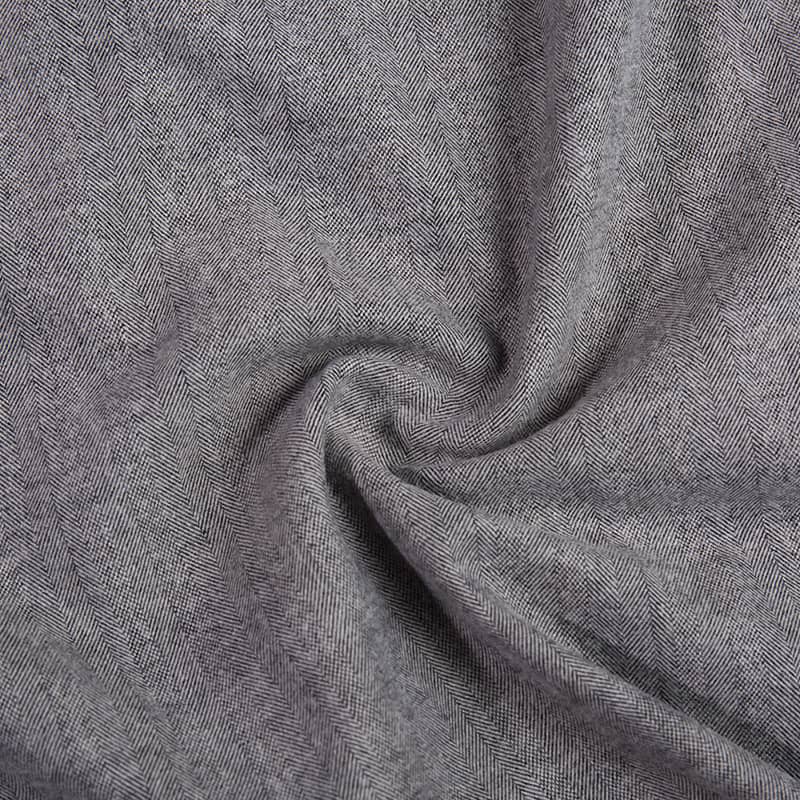
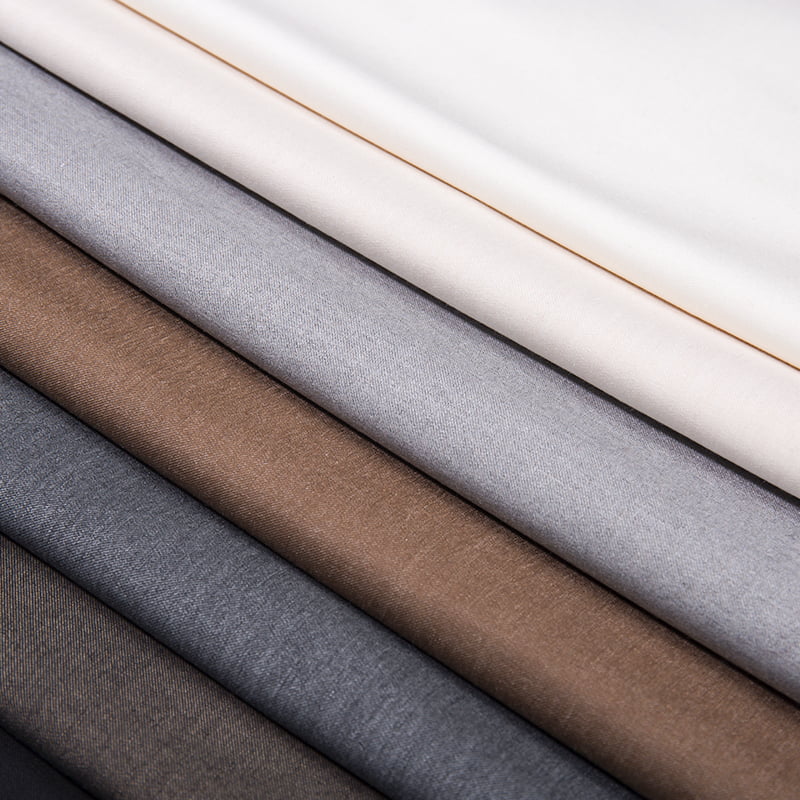
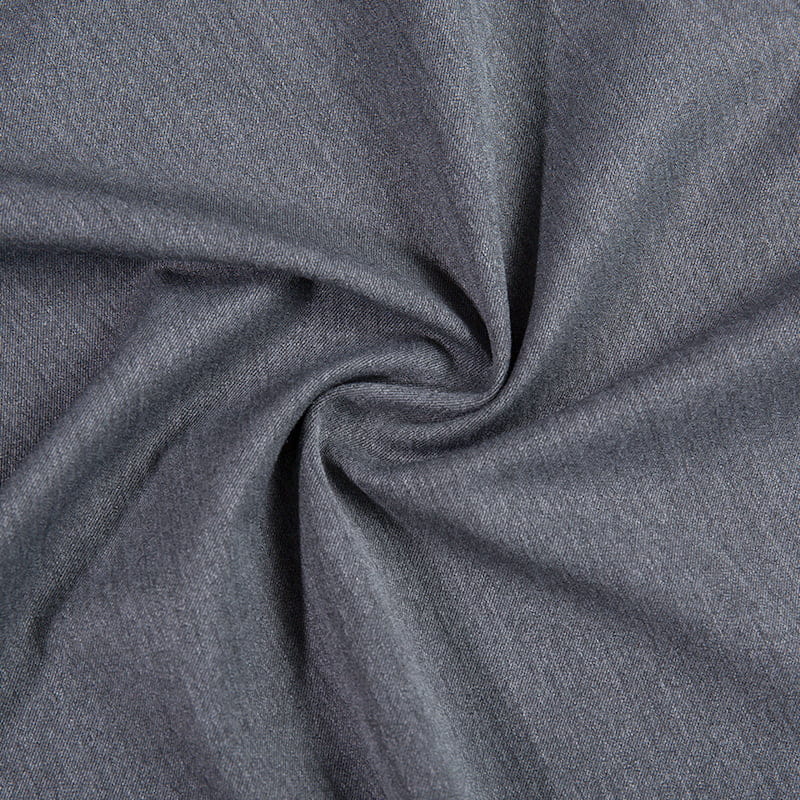
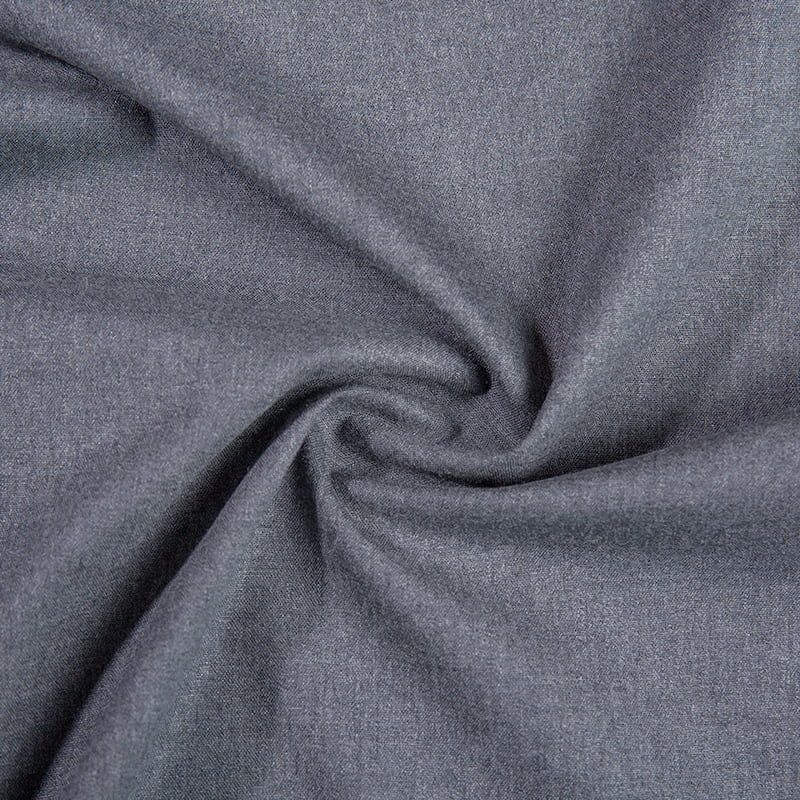
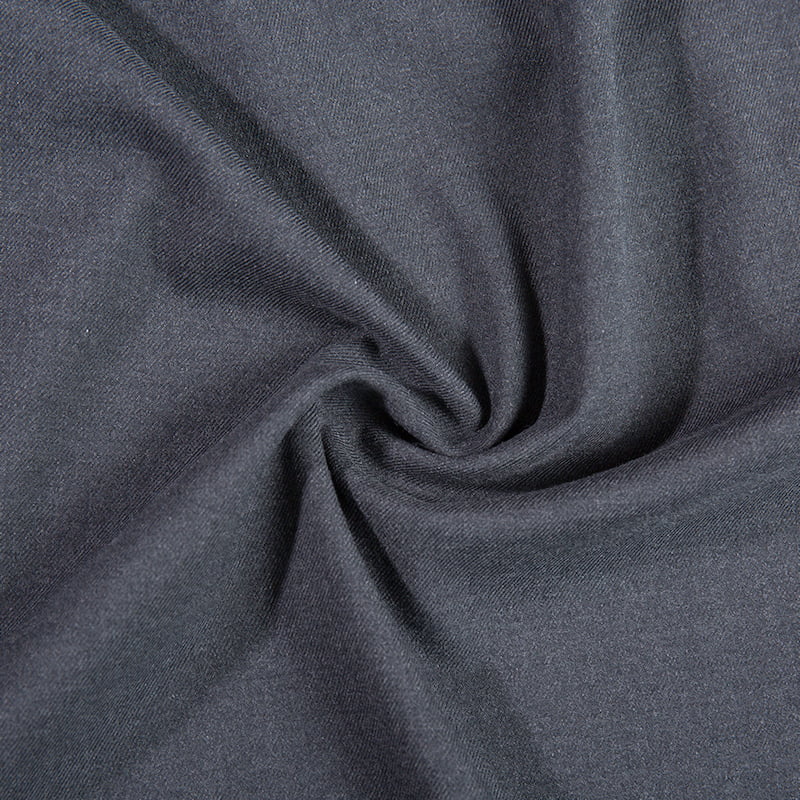
Poly/Rayon/Wool blend fabric is a three-fiber composite that combines polyester, rayon (viscose), and wool to deliver the drape and warmth of wool at a fraction of its cost and care burden. A typical ratio is 70-80% polyester, 15-20% rayon, and 5-10% wool -- a formula that gives suiting manufacturers near-wool aesthetics, better wrinkle recovery than pure wool, and significantly lower production cost. This guide breaks down the composition, performance, and ideal use cases for this increasingly popular suiting material.
What Is Poly/Rayon/Wool Blend Fabric?
Poly/Rayon/Wool blend fabric is a woven textile that interweaves three distinct fiber types into a single yarn or fabric structure, with each fiber contributing a specific functional role:
- Polyester: The structural backbone. Provides wrinkle resistance, shape retention, and durability.
- Rayon (Viscose): The drape agent. Adds a fluid, natural fall and a soft, semi-lustrous surface sheen.
- Wool: The luxury signal. Contributes a fine, warm hand-feel, natural elasticity, and the characteristic depth of color associated with premium suiting.
Composition Ratios and What They Mean for Performance
The exact fiber ratio determines how the fabric feels, drapes, and performs. Different ratios target different price points and use cases:
| Ratio (Poly/Rayon/Wool) | Hand Feel | Price Tier | Best Use |
|---|---|---|---|
| 80/15/5 | Smooth, slightly synthetic | Entry-level | Uniforms, budget suiting |
| 75/17/8 | Balanced, soft | Mid-range | Business suits, blazers |
| 70/20/10 | Near-wool, fine surface | Premium mid-range | Tailored suiting, outerwear |
As wool content increases beyond 10%, both cost and care complexity rise sharply -- most commercial manufacturers find the 5-10% wool range to be the practical sweet spot for retaining wool's sensory benefits without inheriting its full maintenance burden.
Key Benefits of Poly/Rayon/Wool Blend Fabric
1. Wool-Like Drape
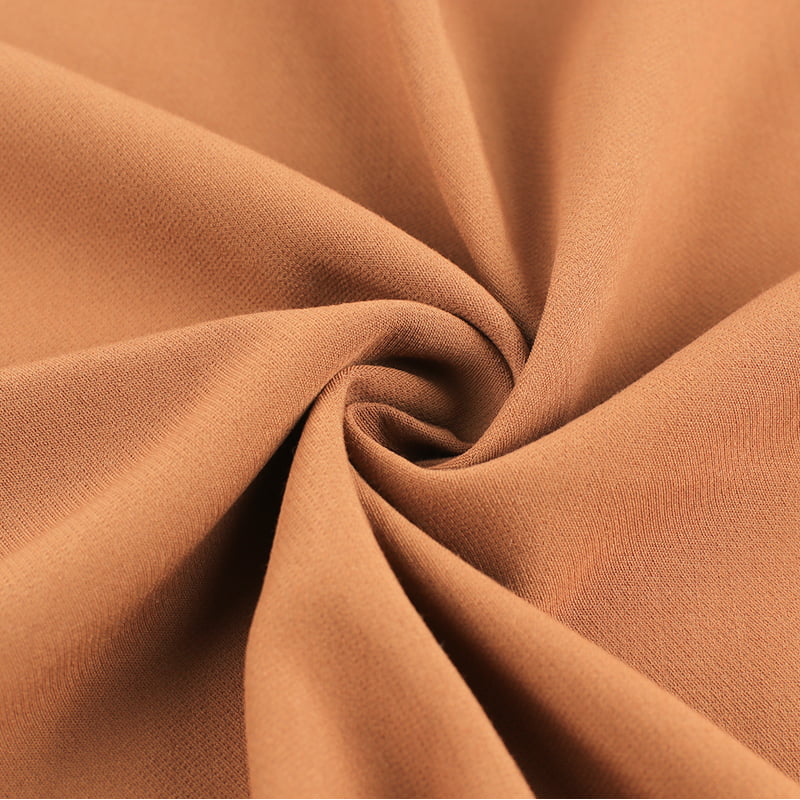
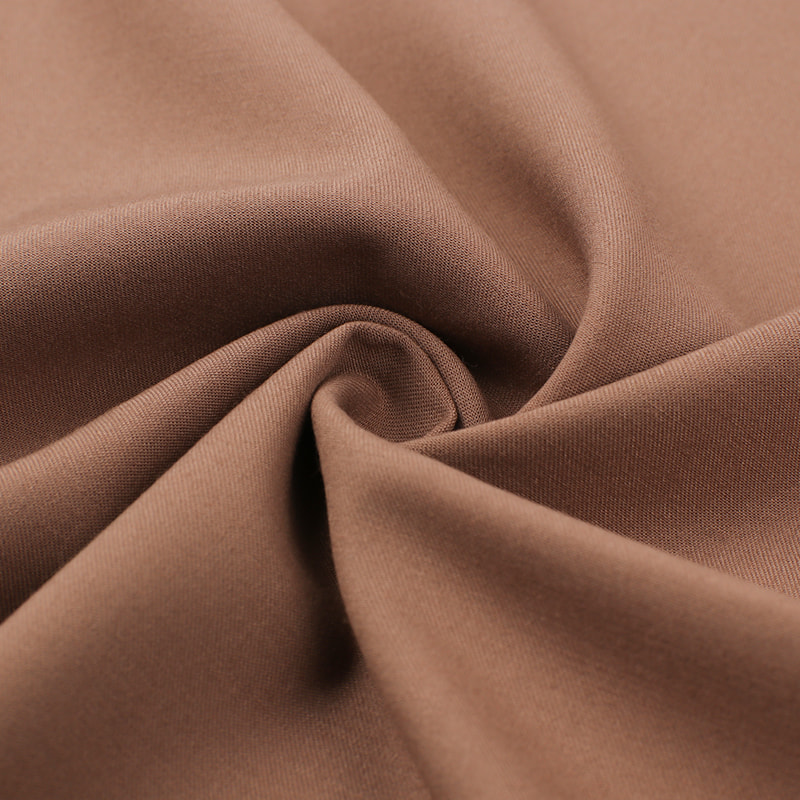
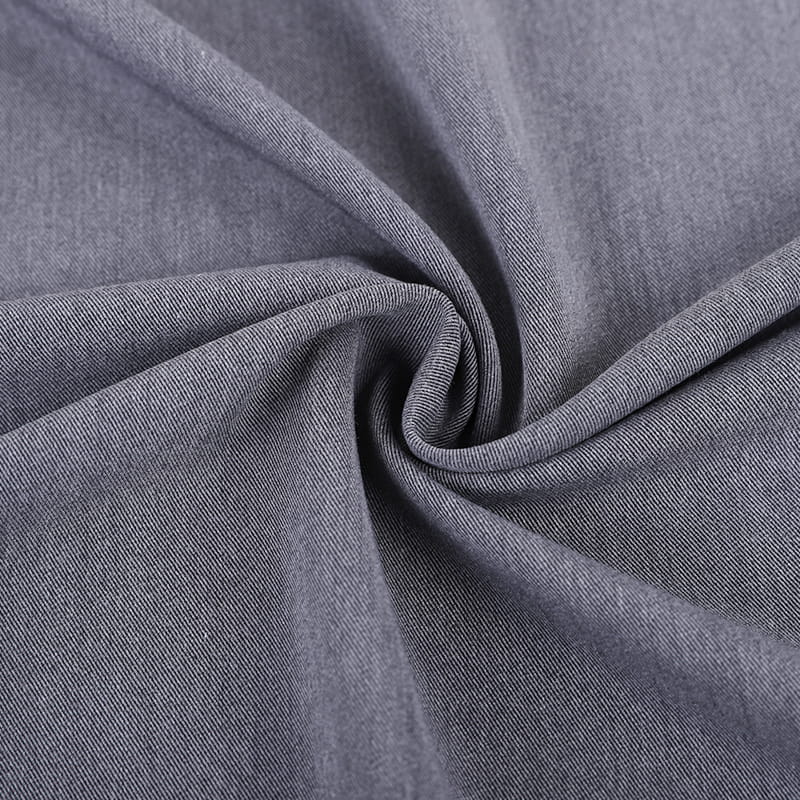
The combination of rayon's fluidity and a small percentage of wool gives the fabric a fall and surface depth that closely mimics worsted wool. Trouser legs hang cleanly and jacket shoulders maintain a soft, rounded silhouette -- visual cues typically associated with fabrics costing several times more.
2. Wrinkle Recovery
Polyester's molecular structure gives it excellent elastic recovery. A 75/17/8 blend typically recovers from compression creases within 30-60 minutes of hanging -- a meaningful advantage over pure wool, which can hold creases for hours after long periods of sitting.
3. Easier Care and Lower Maintenance Cost
Because the wool content is low, most Poly/Rayon/Wool garments can tolerate gentler dry-cleaning cycles and, in some constructions, even machine washing on a delicate cycle. This contrasts with pure wool suits, which generally require professional dry-cleaning at $15-40 per session.
4. Better Abrasion Resistance
Polyester fiber has a tenacity of roughly 4.5-5.5 cN/dtex, compared to wool's 1-1.7 cN/dtex. In Martindale abrasion testing, quality Poly/Rayon/Wool blends typically withstand 15,000-20,000 rub cycles, outperforming pure wool fabrics in high-wear areas like trouser seats and jacket cuffs.
5. Consistent Color and Batch Uniformity
Synthetic-dominant blends take dye more uniformly than pure wool, which can show natural variation between fleece lots. This makes Poly/Rayon/Wool blends a more predictable choice for manufacturers running large production batches that need to match precisely across cutting lots.
Performance Comparison: Poly/Rayon/Wool vs Pure Wool vs TR Fabric
As the comparison shows, Poly/Rayon/Wool blend fabric sits in a distinct middle position: it gains meaningful drape improvement over standard TR fabric thanks to the wool content, while retaining most of TR fabric's practical advantages in wrinkle recovery, abrasion resistance, and low care cost relative to pure wool.
Common Applications
- Men's and women's business suits: The most common application, where the blend balances professional appearance with all-day wearability.
- Blazers and sport coats: Lighter-weight versions (180-220 GSM) suit standalone jackets worn in varied climates.
- Suit trousers and skirts: Wrinkle resistance is especially valuable in trousers, which face the most compression during a workday.
- Uniforms and institutional workwear: Higher polyester ratios (80/15/5) suit uniform programs needing durability and easy laundering across large staff populations.
- Outerwear and overcoats: Heavier-weight versions (above 280 GSM) leverage the wool content for added warmth in cooler-season garments.
How to Identify Quality Poly/Rayon/Wool Blend Fabric
- Check the fiber ratio label: Reputable suppliers disclose exact percentages. Be cautious of vague labeling like "wool blend" without specific ratios.
- Test the hand-feel: Quality blends feel smooth with a slight natural grip, not slick or plastic-like. A purely synthetic feel suggests minimal or no wool content.
- Examine the surface sheen: Wool and rayon together produce a soft, matte-to-semi-lustrous finish. Excessive shine usually indicates a higher polyester ratio than advertised.
- Check thread density: Quality suiting-grade blends typically have a warp-weft density of at least 30 x 25 threads per centimeter for adequate structure and drape.
- Request a colorfastness test result: Look for a rating of Grade 4 or higher under ISO 105-C06 to ensure the fabric will not fade significantly after repeated washing or dry-cleaning.
FAQ: Poly/Rayon/Wool Blend Fabric
What is the typical fiber ratio in Poly/Rayon/Wool blend fabric?
Most commercial Poly/Rayon/Wool blends use a ratio in the range of 70-80% polyester, 15-20% rayon, and 5-10% wool. The exact ratio depends on the target price point and desired hand-feel, with higher wool content increasing both cost and luxury feel.
Is Poly/Rayon/Wool blend fabric as warm as pure wool?
Not quite, since wool content is typically under 10%. However, the blend still offers noticeably better insulation than 100% polyester or TR fabric, making it suitable for cooler-weather suiting and lightweight outerwear.
Can Poly/Rayon/Wool blend fabric be machine washed?
Some lower-wool-content blends (around 5%) tolerate gentle machine washing in cold water. However, most manufacturers recommend dry-cleaning to preserve the wool fibers' shape and prevent shrinkage, especially for blends with 8% or more wool content.
How does Poly/Rayon/Wool blend fabric compare in price to pure wool?
Poly/Rayon/Wool blends typically cost $4-9 per meter at wholesale, compared to $25-60 per meter for quality pure wool. This makes the blend roughly 70-85% cheaper while retaining much of wool's visual and tactile appeal.
What GSM range is best for suiting applications?
Most business suiting uses Poly/Rayon/Wool blends in the 180-260 GSM range. Lighter weights (180-220 GSM) suit warm climates and standalone blazers; heavier weights (240-280+ GSM) suit formal suits and outerwear in cooler seasons.
Does Poly/Rayon/Wool blend fabric pill easily?
Quality blends with proper finishing typically achieve a pilling resistance grade of 3-4 under ISO 12945-2 after 50 wash or wear cycles. Lower-quality blends with loosely twisted yarns are more prone to pilling, particularly at high-friction points like cuffs and trouser inner thighs.
About Shaoxing Fuxing Textile Technology Co., Ltd.
Shaoxing Fuxing Textile Technology Co., Ltd. is a professional fabric manufacturer based in Keqiao, China, with annual output exceeding 10 million meters of fabric.
Poly/Rayon/Wool blend fabric is one of Fuxing Textile's core product lines, alongside Poly/Rayon/Spandex solid fabrics, TR spandex yarn-dyed fabrics, and top-dyed fabrics -- all engineered for suit pants, blazers, and professional uniforms. Fuxing Textile supplies designers, brands, and terminal purchasers worldwide and welcomes cooperation with customers at home and abroad for common success.