 English
 中文简体
 日本語
 한국어
 русский
 Español


What Is Scrubs Fabric Made Of? Fibers, Weaves and Stretch Explained
What Is Scrubs Fabric Made Of?
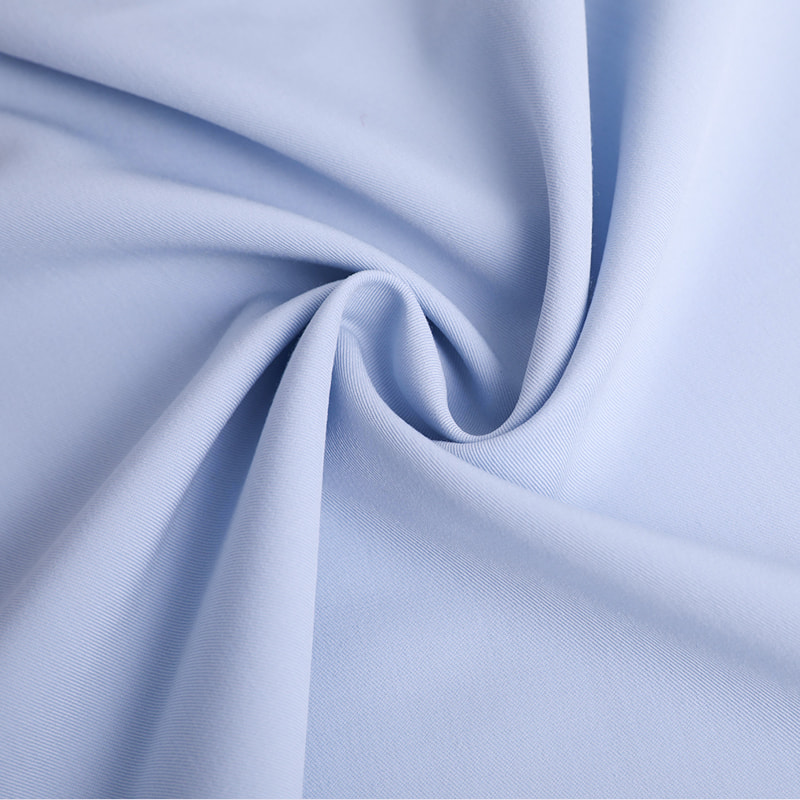
Scrubs fabric is most often a polyester-based blend made to survive long shifts and frequent washing. Polyester provides strength and shape, rayon (viscose) adds softness and moisture absorption, and spandex adds stretch. The fibers are put together as a woven twill or a knit, and the construction decides how the fabric moves, wears and recovers.
This guide focuses on woven poly rayon spandex scrubs fabric, the kind used in the medical apparel range of Shaoxing Fuxing Textile. For a wider overview that also covers poly-cotton and knit scrubs, see our complete guide to scrubs fabric.
The Fibers Behind Scrubs
Polyester
The backbone. It is strong, resists wrinkles, dries fast and holds color through repeated washing, which suits uniforms that are laundered often.
Rayon
Also called viscose. It is soft, drapes well and absorbs moisture, so the fabric feels less clammy than all-polyester cloth.
Spandex
The stretch fiber. A small share lets the fabric stretch with movement and recover its shape.
Other scrubs use cotton or polyester-cotton, which feel natural but wrinkle more and take longer to dry. The Fuxing scrubs fabric is built on the polyester-rayon-spandex combination because it gives a balance of comfort, easy care and shape.
Weaves Used in Scrubs
A woven fabric is made by interlacing warp and weft yarns. Two weaves are common in scrubs.
| Weave | Structure | Behavior in Scrubs |
| Plain weave | Weft passes over one warp yarn and under the next | Light and simple, but less drape and a flatter surface |
| Twill | Weft passes over one and under two or more, stepping across to form a diagonal | Better drape and body, and better abrasion resistance than plain weave |
| Knit (jersey, interlock) | Interlocking loops instead of woven yarns | Naturally stretchy, softer, but less structure |
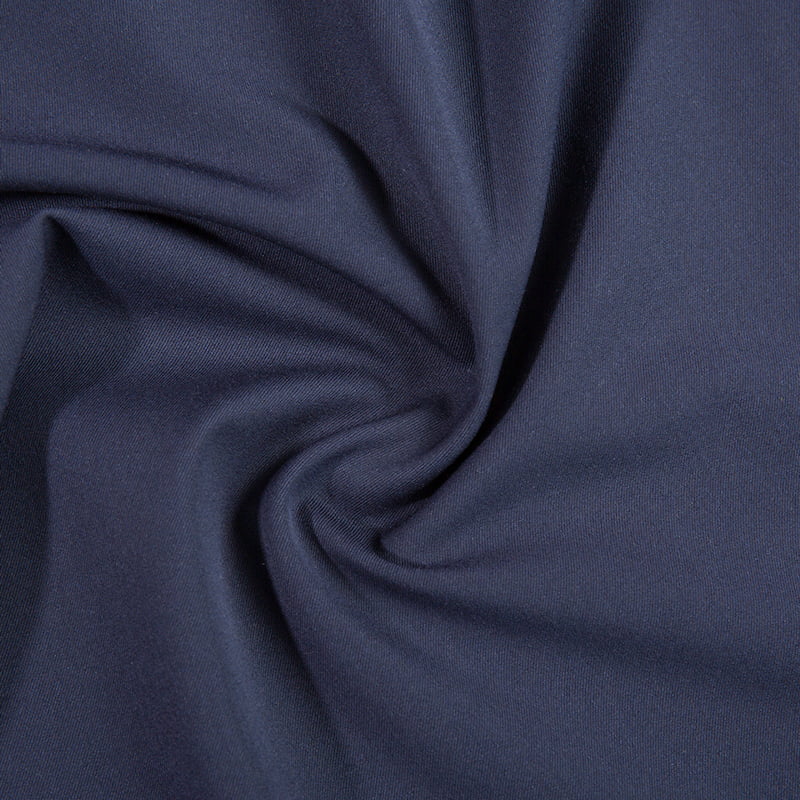
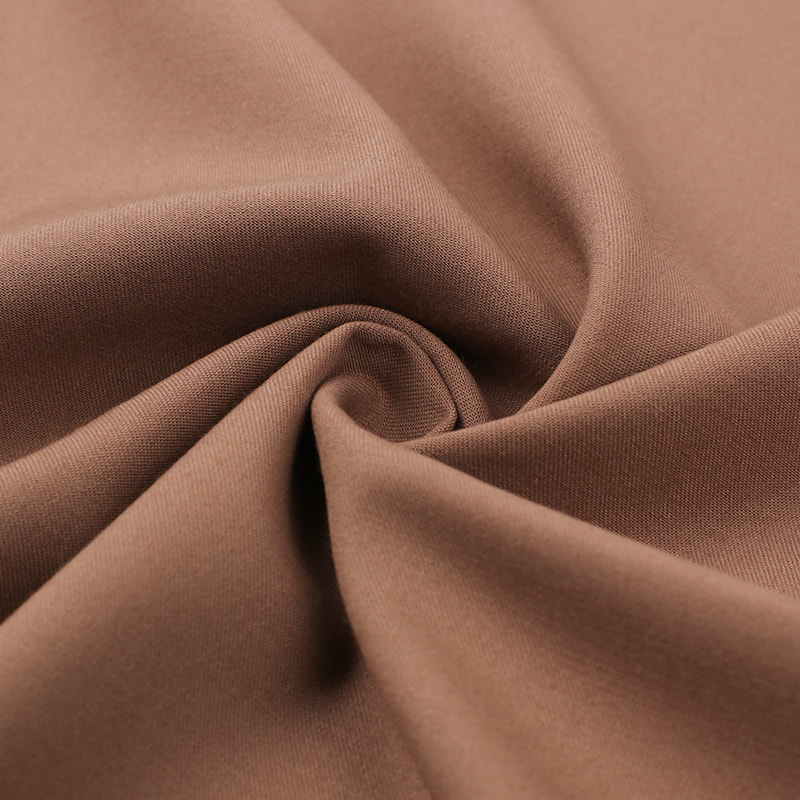
The FX50316 scrubs fabric is a twill. The page states that twill gives better abrasion resistance than plain weave, which matters at pockets, cuffs and seams that rub all day.
Stretch Explained: From No Stretch to 4-Way
0
No stretch
Plain polyester or poly-cotton weave with no elastic fiber. Stable but restrictive.
2
2-way stretch
Stretch in one direction, usually across the width, from elastic yarn in the weft.
4
4-way stretch
Stretch in both width and length directions, giving freedom when bending, reaching and lifting.
The FX50316 page lists four-way elastic stretch, with a soft and elastic hand feel, but it does not give a stretch percentage. If you need a specific figure, ask for it with your sample request.
Woven vs Knit Scrubs
| Feature | Woven Twill (poly rayon spandex) | Knit Scrubs |
| Stretch | From spandex, controlled | Natural, often very stretchy |
| Shape and structure | Holds shape and a crisp line | Softer, drapes closer to the body |
| Wrinkles | Wrinkle resistant, easy to maintain | Generally low wrinkling |
| Abrasion | Twill is more abrasion resistant than plain weave | Depends on knit and yarn |
| Typical look | Tailored uniform look | Casual, athletic look |
Neither is better in every case. Woven twill gives a crisp, professional uniform that keeps its shape, while knits give a softer, stretchier feel.
How Scrubs Fabric Performs: What the Product Page Says
Specifications for a fabric are only useful when they are tied to a real product. The FX50316 page lists the following.
| Property | FX50316 as Listed |
| Fibers | Polyester, rayon and spandex blend |
| Weave | Twill |
| Weight | 200 GSM |
| Width | 57/58 inches |
| Stretch | 4-way stretch |
| Hand feel | Soft and elastic |
| Wrinkle behavior | Good wrinkle resistance, easy to maintain |
| Moisture | Good moisture absorption, helps reduce heat build-up in extended wear |
| Dyeing | Plain dyed or reactive dyed, broad color range, customizable |
| Lead time | 25 days |
The page does not claim antibacterial, fluid-resistant or flame-retardant properties, and gives no abrasion, pilling or colorfastness test results. If your program needs those, request them as a separate finish and test report.
Why a 200 GSM Twill Works for Scrubs
- Light enough to wear all shift. A mid-light weight keeps the garment from feeling heavy or hot.
- Enough body to look neat. Twill holds a clean line through the shoulder and trouser leg.
- Moves with the wearer. 4-way stretch supports bending and reaching.
- Stays presentable. Wrinkle resistance and easy maintenance reduce ironing and care effort.
- Breathes. Rayon helps with moisture absorption and the page notes good breathability.
Fabric Weight (GSM) for Scrubs
GSM means grams per square meter, a measure of how heavy the fabric is. Weight affects comfort, warmth, opacity and how a garment hangs.
| Weight Class | Feel | Typical Fit |
| Lighter | Cool, flowing, may be see-through in pale colors | Hot environments and tops |
| Medium | Balanced body and comfort | Everyday scrubs tops and pants |
| Heavier | Structured, warmer, durable | Cold wards, jackets and uniforms with more structure |
At 200 GSM, the FX50316 fabric sits in the balanced middle of this range for a woven twill, which is why it is listed for scrubs, nurse uniforms, pants and general uniforms.
Dyeing: Plain Dyed vs Reactive Dyed
Both dyeing types are listed for FX50316. They describe how the color gets into the fabric.
Plain dyed
A single solid color applied to the whole fabric, standard for scrubs where a consistent color across a size run is important.
Reactive dyed
Reactive dyes bond with the fiber. The FX50226 and FX55642 pages say reactive dyeing gives depth in dark shades and stable batch-to-batch color. The FX50388 page adds that it supports a wide range of color customization.
Batch-to-batch color matters for uniforms, because scrubs reordered months apart must still match the first order.
A Short Scrubs Fabric Glossary
| Term | Meaning |
| GSM | Grams per square meter, the weight of the fabric |
| 4-way stretch | Stretch in both width and length directions |
| Twill | A weave with a diagonal rib, giving body and abrasion resistance |
| Spandex (SP) | Elastic fiber that gives stretch and recovery |
| Viscose or rayon | A soft, moisture-absorbing regenerated cellulose fiber |
| Reactive dyed | Dyed with dyes that bond to the fiber for stable color |
| MOQ | Minimum order quantity, per color and per order |
The FX50316 page lists SP in the composition without defining it. SP is commonly used to mean spandex, so confirm with the supplier when you request a spec sheet.
Care Tips for Scrubs Garments
- Wash as the care label says. Poly rayon spandex blends usually do best with moderate temperatures.
- Avoid very high heat in the dryer. Heat can reduce elastic recovery over time.
- Remove promptly from the dryer. This helps the wrinkle-resistant finish do its job.
- Treat stains early. Quick treatment keeps uniforms presentable.
- Do not iron too hot. Steam or a low iron is enough.
These are general care habits for stretch blends. Always follow the garment maker's care instructions.
Questions to Ask a Scrubs Fabric Supplier
- What is the exact composition, since page titles and spec tables can differ?
- What is the stretch percentage in width and length?
- Is an antibacterial, fluid-resistant or other finish available, and what test report supports it?
- What are the pilling, abrasion and colorfastness results after repeated washing?
- What are the MOQ, sample time and lead time for my color?
Asking these before you order avoids surprises, and the answers should be put in writing alongside your sample approval.
How to Choose Scrubs Fabric for Your Line
Uniform and workwear brands
Look for a twill with stretch, an easy-care finish and a wide color range so you can match brand colors across batches.
Private-label scrubs lines
Compare hand feel by swatch, ask for color options, and check that reactive dyeing is available for deep shades.
The medical range sits under medical apparel fabrics, with scrubs fabrics listed in the scrubs fabric category. You can also read our guide on twill suit fabric for more on the weave.
Ordering Notes
- Order quantity: the FX50316 page lists a minimum of 1,500 m per color and 3,000 m per order.
- Lead time: 25 days is listed on the page, and the site FAQ gives a general range of 15 to 25 days for regular bulk orders. Confirm the date when you order.
- Samples: the site FAQ lists regular samples in 5 to 12 days, with the first sample free and shipping collect.
- Customization: colors are customizable.
Frequently Asked Questions
What is scrubs fabric made of?
Most scrubs fabric is a polyester-based blend, often with rayon for softness and spandex for stretch. Some use cotton or polyester-cotton, and some are knit instead of woven.
What weave is best for scrubs?
Twill is a good choice for woven scrubs because it offers drape, body and better abrasion resistance than plain weave.
Does scrubs fabric need to be stretchy?
Not strictly, but stretch improves comfort in long shifts. The FX50316 page lists four-way stretch.
Is scrubs fabric wrinkle resistant?
The FX50316 page lists good wrinkle resistance and easy maintenance, which helps scrubs look neat after washing.
Does this fabric have antibacterial properties?
The product page does not state an antibacterial finish. Ask the supplier if your program requires one.
News
Products
Recent Articles
- Is Dyed Poly Rayon Woven Fabric With Stretch Ideal for Sportswear and Activewear?
- What Are the Key Differences Between Dyed Poly Rayon Woven Fabric With Stretch and Other Stretch Fabrics?
- What Are the Key Differences Between Dyed Poly Rayon Woven Fabric With Stretch and Other Stretch Fabrics?
- What is the texture and feel of FX55478 Popular Stripe Design Customize Poly Viscose With Stretch Fabric For Suit And Blazers?
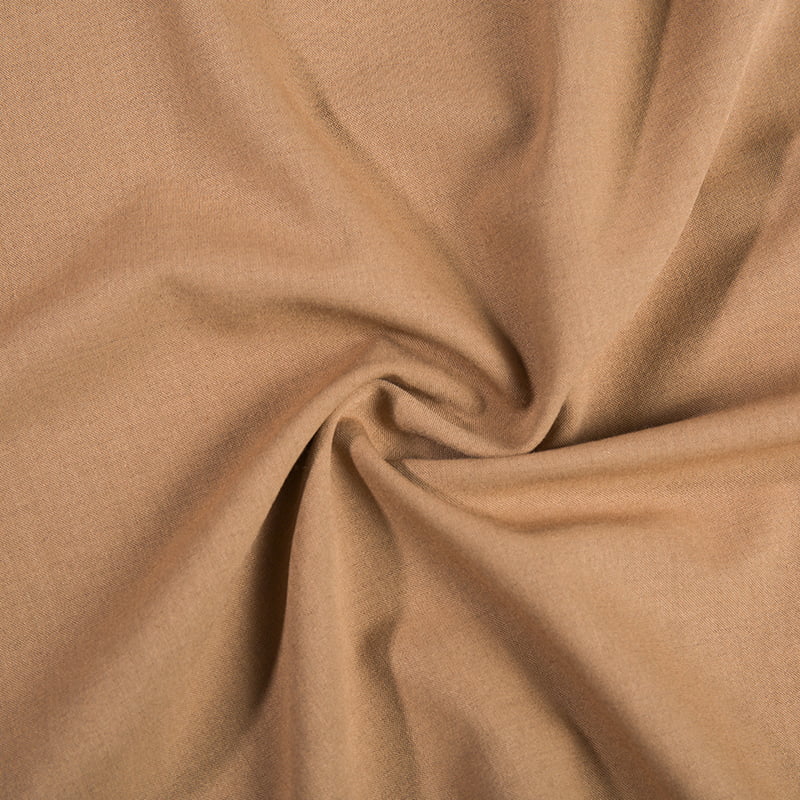
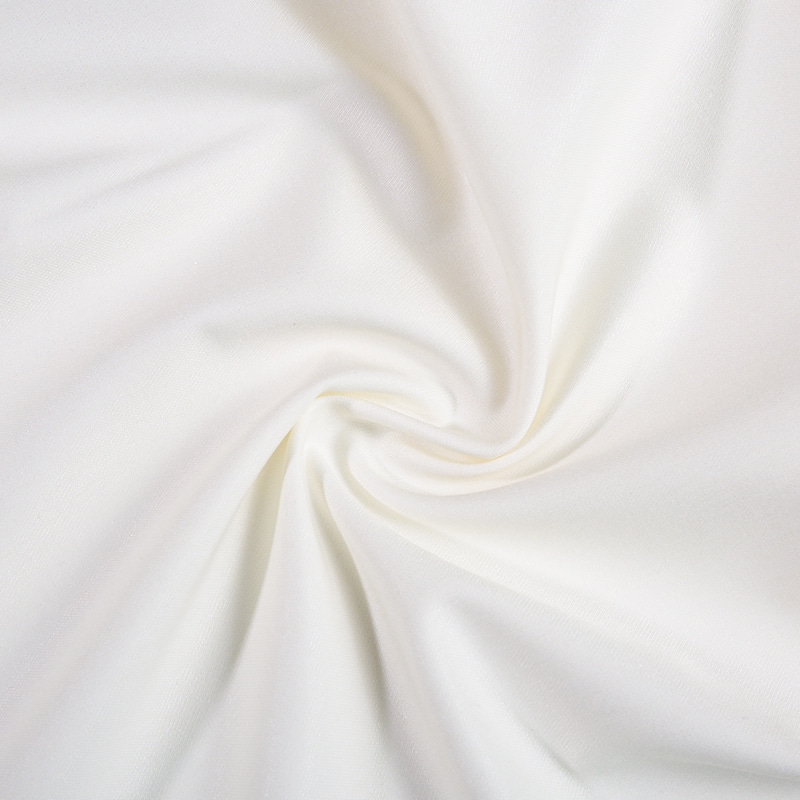
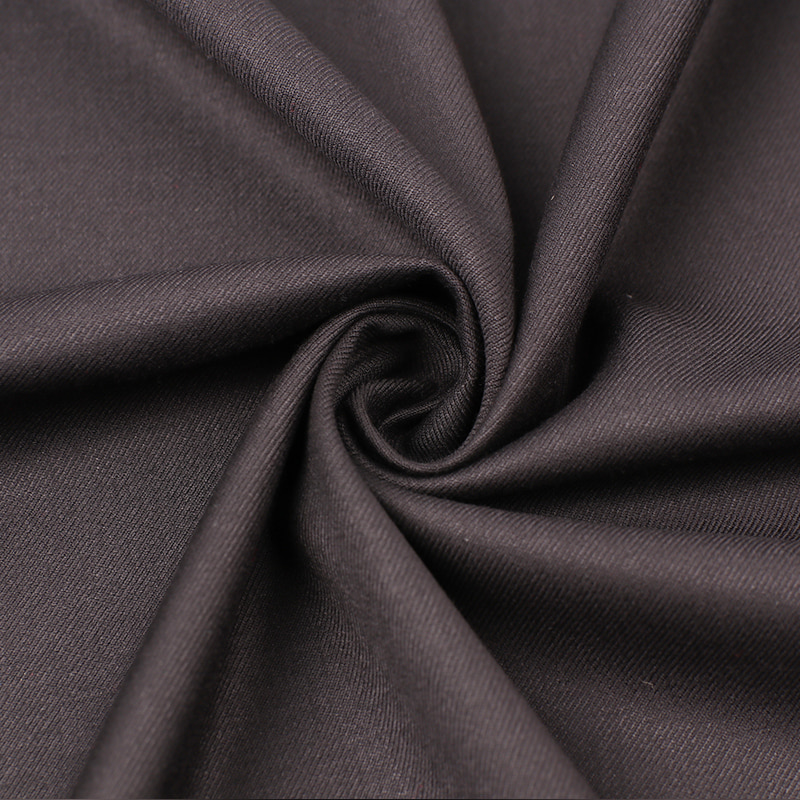

Can Supply Mature And Stable Products.
Choose Us, Contact Us
Choose Us, Contact Us
Contact Us
-

Tel: +86-575-81176657
+86-18857538666 -
 E-mail: martin@fuxing-tex.com
-
 Xindian Village, Qianqing Street, Keqiao District, Shaoxing City, Zhejiang Province, China.
Quick Links
Products
Get In Touch
Copyright © Shaoxing Fuxing Textile Technology Co., Ltd. All rights reserved. China Woven Fabric Manufacturer OEM & ODM Suiting & Medical Fabrics Factory
