 English
 中文简体
 日本語
 한국어
 русский
 Español

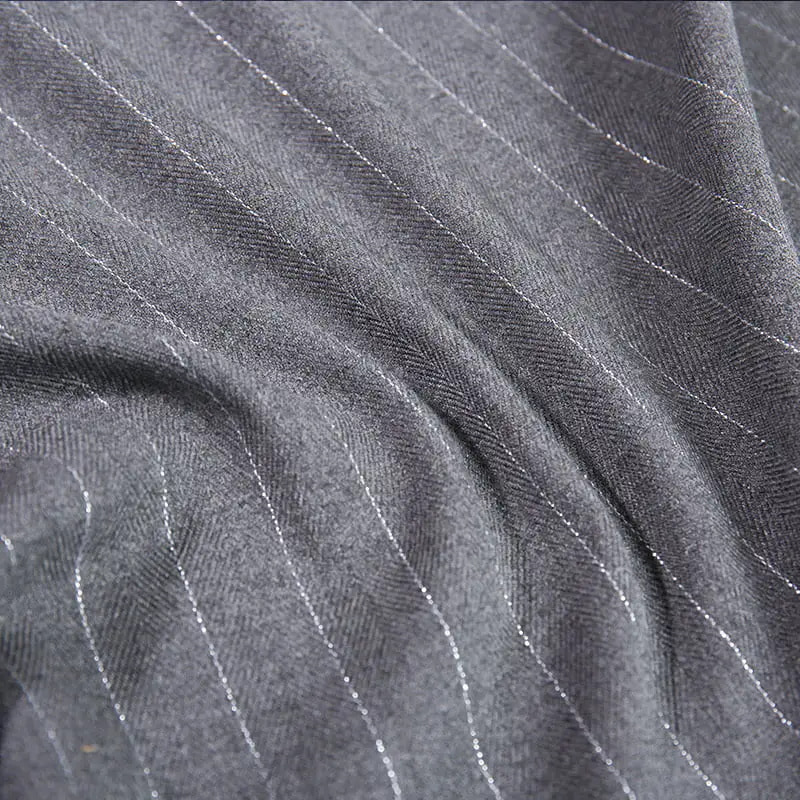
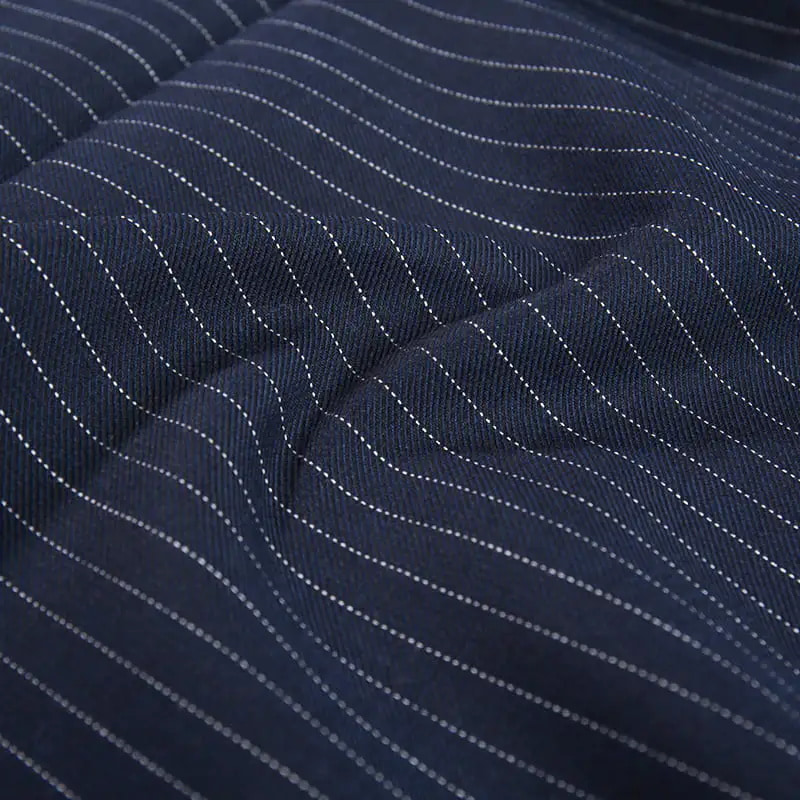
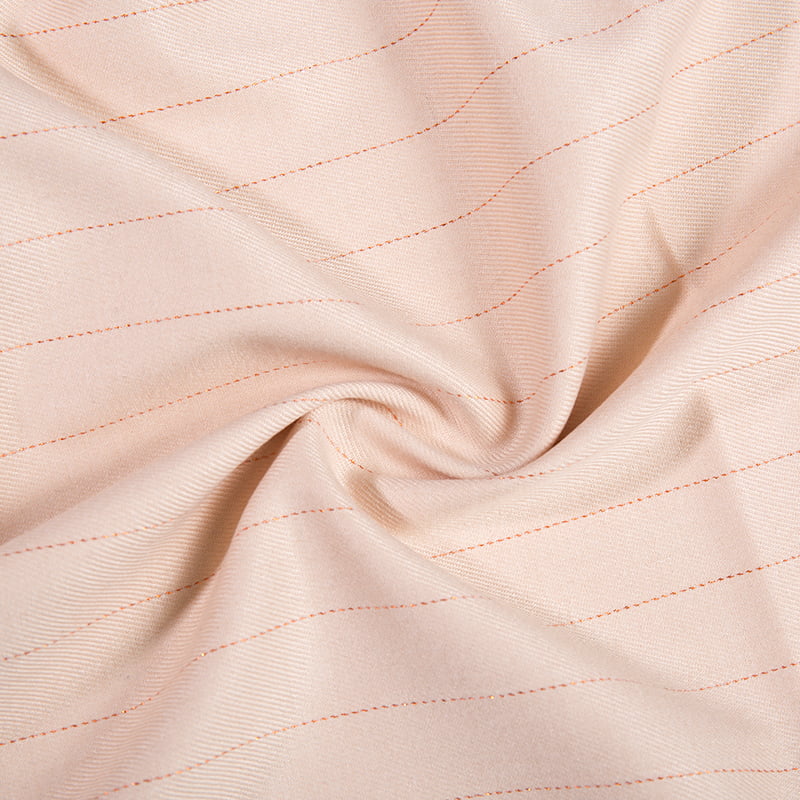
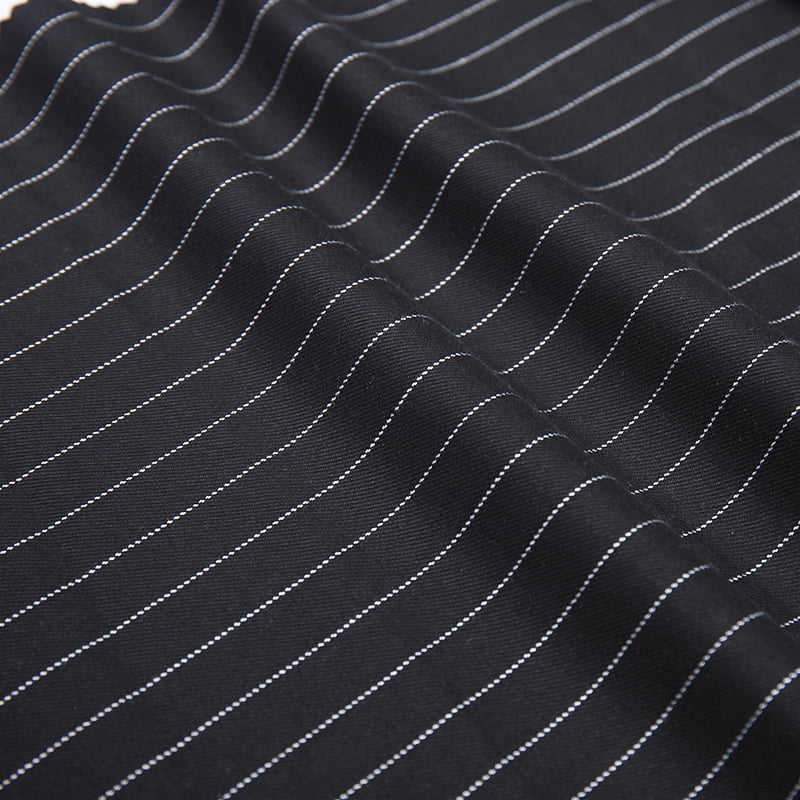
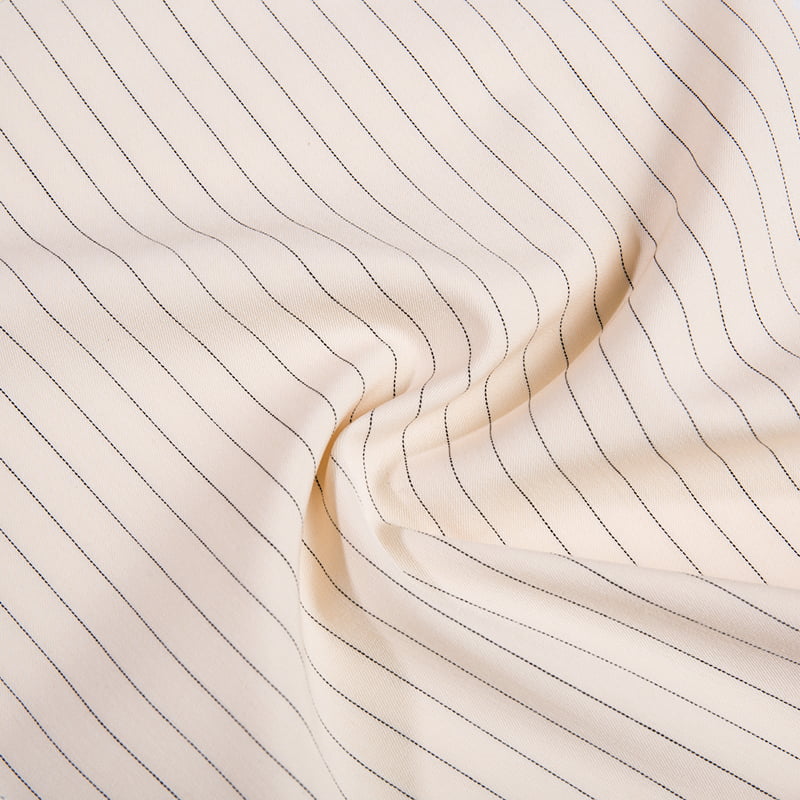
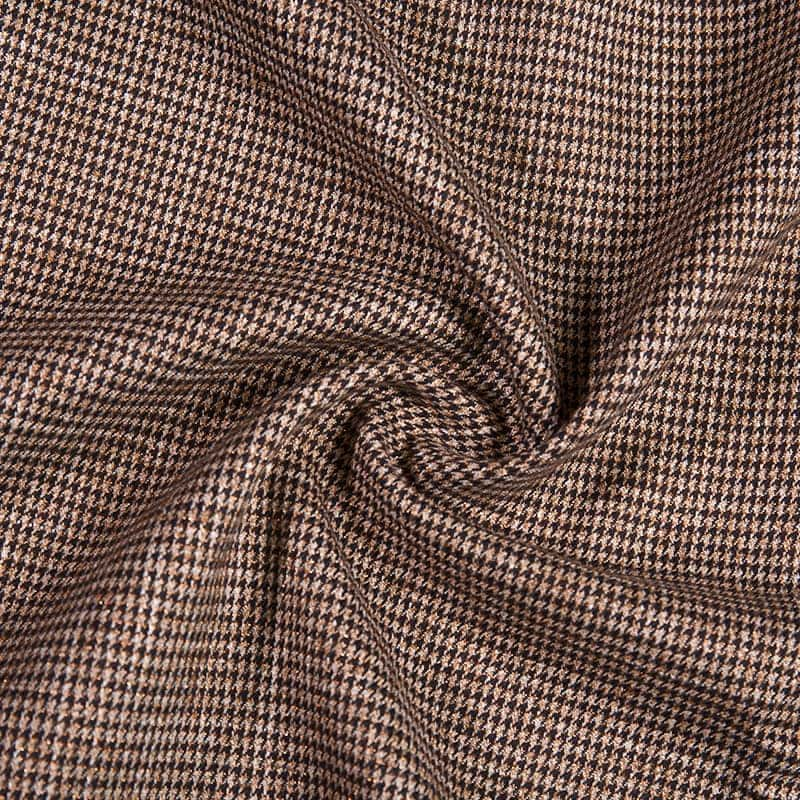
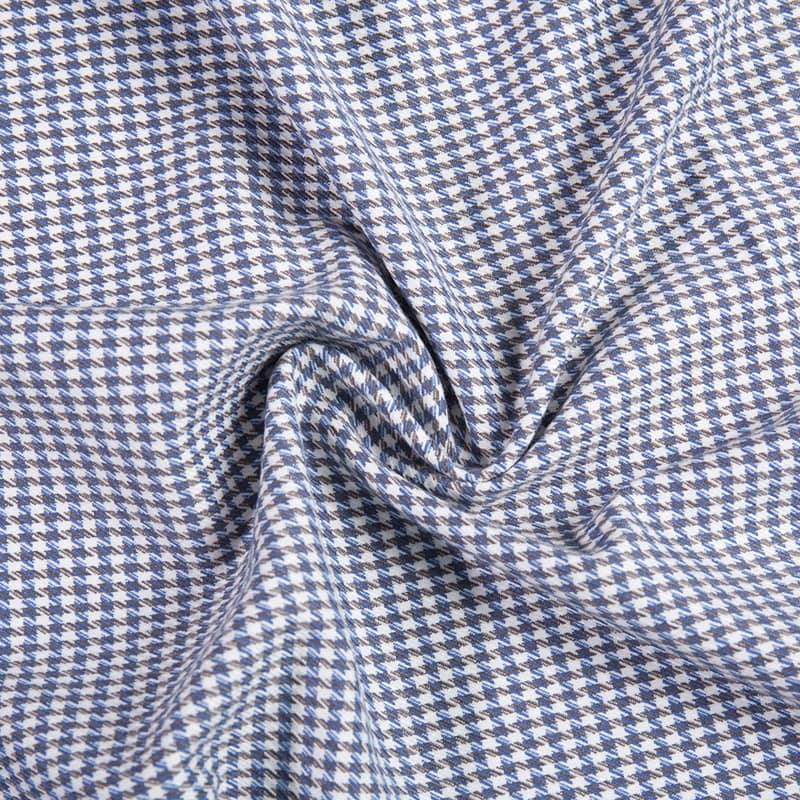
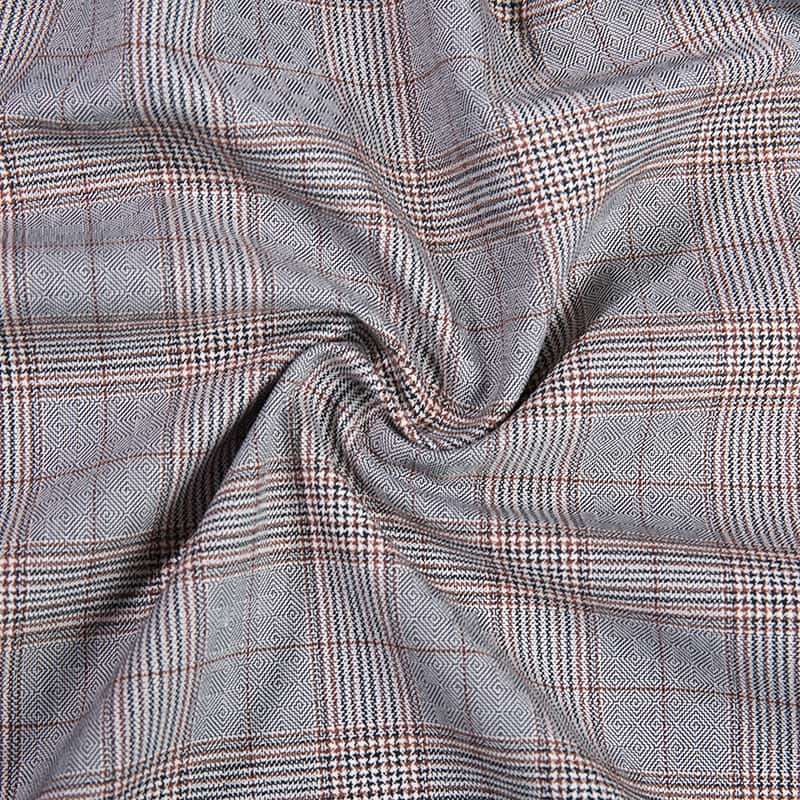
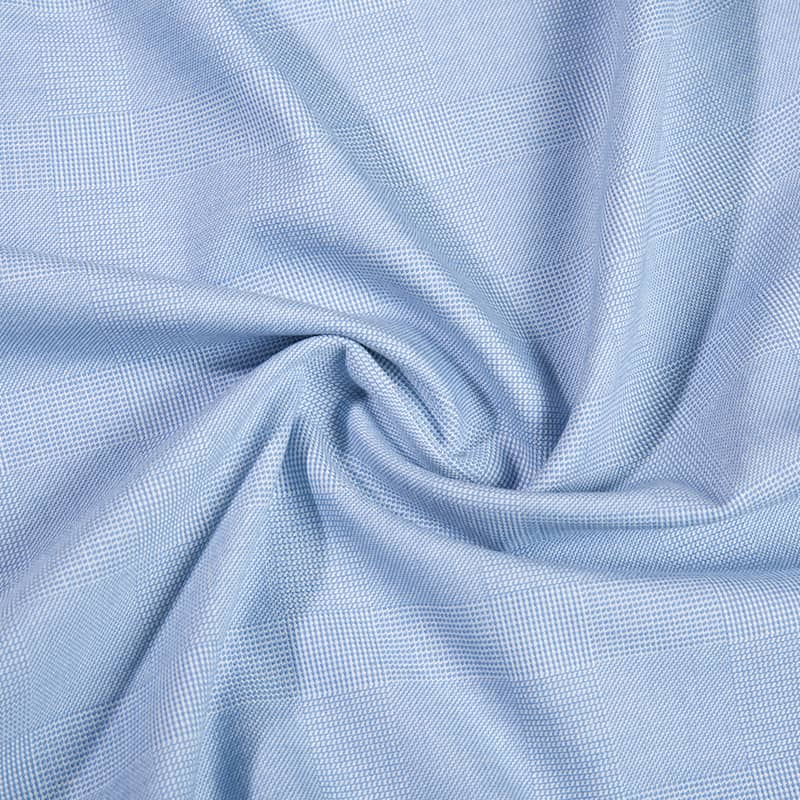
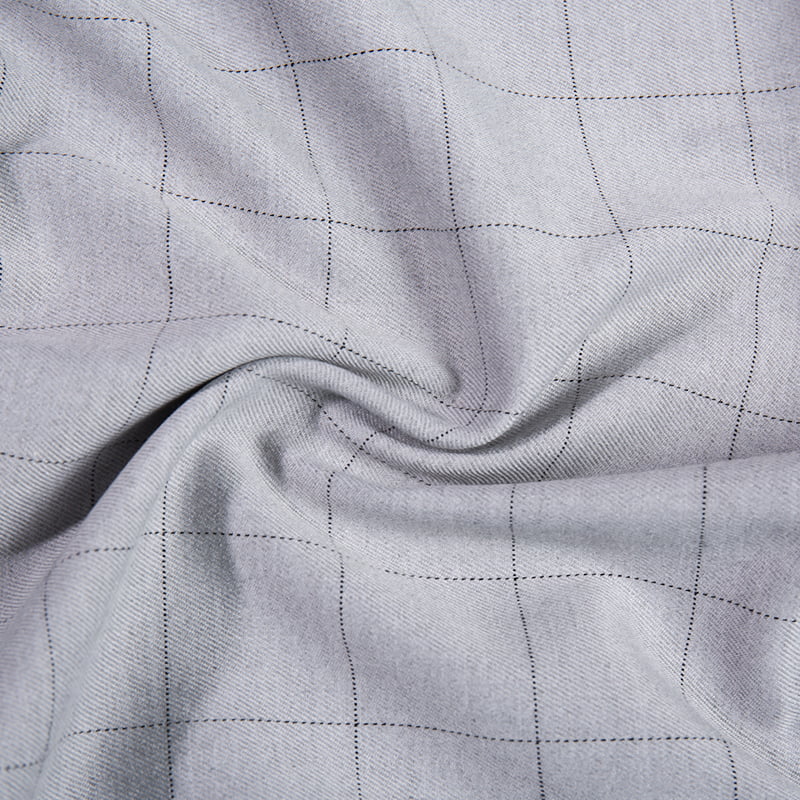
Shaoxing Fuxing Textile Technology Co., Ltd. was founded in 2002 and is located in Keqiao, Shaoxing — one of China‘s most dynamic textile hubs. We operate a 50,000㎡ modern facility equipped with 128 imported Italian rapier looms, supported by a dedicated team of 150+ professionals including textile engineers, quality control specialists, and customer service staff.
We are a specialized China Yarn Dyed Suiting Fabric Supplier and Yarn Dyed Poly Rayon Woven Fabric With Stretch Company, we deliver high-quality, professional-grade fabrics for suits, trousers, blazers, and uniforms. we deliver high-quality, professional-grade fabrics for suits, trousers, blazers, and uniforms. By controlling everything from yarn procurement to finished fabric, we guarantee consistent dye lots, reliable quality, and seamless re-orders.
With the innovation of science and technology, Fuxing Textile has developed more and faster and now we annually provide over 10 million meters of fabric for designers, brands, and terminal purchasers.

Yarn Dyed Fabric
Structured Comfort.
Woven for Real Life
Woven for Real Life
Our suiting fabrics combine shape retention with subtle stretch and wrinkle recovery. Engineered for blazers, trousers, and skirts that hold their form — wear after wear.
Yarn Dyed Suiting Fabric Supplier
Yarn Dyed Fabric refers to woven fabric where the yarns are dyed before weaving, allowing patterns to form through the interlacing of differently colored threads. Unlike piece dyeing or printing on greige fabric, yarn-dyed colors are fixed directly within the fiber of each yarn. The fabric's pattern is determined by the weave structure of the warp and weft, resulting in clear patterns on both sides and a richer, more dimensional color expression.
Fuxing Textile's yarn dyed fabric series is primarily composed of polyester-rayon-spandex blends, featuring classic woven patterns such as stripes, checks, and houndstooth. The range focuses on providing stable fabric solutions for suits, uniforms, outerwear, and professional attire. A broad weight range is available, with colors and patterns all supporting customization to meet needs ranging from brand series development to large-scale uniform procurement.
Core Advantages
Excellent color stability
Colors are fixed into the yarn itself — not reliant on printing or piece dyeing — ensuring color retention after washing without fading or dulling.
Clear, dimensional patterns
The design is determined by the weave structure, giving stripes, checks, and houndstooth sharp definition with visible patterns on both sides for a high-quality appearance.
High batch-to-batch consistency
Yarn dyeing requires strict color management during mass production, resulting in minimal color deviation between batches — ideal for uniform procurement with strict appearance standards.
Flexible fiber ratios
The ratio of polyester, rayon, and spandex can be adjusted according to application needs, balancing hand feel, elasticity, breathability, and dimensional stability.
Strong pattern customization
Stripe width, check colorways, and pattern arrangement can all be developed to client specifications, meeting the differentiated design requirements of brand or uniform projects.
Stretch as standard
Spandex is incorporated throughout the product range, ensuring comfortable wear and unrestricted movement under formal tailoring — suitable for extended professional wear.
Product Range
| Item | Details |
|---|---|
| Pattern categories | Classic woven designs including Stripe, Check, and Houndstooth |
| Weight range | From lightweight to heavy-weight options, covering everything from spring/summer lightweight formalwear to autumn/winter heavy outerwear |
| Width | 57/58 inches, suitable for mass cutting of suit and outerwear patterns |
| Composition | Primarily Poly/Rayon/Spandex blends; ratios vary by product — refer to specific item specifications |
| Colors | A rich range of available colorways; full customization supported via Pantone reference or physical color samples |
| MOQ | Varies by style; some options support orders from 1,500m/color, suitable for flexible small-to-medium batch procurement |
Applications
Corporate uniforms
Check and houndstooth patterns project a professional image; consistent color in mass production meets the needs of organizations with strict dress code requirements.
Suits & blazers
Stripe and check fabrics offer structure and hold their shape, with stretch for comfort — ideal for formal wear brands and ODM factories.
Women's professional suits
Certain high-stretch styles are optimized for women's tailoring; twill construction combined with higher spandex content conforms to fitted silhouettes.
Outerwear & coats
Heavier weight fabrics offer substantial drape and body — well suited for autumn/winter outerwear development.
School uniforms & student formal wear
Durable and wash-resistant; colors can be customized to school standard colors with high batch consistency for large-scale school uniform orders.
Hotel & airline uniforms
High color fastness and wrinkle resistance meet the demands of high-frequency wear and frequent laundering in professional uniform applications.
FAQ
What is the practical difference between yarn dyed fabric and printed fabric?
In yarn dyed fabric, the pattern is determined by the weave structure and the color penetrates the entire yarn — making it more abrasion-resistant and colorfast, with visible pattern on both sides. Printed fabric has patterns applied to the surface of the greige cloth, which may blur or fade with long-term wear and friction. Yarn dyeing is typically preferred for uniforms and formalwear due to its superior durability.
How does the polyester/rayon/spandex composition affect the feel of the fabric?
Polyester provides dimensional stability and durability; rayon improves moisture absorption and breathability while giving the fabric a natural luster; spandex provides elastic recovery. Adjusting the ratio of these three directly affects fabric softness, drape, and stretch behavior. Compositions vary by style — we recommend requesting samples for hand-feel evaluation based on your specific end use.
What is the process for color customization?
Provide a Pantone reference number or a physical color sample, and we will produce an initial color lab dip for client approval.
Can the pattern (stripe / check / houndstooth) be customized?
Color matching is fully customizable across the entire range. Adjustments to pattern structure (e.g., stripe width or check size) are subject to weaving process constraints — some parameters can be adjusted, others have limitations. We recommend providing a reference image or physical sample for us to assess feasibility and advise on a sampling plan.
How is color consistency guaranteed across batches for large uniform orders?
Yarn dyeing enforces strict color management at the yarn dyeing stage, resulting in relatively small color deviation between production batches. For projects with special color consistency requirements, we recommend agreeing on a color deviation standard (e.g., grey scale rating) before placing the order, and we can establish a production quality control plan accordingly.
What should be noted when pattern-making for stretch fabrics?
When pattern-making with spandex-containing stretch fabrics, allowance must be made for the elastic recovery rate of the fabric. Stretch behavior varies with different fiber compositions — we recommend requesting samples for stretch testing before finalizing pattern specifications.
What level of wrinkle resistance can be expected?
All products in the range have undergone wrinkle-resist finishing and recover well after normal formalwear use, without the need for frequent ironing. Under extreme compression (e.g., prolonged folding during long-haul travel), creasing may still occur, but the fabric will largely recover once unfolded. We recommend requesting samples for testing prior to commercial launch.
Can the MOQ be combined across colors or styles?
Yes, combined orders across multiple colors or patterns within the same series are supported. MOQ per color and minimum order requirements vary by style — please contact our sales team to confirm the combining terms for your specific needs.
Can eco-friendly or quality-related test reports be provided?
Yes. The specific testing items and certification types depend on the regulatory requirements of your target export market. Please advise us of the applicable regional standards in advance so we can prepare the corresponding documentation.
What color fastness standard does the fabric achieve?
Color fastness reaches Grade 3.
About Us
Shaoxing Fuxing Textile Technology Co., Ltd.
-
50,000㎡Factory Area
-
128+Imported Weaving Machine
-
150+Current Employees
-
20+Countries and Regions
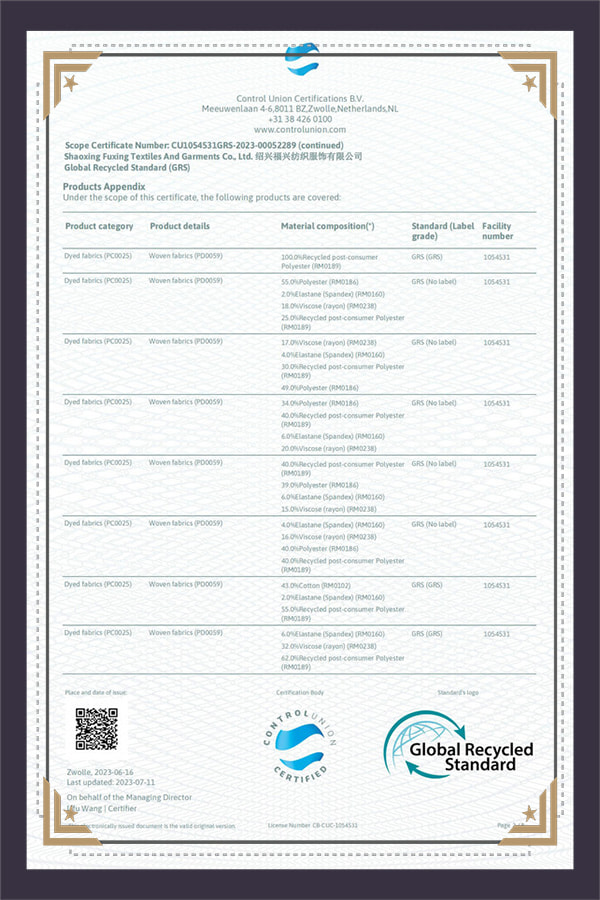
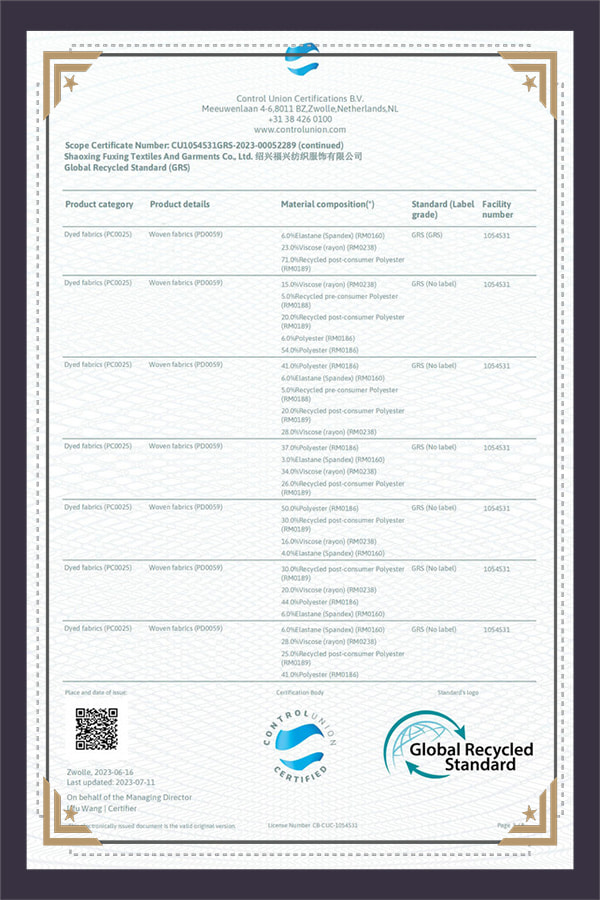
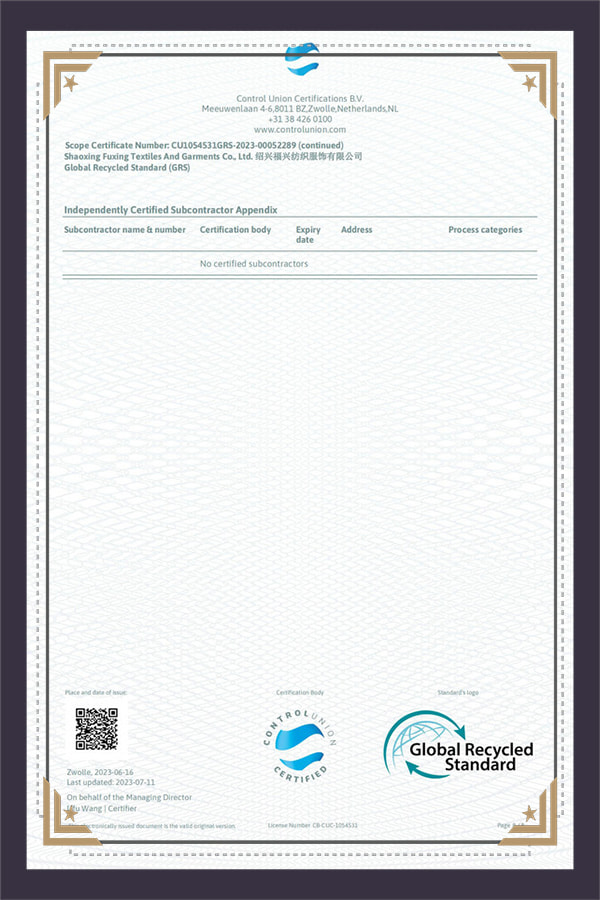
Certificate Of Honor
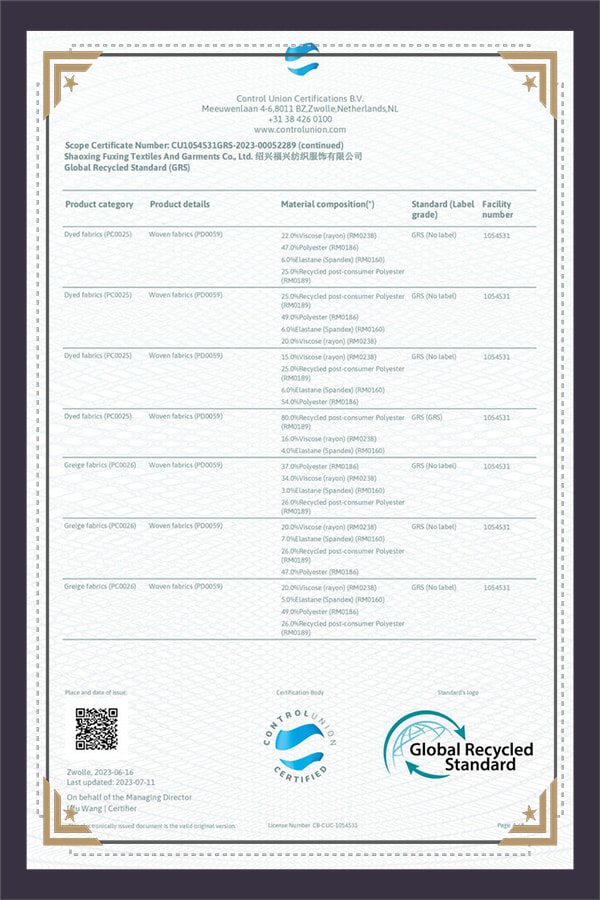
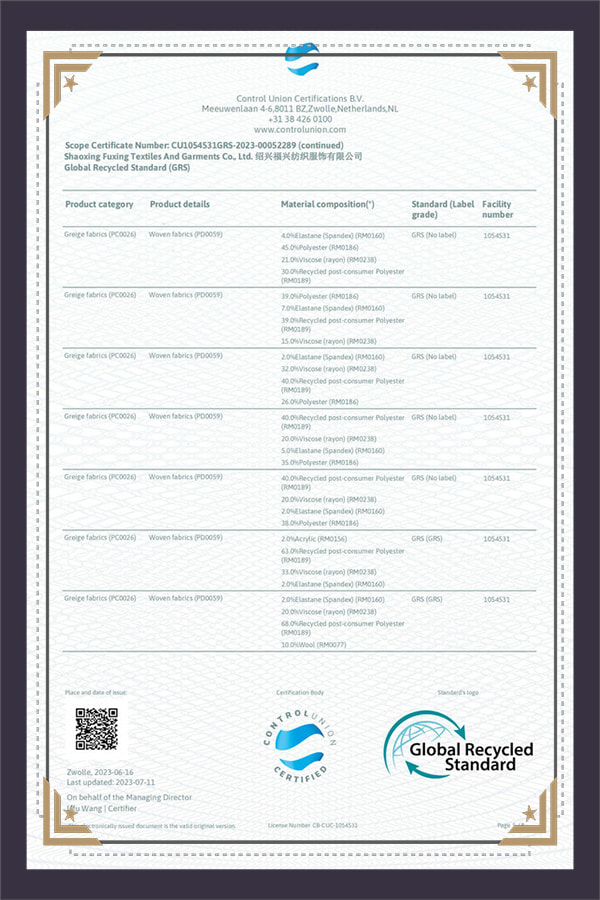
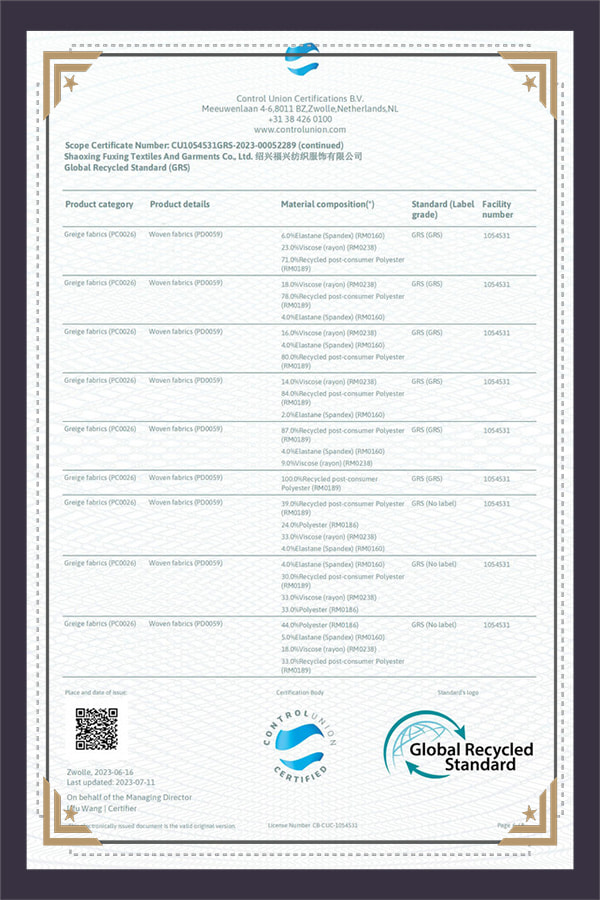
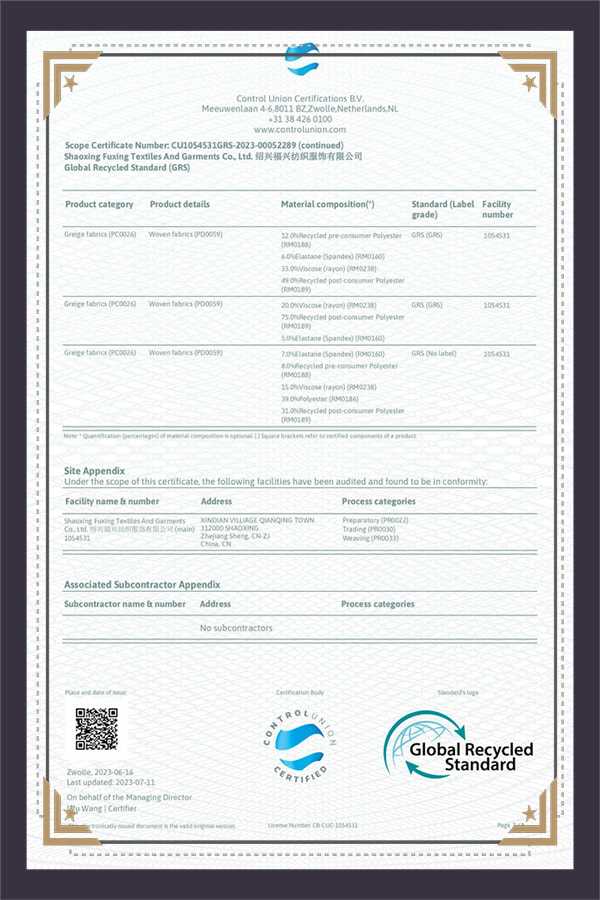
Yarn Dyed Fabric Industry knowledge
Fuxing Textile Technology Co., Ltd. is a Yarn Dyed Suiting Fabric manufacturer based in Keqiao, Shaoxing, China, producing woven fabric for women's tailoring. Founded in 2002, we operate a 50,000 square meter mill with 128 imported Italian rapier looms and a team of more than 150 people, and we supply over ten million meters of fabric a year to customers in more than 20 countries and regions. This yarn dyed range is built on polyester-rayon-spandex blends in stripes, checks and houndstooth, woven at 57/58 inches in weight bands that serve both warm-weather and cold-weather tailoring.
The qualities on the category are developed for structured womenswear: blazers, suits, trousers, skirts and waistcoats, plus office and workwear programs where the same cloth has to look correct across a large, repeated order. Pattern, weight and stretch are set per quality, and composition ratios, colors and pattern arrangements are developed against the garment a customer is actually building.
Yarn Dyeing as a Weave Decision
Patterns in this range are not printed onto finished cloth. The warp and weft yarns are dyed before weaving, and the stripe, check or houndstooth appears because differently colored yarns cross on the loom. Color runs through the yarn body and reads on both faces of the fabric, so a tailored garment keeps its appearance through cutting, pressing and repeated wear instead of exposing a pale core at a worn edge.
Yarn dyeing also changes where shade control happens. Color is fixed into the yarn lot before the loom, so the appearance of the finished roll depends on dye-lot discipline rather than on a final dye bath applied to greige cloth. That structure gives us a workable basis for matching a repeat order to the original shade, which matters when a blazer program is restocked a season later.
- Yarn dyed: pattern formed by the weave structure, color carried through the yarn, pattern readable on both sides, strong batch-to-batch consistency.
- Piece dyed: solid shades developed on woven greige cloth, the route for plain black, navy and fashion solids in our Piece Dyed Suiting Fabric range.
- Top dyed: fiber dyed before spinning, used where a deeper, melange-like color expression is wanted, as in our Top Dyed Suiting Fabric range.
Selected Qualities in the Yarn Dyed Range
The qualities below are running articles, each with its own construction, weight and stretch level, and they are a selection rather than the full range. The pattern family is the visible difference; hand feel, drape and recovery are set by the yarn ratio and weave underneath it.
| Quality | Pattern | Construction and composition | Garment fit |
|---|---|---|---|
| FX55936 | Stripe | Polyester / rayon / spandex woven | Tailored suiting, blazers and trousers |
| FX55051 | Stripe | TR (polyester / rayon) stretch woven | Suits and blazers |
| FX55478 | Stripe | Poly / viscose with stretch | Suits and blazers |
| FX55858 | Colorful stripe | TR spandex woven | Suits and blazers |
| FX55895 | Stripe | Viscose / poly twill with spandex | Ladies' suits and uniform styles |
| FX54372 | Houndstooth | Poly / rayon / spandex woven | Suits and uniform styles |
| FX55681 | Colorful houndstooth | TR spandex woven | Suits and uniform styles |
| FX55289 | Check | Polyester / rayon / spandex woven | Suiting, jackets and trousers |
| FX55682 | Check | TR poly / viscose with spandex | Uniform programs and formal styles |
| FX54237 | Check | Polyester / viscose with spandex | Uniform programs and suiting |
Stripes give the range its sharpest tailoring line and work well on trousers, skirts and waistcoats where a vertical direction is wanted. Checks and houndstooth carry more surface interest and are usually placed on blazers, jackets and full suits where the pattern is part of the design statement. A short twill float or a crepe-like surface finish sits behind several of these qualities and changes how light falls on the cloth.
Fiber Composition and What Each Component Does
Polyester, rayon and spandex are blended rather than simply mixed. Changing the ratio shifts softness, drape, breathability, dimensional stability and stretch recovery, so the same pattern family can be produced as a crisp tailoring cloth or a softer, more fluid one.
- Polyester carries dimensional stability, shape retention and durability, and it is the main reason these fabrics spring back after folding and pressing.
- Rayon (viscose) adds moisture absorption, a natural luster and a softer hand, which is what keeps a poly-rich suiting cloth from feeling dry or papery.
- Spandex is added in the weft, typically at 3-5 percent content, producing 15-25 percent moderate stretch so a fitted blazer or slim trouser moves with the wearer instead of pulling at the seams.
Stretch and Pattern Making
Because these qualities contain spandex, pattern allowances have to account for elastic recovery as well as for the base weave. Stretch behavior differs between qualities with different fiber ratios, so we supply samples for stretch testing before a pattern specification is locked, particularly on close-fitting trousers, fitted blazers and lined waistcoats where recovery affects seam stability.
Weight, Width and Seasonal Planning
All qualities are woven at 57/58 inches, which suits standard marker planning for jackets, trousers and skirts with limited waste at the selvedge. Weight is the main seasonal lever.
- 180-220 GSM: spring and summer tailoring, unlined blazers, lightweight trousers and skirts.
- 240-300 GSM: autumn and winter suiting where a fuller drape and more body are wanted in blazers, coats and structured trousers.
- Heavier weights hold a pressed edge and a clean shoulder line; lighter weights follow the body and are better suited to fluid, soft-tailored silhouettes.
Performance We Build and Test To
The qualities in this range are wrinkle-resistant finished, so a garment recovers its surface after normal wear and hanging without routine dry cleaning. Prolonged compression in packing or travel can still crease the cloth, and it relaxes again once unfolded.
- Pilling resistance of grade 3-4 to ISO 12945 on our T/R stretch fabrics, supported by yarn quality, weaving density and finishing control.
- Color fastness to grade 3, with yarn dyeing giving the shade stability that repeated laundering and pressing demand.
- In-house laboratory testing of abrasion, pilling, breaking and tearing strength, color fastness to washing, rubbing, light, perspiration and chlorine bleaching, plus dimensional stability and fiber composition analysis.
- Third-party test reports can be arranged where a destination market or brand standard requires them.
- Our products are made to comply with OEKO-TEX Standard 100.
Color Matching and Pattern Development
Color development starts from a Pantone reference or a physical color sample. We produce a lab dip for approval before bulk, and shade is then held through yarn dye lot control rather than corrected at the finishing stage. For programs with tight appearance standards, we agree a color deviation tolerance with the customer before the order is placed and build the production quality plan around it.
Pattern structure is a separate discussion from color. Stripe width, check scale and houndstooth repeat can be adjusted within weaving constraints, so some parameters move freely and others are limited by the reed and the loom setup. A reference image or a physical sample lets us assess feasibility and return a sampling plan rather than a general answer.
- In-house sample development center with sample weaving, sample warping and dyeing prototype equipment.
- Regular sampling within 5-12 days, covering composition adjustments, weave structure changes and color customization; urgent requests can be negotiated.
- Samples replicated from a customer's own reference cloth, or new designs developed from a brief.
Production Control from Yarn to Roll
Each meter passes through eight main production processes with at least three intermediate inspections, and production data is recorded in an ERP system so every batch stays traceable. The sequence runs from raw material procurement and incoming detection through warping, sizing, weaving, fabric inspection, post finishing, process monitoring and finished product inspection to packaging and warehousing.
Our 128 imported Italian rapier looms are dedicated to T/R stretch and functional woven fabrics, and annual output exceeds ten million meters. Bulk lead time is typically 25-30 days, with sampling and bulk scheduling planned together so a development round does not restart the clock on the production slot.
Fitting Notes for Womenswear Teams
Blazers and jackets take the check and houndstooth qualities, where a clean repeat across the panel and the sleeve head is the main technical concern. Trousers and skirts take the stripes and the finer checks, usually in the mid-weight band, where stretch recovery at the knee and seat determines how the garment holds its line through a working day.
- Suits and blazers: mid to heavy weights with enough body to support canvas and shoulder structure.
- Trousers and skirts: mid weights with 15-25 percent stretch for comfort in seated work.
- Waistcoats: tighter, more stable constructions where the cloth must sit flat under a jacket.
- Office and workwear styles: darker, tighter patterns and consistent shade across sizes and re-orders.
- Uniform programs: combined orders across colors and patterns within a series are supported, so a coordinated blazer, trouser and skirt range can be produced together.
Information We Use to Prepare Your Fabric Proposal
A quotation is only as precise as the brief behind it. These are the details that let us propose a specific quality, a composition ratio and a sampling route instead of a generic price band.
- Target garment and silhouette, including whether the cloth goes into a structured blazer, a soft jacket, trousers, a skirt or a waistcoat.
- Preferred composition, or the hand feel and stretch behavior you want the fabric to achieve.
- Weight in GSM and required width, with the season the collection is built for.
- Color references as Pantone numbers or physical swatches, and the number of colorways.
- Pattern direction: stripe width, check scale or houndstooth repeat, with a reference image or sample where one exists.
- Quantity per color and pattern, total order volume, and whether a series should be combined.
- Testing requirements and the destination market, so the right test protocol and documentation are attached.
- Delivery timing and shipping destination, plus packing and labeling instructions.
Questions We Answer Most Often
How does yarn dyed suiting differ from your piece dyed range?
In yarn dyed cloth the pattern comes from the weave and the color sits inside each yarn, so stripes, checks and houndstooth stay legible on both faces and resist surface abrasion. Piece dyed cloth is dyed as greige fabric and produces solid shades. Designers usually choose yarn dyed for pattern-led tailoring and piece dyed for plain black, navy or seasonal solids.
Can you match a stripe or check to our existing sample?
Yes, within weaving constraints. A physical sample or a clear reference image lets us assess stripe width, check scale and color sequence, then confirm which parameters can be reproduced exactly and which need adjustment to suit our loom setup. We return a sampling plan with the assessment.
What stretch level should we plan for, and how does it affect pattern making?
Spandex is added in the weft at typically 3-5 percent, giving 15-25 percent moderate stretch. Because recovery varies with the fiber ratio, pattern allowances should be set after stretch testing on the actual quality. We supply samples for that purpose before pattern specifications are finalized.
How do you keep shade consistent across a multi-color uniform order?
Color is managed at the yarn dyeing stage, which keeps deviation between batches small. For orders with strict appearance standards we agree a color deviation tolerance, for example a grey scale rating, before production and run the batch against that standard. Combined orders across colors and patterns in the same series are supported, with minimum order terms confirmed per style.
What are your sampling and bulk timelines?
Regular samples are delivered within 5-12 days, covering composition adjustments, structure changes and color customization, with urgent requests negotiable. Bulk lead time is typically 25-30 days. Minimum order quantity varies by style, and some qualities support orders from 1,500 meters per color, which suits small to medium development runs as well as larger programs.
Related Products and Categories
Our portfolio also includes Piece Dyed Suiting Fabric for solid shades and Top Dyed Suiting Fabric for fiber-dyed melange surfaces, both part of our wider women's suiting fabric range.

Can Supply Mature And Stable Products.
Choose Us, Contact Us
Choose Us, Contact Us
Contact Us
-

Tel: +86-575-81176657
+86-18857538666 -
 E-mail: martin@fuxing-tex.com
-
 Xindian Village, Qianqing Street, Keqiao District, Shaoxing City, Zhejiang Province, China.
Quick Links
Products
Get In Touch
Copyright © Shaoxing Fuxing Textile Technology Co., Ltd. All rights reserved. WholesaleYarn Dyed Fabric for Suits Supplier OEM/ODM Yarn Dyed Fabric for Suits Company
