 English
 中文简体
 日本語
 한국어
 русский
 Español

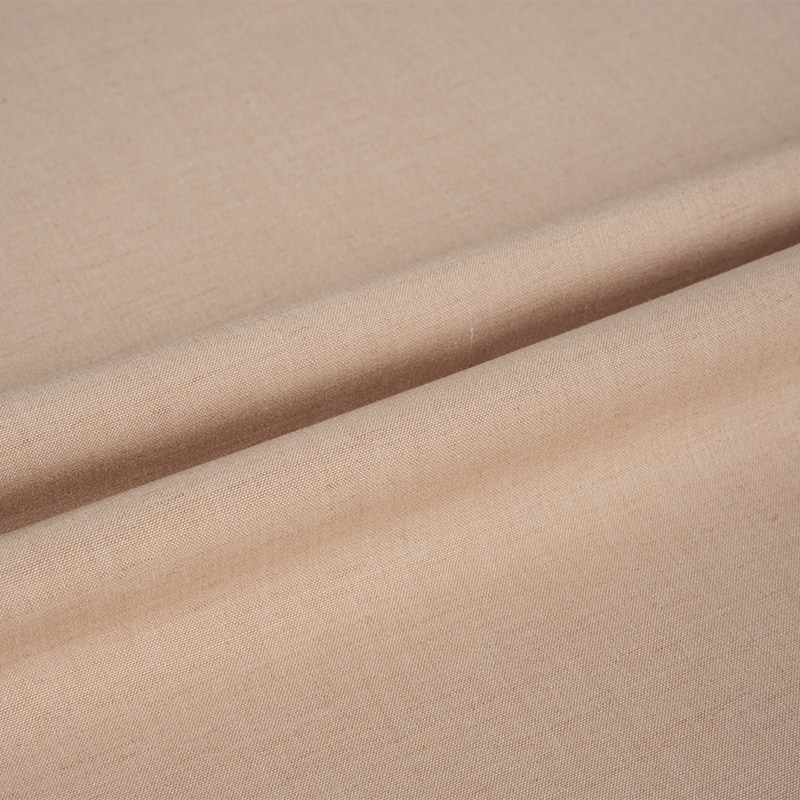
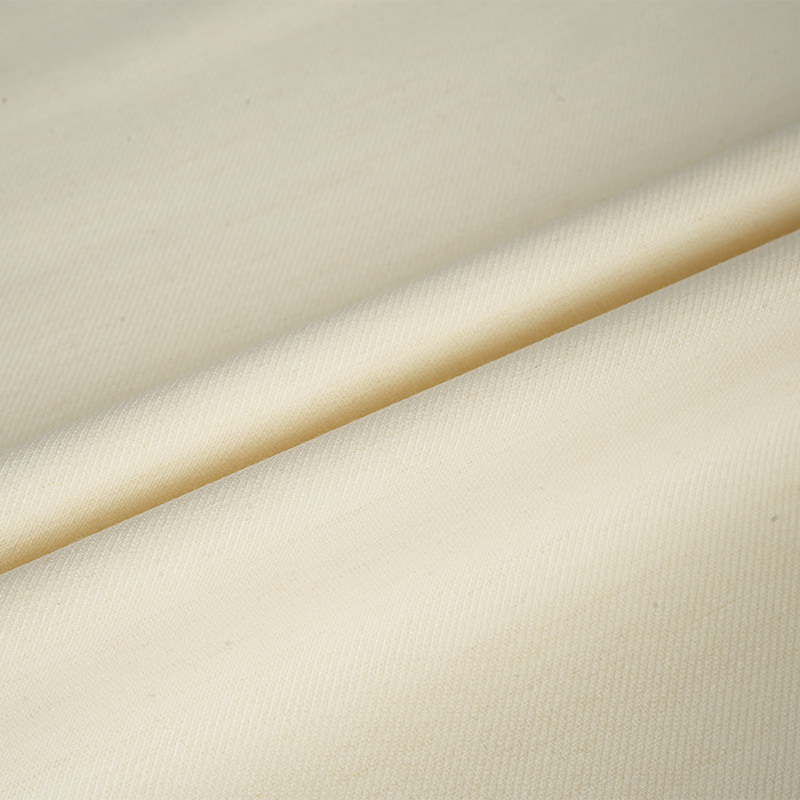
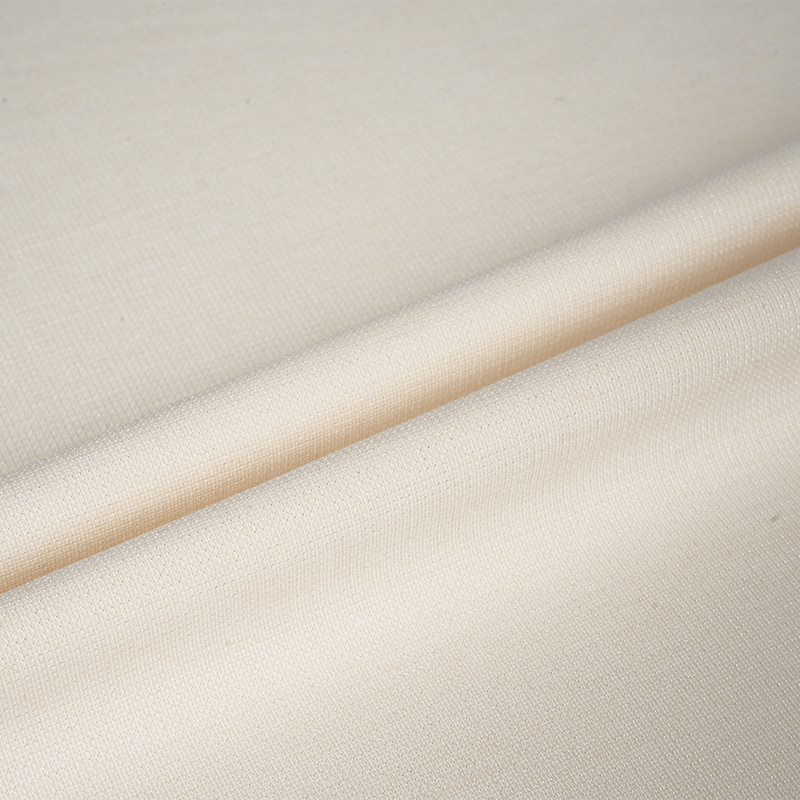
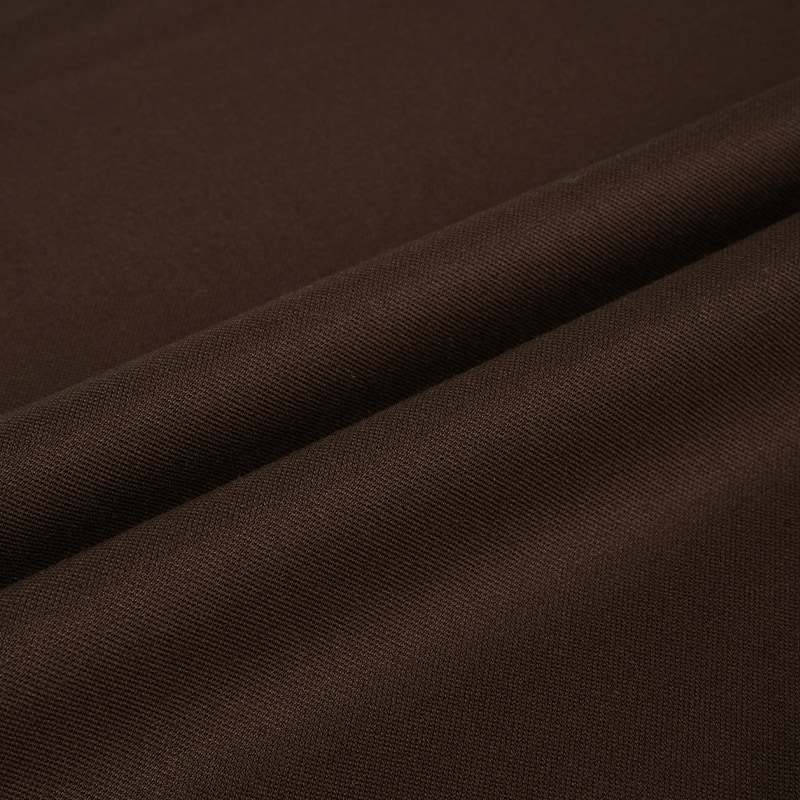
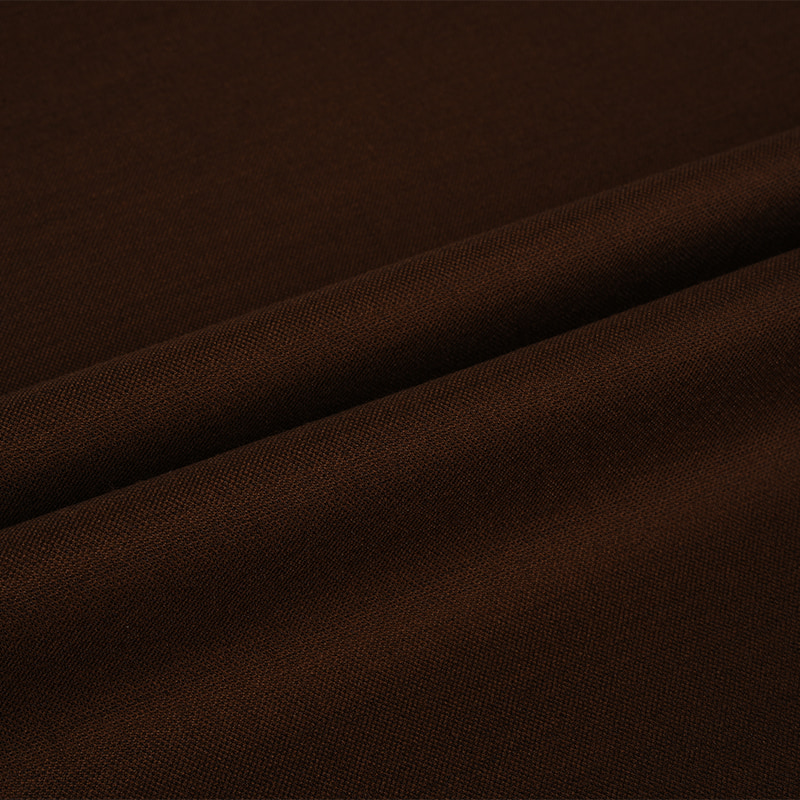
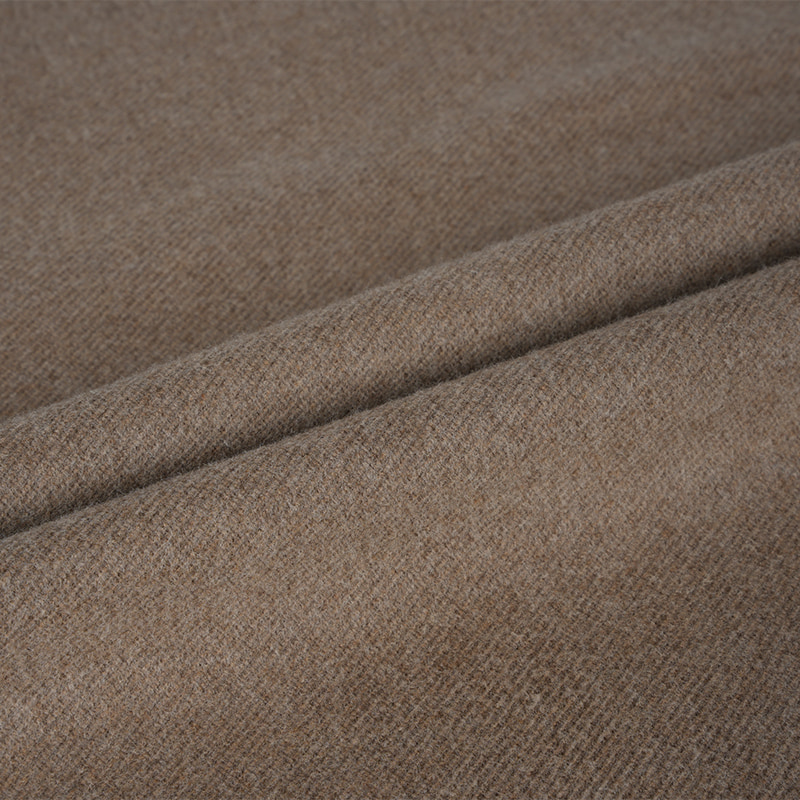
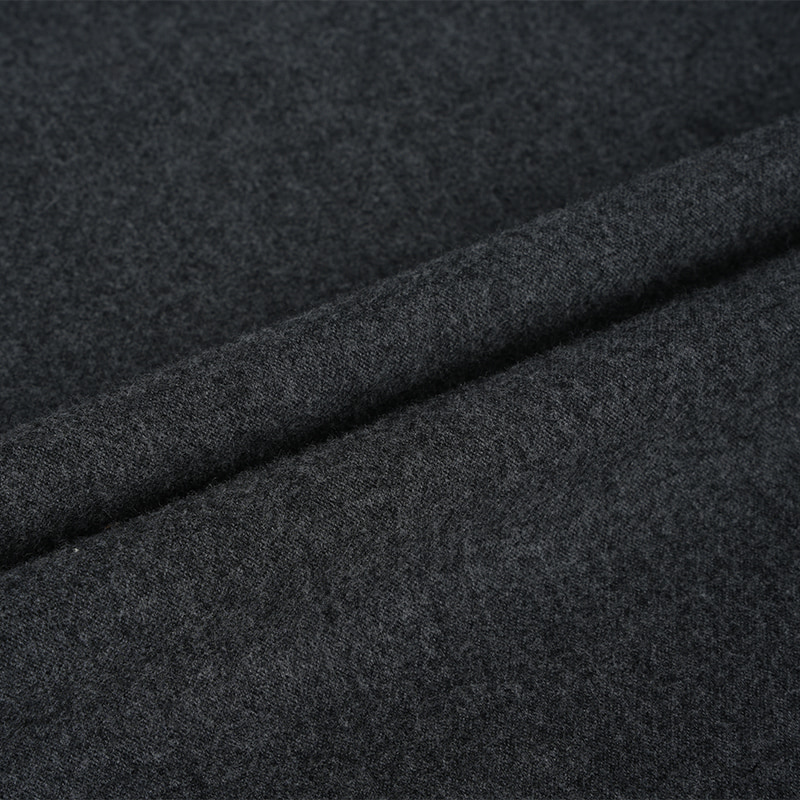
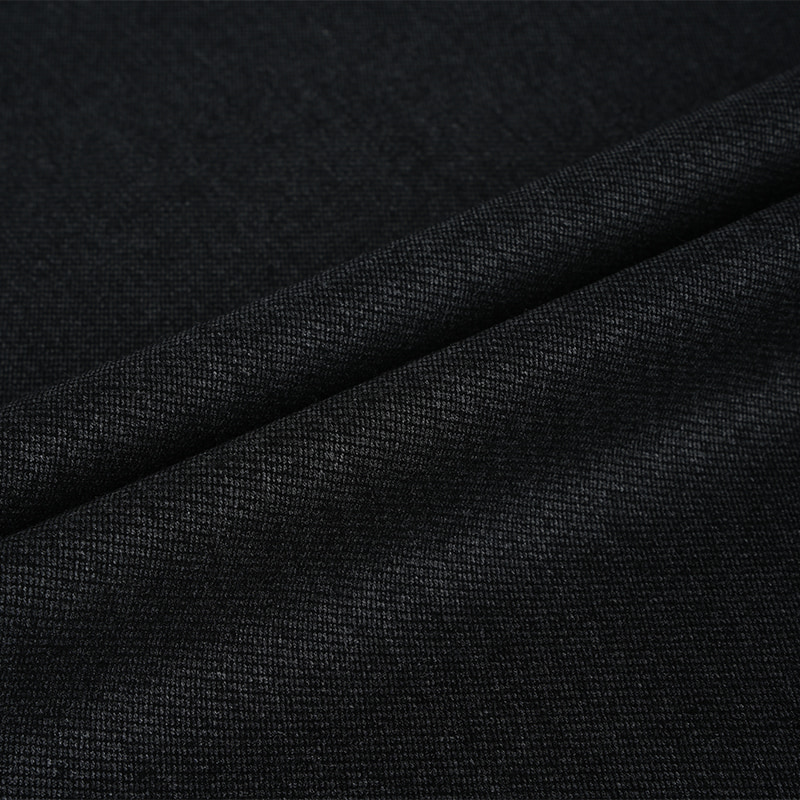
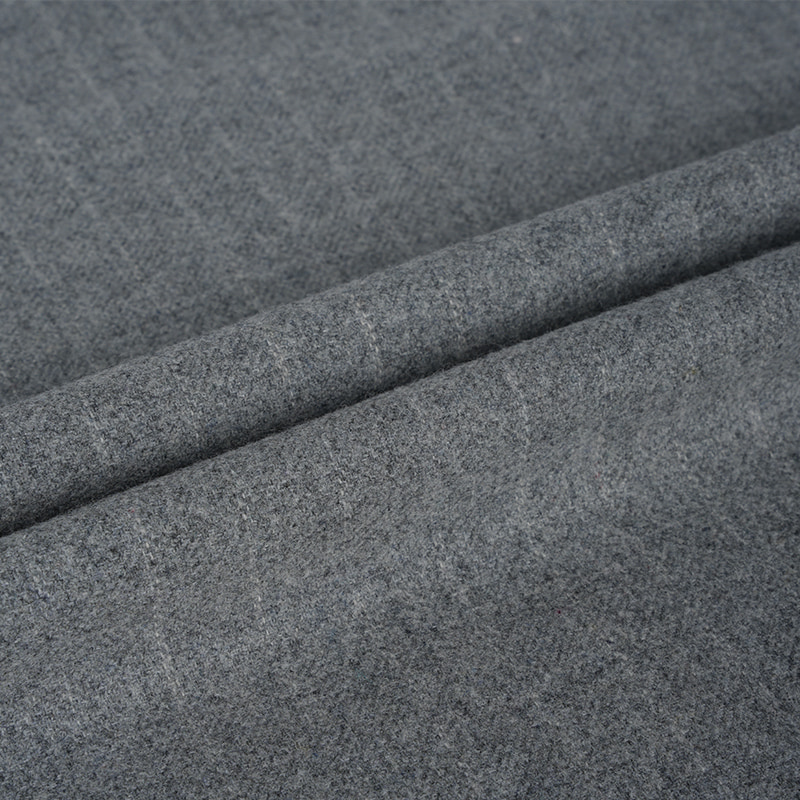
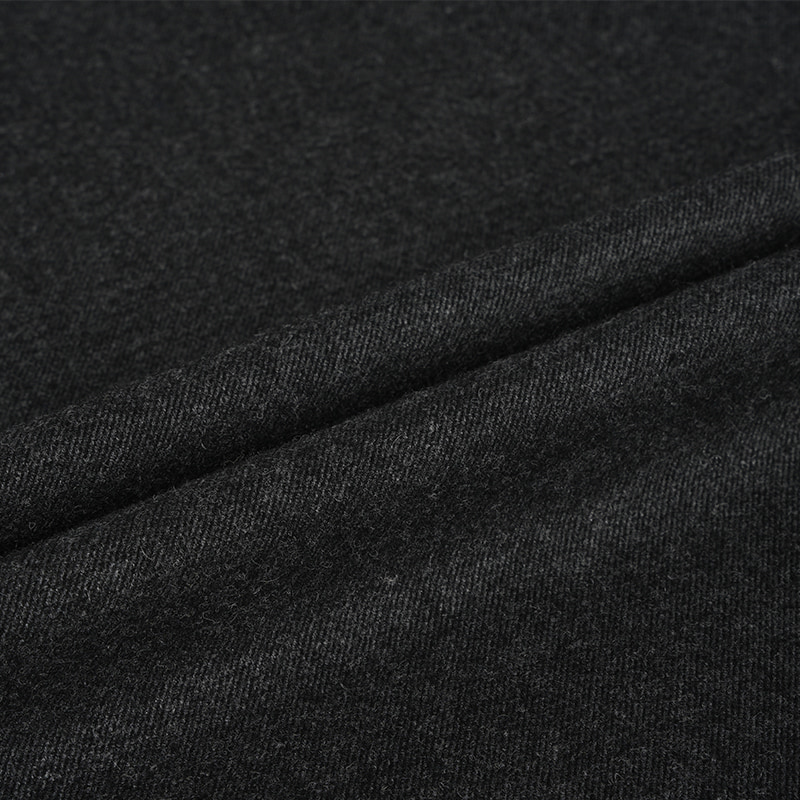
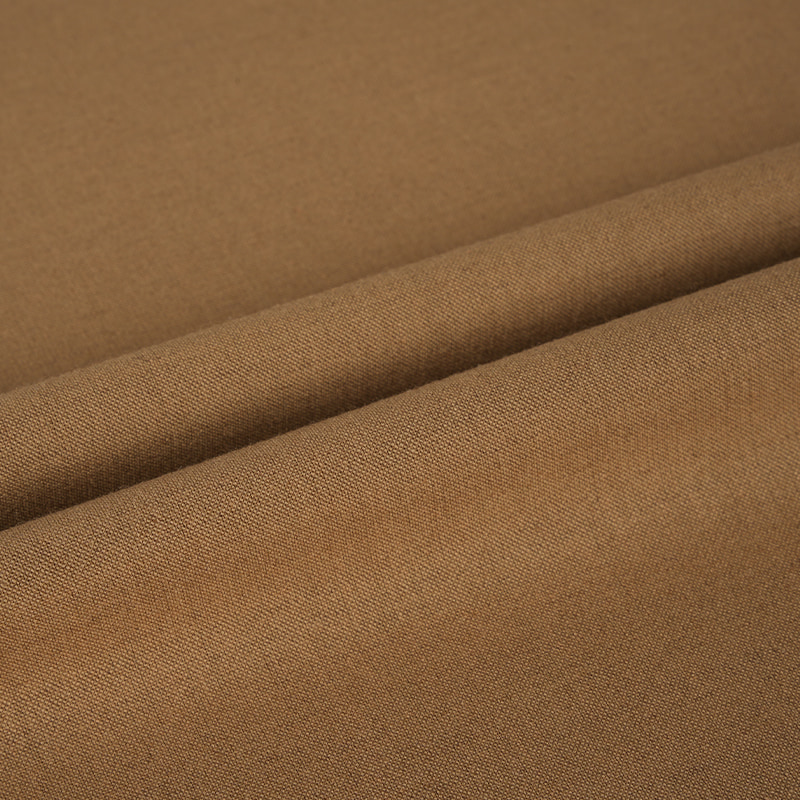
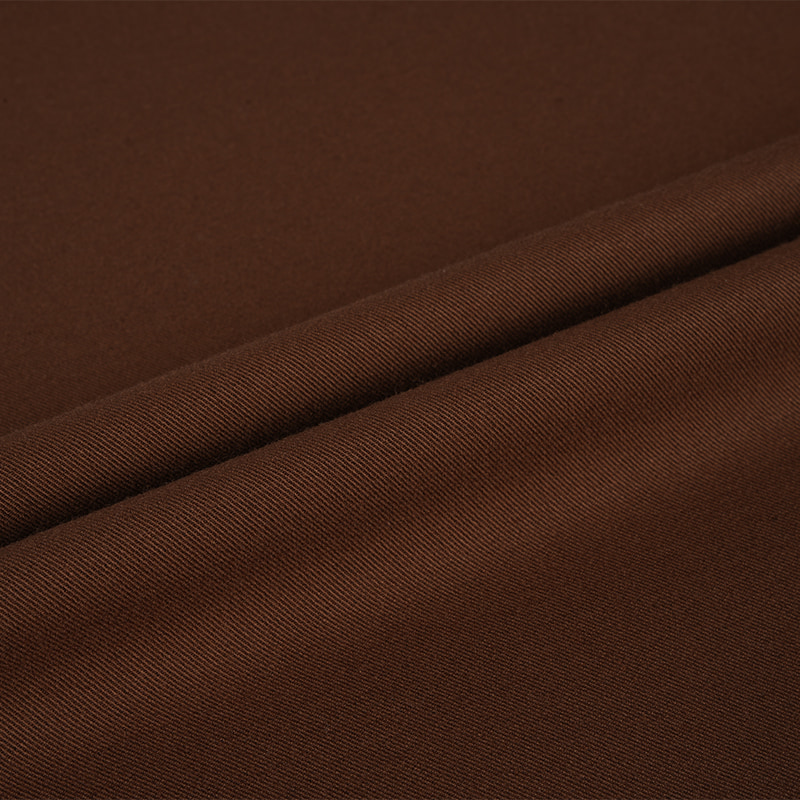
Shaoxing Fuxing Textile Technology Co., Ltd. was founded in 2002 and is located in Keqiao, Shaoxing — one of China‘s most dynamic textile hubs. We operate a 50,000㎡ modern facility equipped with 128 imported Italian rapier looms, supported by a dedicated team of 150+ professionals including textile engineers, quality control specialists, and customer service staff.
We are a specialized China Top Dyed Suiting Fabric Supplier and Top Dyed Poly Rayon Woven Fabric With Stretch Company, we deliver high-quality, professional-grade fabrics for suits, trousers, blazers, and uniforms. we deliver high-quality, professional-grade fabrics for suits, trousers, blazers, and uniforms. By controlling everything from yarn procurement to finished fabric, we guarantee consistent dye lots, reliable quality, and seamless re-orders.
With the innovation of science and technology, Fuxing Textile has developed more and faster and now we annually provide over 10 million meters of fabric for designers, brands, and terminal purchasers.

Top Dyed Fabric
Structured Comfort.
Woven for Real Life
Woven for Real Life
Our suiting fabrics combine shape retention with subtle stretch and wrinkle recovery. Engineered for blazers, trousers, and skirts that hold their form — wear after wear.
Top Dyed Suiting Fabric Supplier
Top Dyed fabric refers to yarn-dyed or fiber-dyed fabric, where the fibers or yarns are dyed before spinning, and then spun and woven into cloth. Unlike conventional reactive dyeing (where the grey fabric is woven first and then piece-dyed), top dyeing results in color formation within the fiber itself, naturally producing a blended texture, higher color fastness, and more consistent batch-to-batch color.
Fuxing Textile's Top Dyed fabric series focuses on polyester/rayon/spandex woven yarn-dyed fabrics, with men's suits, trousers, and corporate uniforms as the core direction. The series covers weights from 170–340 GSM, with standard wrinkle-resistant finishing and stretch design. Upgraded versions incorporating Modal, wool, linen, and other multi-fiber blends are also available to meet procurement needs across different seasons, markets, and price ranges.
Core Advantages
High Color Fastness
Fiber-level coloring; rubbing, perspiration, and wash fastness all reach Grade 3 or above; stable color consistency for long-term repeat orders.
Natural Blended Texture
Multi-colored fiber blending creates a fabric surface with fine natural patterns; professional color tones have richer visual depth compared to conventional solid dyeing.
Complete Stretch Specifications
Both 2-way and 4-way stretch available; spandex content 2%–6%; covers everything from traditional silhouettes to comfort-focused requirements.
Wrinkle-Resistant and Washable
Standard wrinkle-resistant finishing across the entire series; fast recovery after washing; suitable for high-frequency laundering of uniforms.
Wide Weight Range
Full coverage from 170–340 GSM; lightweight spring/summer options and heavyweight autumn/winter options within the same series; supports cross-season procurement.
Flexible MOQ
MOQ 1,500–2,000 m/color; once the minimum quantity is met for the full order, splitting across colorways is supported.
Product Coverage
| Series | Details |
|---|---|
| Standard TR Yarn-Dyed Series | Polyester/Rayon/Spandex base formula; weights 170–340 GSM; covering lightweight, medium-weight, and heavyweight ranges |
| Multi-Fiber Upgraded Series | Modal, wool, or linen added on top of TR base; each with distinct handle, luster, and breathability; suitable for mid-to-high-end positioning |
| 2-Way Stretch | Spandex content 2–4%; gentle stretch; good suit silhouette retention; suitable for formal garments |
| 4-Way Stretch | Spandex content 4–6%; greater freedom of movement; suitable for outerwear and professional wear with higher comfort requirements |
Application Scenarios
FAQ
What is the visual difference between top-dyed and reactive-dyed fabric?
Reactive dyeing colors the entire piece of grey fabric uniformly, resulting in solid, even color. Top dyeing blends multiple colored fibers before weaving, creating a natural blended texture on the fabric surface with richer color depth—but the color saturation is lower than reactive dyeing. If you need highly saturated, vivid solid colors, the reactive-dyed series is more suitable.
Can top-dyed fabrics be made in custom corporate colors?
Yes. Provide a Pantone color number or a physical color swatch and we will proceed with sampling.
How do I choose between stretch options in the series?
Low spandex content (2–3%) gives gentle stretch with a silhouette close to traditional suits, suitable for formal wear with strict fit requirements. Spandex at 4–6% provides noticeable stretch with greater freedom of movement, suitable for outerwear or professional wear that emphasizes comfort. 4-way stretch offers a greater range of motion than 2-way stretch, making it better suited for outerwear.
How does weight correspond to seasons and markets?
170–210 GSM is suitable for spring/summer or year-round tropical regions. 220–270 GSM is suitable year-round, especially for indoor air-conditioned professional wear. 310–340 GSM is suitable for autumn/winter or garments requiring a heavier feel. Specific recommendations depend on the target market's climate zone—requesting physical fabric swatches for comparison is the most direct approach.
Is the MOQ flexible?
MOQ per color is 1,500–2,000 m. Once the minimum quantity is met for the full order, colors can be split across colorways. For multi-color uniform projects, reasonable consolidation is possible. Please contact us to confirm specific consolidation plans.
How long does sampling take?
Standard sampling lead time is 7–12 days. Please contact us for specific confirmation.
Can you provide test reports or environmental certifications?
Yes. Standard color fastness and composition test reports are available. For export market certifications such as OEKO-TEX and REACH, we can assist with follow-up.
About Us
Shaoxing Fuxing Textile Technology Co., Ltd.
-
50,000㎡Factory Area
-
128+Imported Weaving Machine
-
150+Current Employees
-
20+Countries and Regions
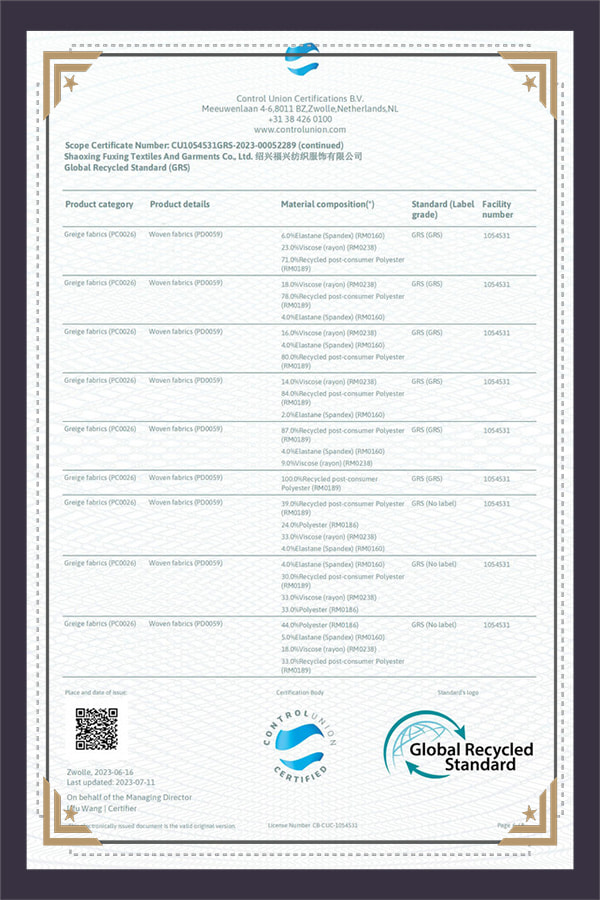
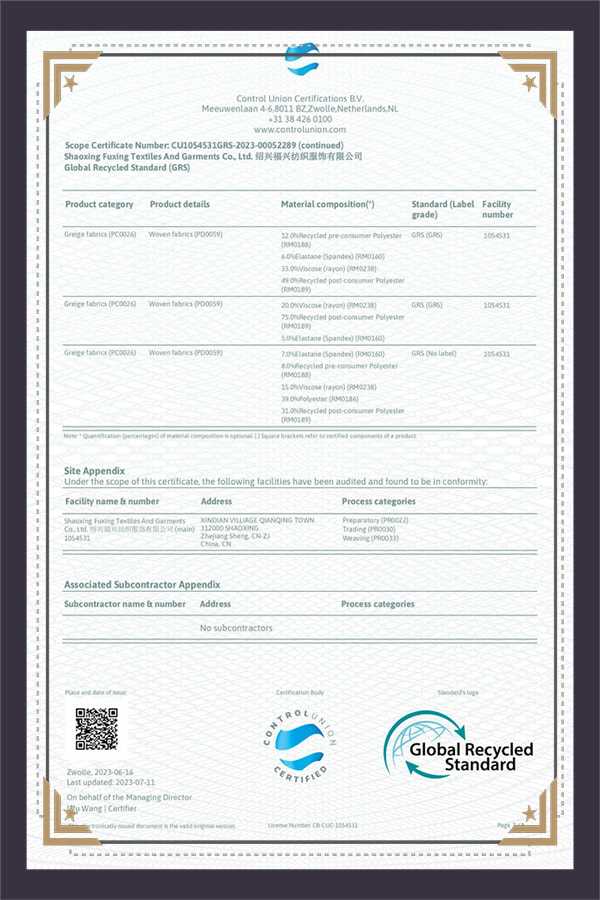
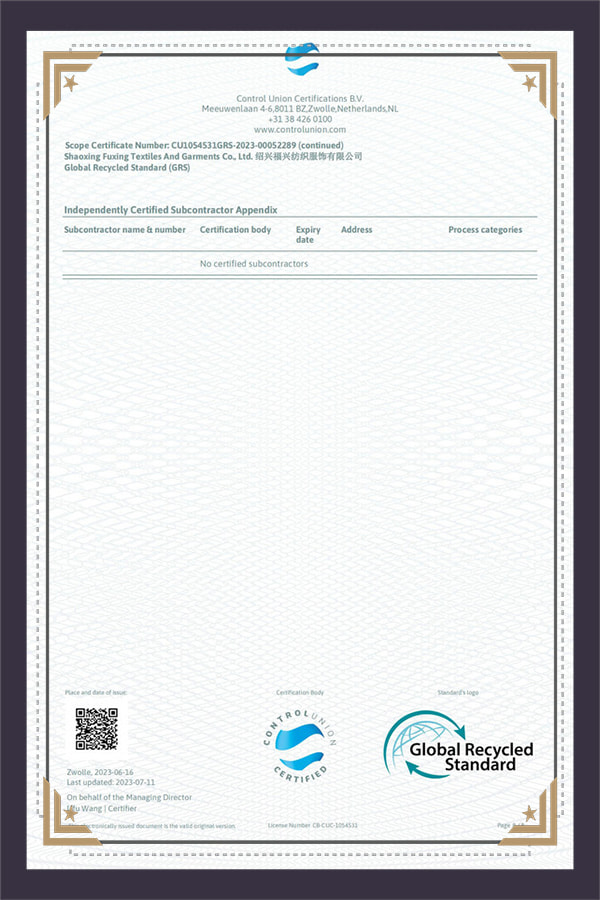
Certificate Of Honor
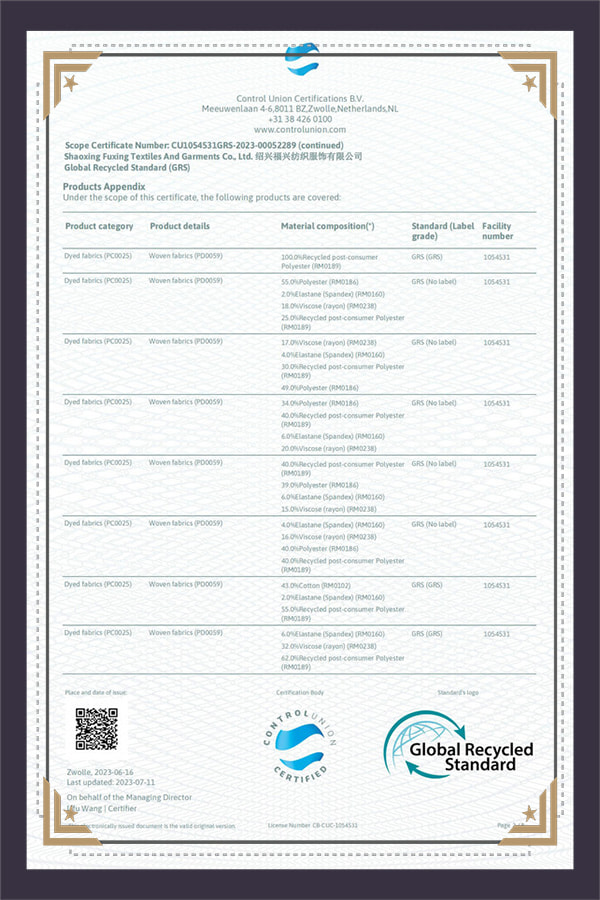
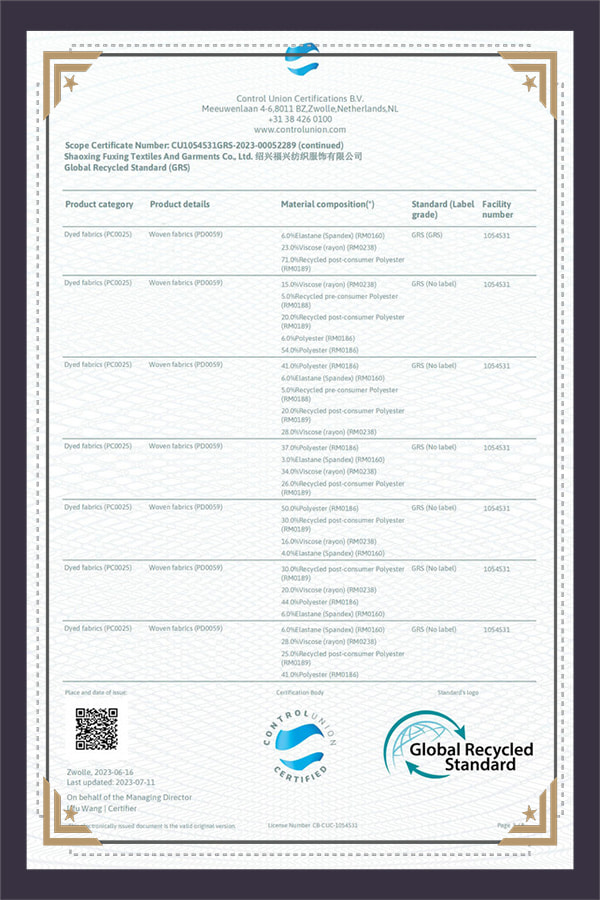
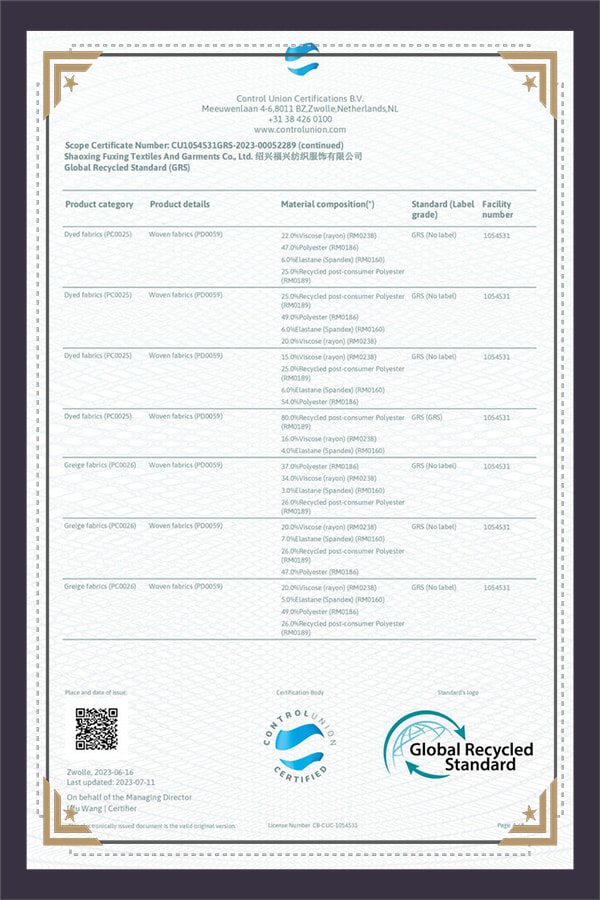
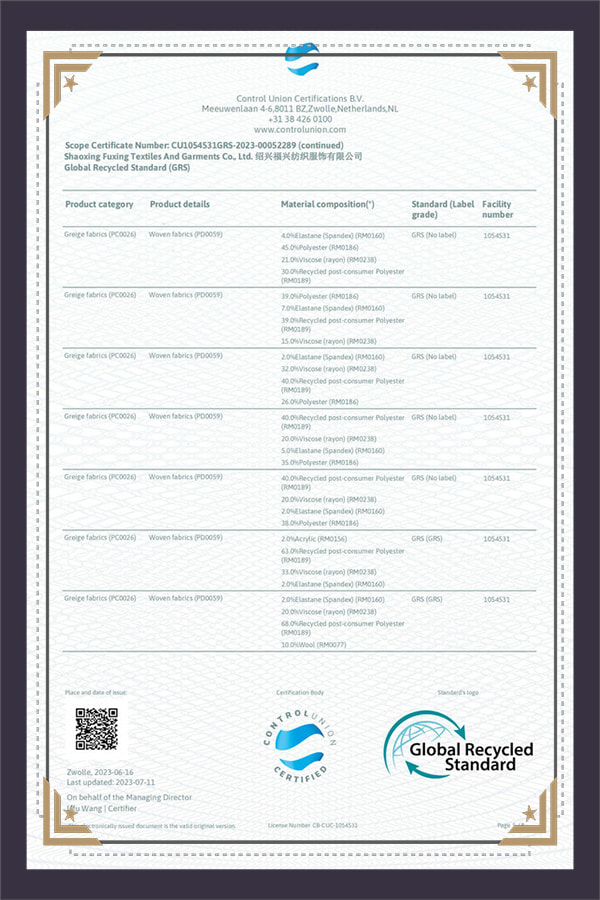
Top Dyed Fabric Industry knowledge
Fuxing Textile Technology Co., Ltd. was founded in 2002 and weaves in Keqiao, Shaoxing, on a 50,000 m2 site equipped with 128 imported Italian rapier looms and a team of more than 150. As a Top Dyed Suiting Fabric manufacturer, we produce fiber-dyed polyester/rayon/spandex wovens for tailored womenswear: blazers, suits, trousers, skirts and waistcoats, together with corporate and office uniform programs where the shade has to survive repeat ordering and repeated wear.
What Top Dyeing Changes in a Tailored Cloth
We dye the fiber before it is spun. Colored staple fibers are blended, spun into yarn and woven, so color sits inside the fiber rather than being applied to a greige cloth in a later dye bath. In a structured blazer or a crease-holding trouser, that shows as depth of tone, a fine melange character across the face, and a shade that withstands rubbing, perspiration and washing.
- Color fastness: grade 3 or above for rubbing, perspiration and wash across the series, which supports long repeat runs and uniform programs.
- Batch consistency: color is fixed at fiber stage, so shade holds from lot to lot far better than a piece-dyed equivalent.
- Surface depth: blending several colored fibers creates a naturally textured face with more visual depth than a flat solid.
- Wrinkle-resistant finishing: applied as standard across the series, with recovery after wear and washing.
Top dyeing reads softer in saturation than reactive piece dyeing. Where a design calls for a deep, vivid solid, we move the same base construction to our Piece Dyed Suiting Fabric route; where the design depends on woven-in stripes or checks built from dyed yarns, the Yarn Dyed Suiting Fabric group covers it. All three sit inside our Women's Suiting Fabric program.
The Top Dyed Range We Produce
Five families cover most tailored womenswear briefs, built on a polyester/rayon base with spandex for stretch and finished for shape retention. Weights run from 170 to 340 GSM, so a spring collection and an autumn program can be sourced from one mill and one color standard.
| Fabric family | Base construction | Weight | Typical garment fit |
|---|---|---|---|
| Standard TR top dyed | Polyester/rayon/spandex twill, plain or herringbone | 170-340 GSM | Blazers, trousers, waistcoats, skirts; corporate uniform suiting |
| Wool-blend TR | Polyester/rayon/wool with spandex | Mid to heavy | Structured blazers and suits, tailored skirts, heavier trousers |
| Modal-blend TR | Polyester/rayon/modal with spandex | Mid weight | Soft-drape blazers, wide-leg trousers, unlined jackets |
| Linen-blend TR | Polyester/rayon/linen with spandex | Light to mid | Spring/summer suits, unlined blazers, summer trousers |
| Heavyweight and patterned | Brushed, herringbone or check-effect TR with spandex | 310-340 GSM | Autumn/winter tailored coats, structured trousers, heavier skirts |
Stretch direction, surface effect and finish are set at specification stage, so a standard TR quality and a wool-blend quality can be developed against one color standard and one finishing brief across a collection.
Weight, Stretch and Seasonal Fit
Weight decides drape, opacity and how a garment reads in the hand. Our top dyed series spans three working bands that map directly onto collection seasons and destination climates.
| Weight band | Season and market | Typical garments |
|---|---|---|
| 170-210 GSM | Spring/summer; year-round in tropical climates | Unlined blazers, skirts, lightweight trousers |
| 220-270 GSM | Year-round, especially air-conditioned office wear | Suits, blazers, waistcoats, tailored trousers |
| 310-340 GSM | Autumn/winter | Tailored coats, structured trousers, heavy skirts |
Stretch is where comfort and silhouette meet. We engineer both options on the same woven base, with spandex content from 2% to 6% and typical elongation of 15-25% in the stretch direction, without bagging at knees or elbows.
- 2-way stretch, 2-4% spandex: gentle give with a silhouette close to a traditional tailored suit, for fitted jackets, waistcoats and narrow trousers.
- 4-way stretch, 4-6% spandex: a wider range of movement for slim trousers, travel suiting and workwear styles worn through a long shift.
Surface, Hand Feel and Finishing
Weave and fiber blend decide how the cloth behaves on the cutting table and on the body. A twill builds a clean diagonal line and holds a pressed crease; a plain construction gives a compact, even face for minimal tailoring; herringbone reverses the twill direction so the zigzag reads as texture at a distance rather than as pattern.
- Modal softens the handle and improves drape, which suits unlined blazers and fluid trousers.
- Wool adds body, recovery and a dry luster for structured jackets and tailored skirts.
- Linen brings a crisper, drier handle and breathability for spring and summer suiting.
Finishing carries the performance through the garment's life. Standard wrinkle-resistant treatment lets a jacket or trouser recover after a day of wear, with hanging overnight usually enough and low-temperature ironing sufficient where a sharper finish is wanted after laundering.
- Pilling resistance grade 3-4 to ISO 12945 on our T/R stretch qualities.
- Color fastness tested to washing, rubbing, light, perspiration and chlorine bleaching.
- Dimensional stability verified as shrinkage and distortion rate, alongside fiber composition analysis.
Color Development and Sampling
Custom color to Pantone or physical swatch
Uniform programs and brand collections rarely accept a stock shade. Send a Pantone number or a physical swatch and we develop the shade on the fiber-dyed route, keeping in mind that a top dyed cloth carries a natural melange character rather than the flat uniformity of piece dyeing. Where a target is a saturated solid, we say so at quotation stage and propose the piece-dyed route instead.
Sampling, OEM and ODM work
Our sample development center runs its own sample weaving machine, sample warping machine and dyeing prototype unit, so composition adjustments, structure changes and color work do not queue behind bulk production. Standard sampling runs 5-12 days.
- Replication of a customer reference fabric in our own construction and finish
- New weave and surface development, including herringbone, check-effect and brushed qualities
- Blend adjustment across TR, Modal, wool and linen versions of the same base cloth
OEM and ODM programs are handled through the same channel, with the approved sample acting as the quality reference for bulk.
Quality Control and Test Documentation
Every meter passes eight main processes and at least three intermediate inspections, with production data recorded in an ERP system so each batch stays traceable from yarn through to finished roll.
- Raw material detection before warping, sizing and weaving
- Fabric inspection after weaving, then again after post-finishing
- Finished product inspection before packaging and warehousing
- In-house laboratory checks on abrasion, pilling, breaking and tearing strength
Standard color fastness and composition test reports accompany top dyed orders. For export programs we assist with OEKO-TEX and REACH follow-up, and third-party reports can be arranged where a brand or retailer specifies them.
Order Configuration, Minimums and Lead Time
Top dyed orders start at 1,500-2,000 m per color. Once the full order meets that minimum, we split it across colorways, which keeps a multi-color uniform or collection program inside a single production batch and a single shade standard. Bulk lead time is 25-30 days, against annual output of more than 10 million meters serving customers in 20+ countries and regions.
- Colorway plan and quantity per shade, checked against the minimum
- Finish confirmation: standard wrinkle-resistant, or an added handle or surface effect
- Roll packing and roll identification agreed at order confirmation
- Shipping documents and delivery window fixed when the order is placed
Information We Use to Prepare a Fabric Proposal
A workable proposal comes from a small set of inputs. We use the following to select the base quality, set the finish, price the colorways and schedule sampling.
- Target garment and style: blazer, suit, trouser, skirt, waistcoat or uniform, and whether it is lined or unlined
- Composition direction: standard TR, or a Modal, wool or linen upgrade
- Weight band and season, with the climate of the destination market
- Required cuttable width and roll length
- Stretch direction and level, and the movement the garment needs to allow
- Color reference: Pantone number or physical swatch, number of colorways, and whether lab dips are required
- Quantity per color and total order quantity
- Test requirements: fastness grades, pilling, shrinkage, composition report, OEKO-TEX or REACH documentation
- Delivery window and destination
- A reference fabric or garment sample where an existing quality is being matched
Where a fabric is being replaced, a cutting of the current cloth tells us more about weight, stretch and hand than any written description, and it shortens the sampling round considerably.
Frequently Asked Questions
How does top dyed suiting differ from piece dyed suiting?
Top dyeing colors the fiber before spinning, so the shade is built into the yarn and then woven into cloth. Piece dyeing weaves a greige first and dyes the finished fabric in one uniform bath. Top dyed cloth carries a blended, slightly melange surface with strong fastness and tight lot-to-lot consistency; piece dyeing gives higher saturation on vivid solid shades.
Can you develop a custom color for a uniform or collection program?
Yes. A Pantone reference or a physical swatch is enough to begin, and we develop the shade on the fiber-dyed route with sample cloth for approval. Standard sampling runs 5-12 days, and the approved sample becomes the shade and hand reference for bulk.
Which weight suits a year-round women's suit program?
220-270 GSM is the usual choice for year-round tailoring, particularly for indoor air-conditioned office wear where a suit is worn through the working day. For tropical markets or spring/summer collections, 170-210 GSM gives a lighter, cooler blazer or trouser, while 310-340 GSM is reserved for autumn/winter coats and heavier tailored pieces.
What is the minimum order and can it be split across colors?
The minimum is 1,500-2,000 m per color. Once the total order meets the minimum quantity, we split production across colorways, which is how multi-color corporate uniform programs are normally structured. Consolidation plans are confirmed with the quotation.
What testing documentation supports a top dyed order?
Standard color fastness and composition test reports are issued with top dyed production, supported by in-house checks on pilling, abrasion, breaking and tearing strength, shrinkage and distortion. T/R stretch qualities are tested to pilling grade 3-4 under ISO 12945, and we assist with OEKO-TEX and REACH follow-up for export markets.

Can Supply Mature And Stable Products.
Choose Us, Contact Us
Choose Us, Contact Us
Contact Us
-

Tel: +86-575-81176657
+86-18857538666 -
 E-mail: martin@fuxing-tex.com
-
 Xindian Village, Qianqing Street, Keqiao District, Shaoxing City, Zhejiang Province, China.
Quick Links
Products
Get In Touch
Copyright © Shaoxing Fuxing Textile Technology Co., Ltd. All rights reserved. WholesaleTop Dyed Fabric for Suits Supplier OEM/ODM Top Dyed Fabric for Suits Company
