 English


Wrinkle-Resistant Suiting Fabric: Why Crepe and Twill Hold Shape
Why Do Crepe and Twill Hold Their Shape?
Crepe and twill resist wrinkles for three reasons that work together: a high polyester content that springs back after folding, a woven structure that hides or breaks up creases, and a finish that supports recovery. In the Fuxing range the wrinkle-resistant suiting fabrics are polyester-rayon-spandex blends, and the page for FX50226 says its 75% polyester gives stronger wrinkle resistance and shape stability than standard TR fabrics.
The Three Things Behind Wrinkle Resistance
Fiber
Polyester is resilient and recovers from folding. Rayon feels soft and drapes well but creases easily on its own. Blending the two balances comfort and shape.
Structure
Twill has a diagonal rib that gives body. Crepe has a pebbled, textured surface that breaks up light and so hides creases.
Finish
A wrinkle-resistant finish supports recovery, and the product pages describe the fabrics as easy to maintain.
No single factor does the whole job. A fabric with a good weave but little polyester will still crush, and a polyester-rich plain weave will still show hard creases.
How Crepe Hides and Recovers From Creases
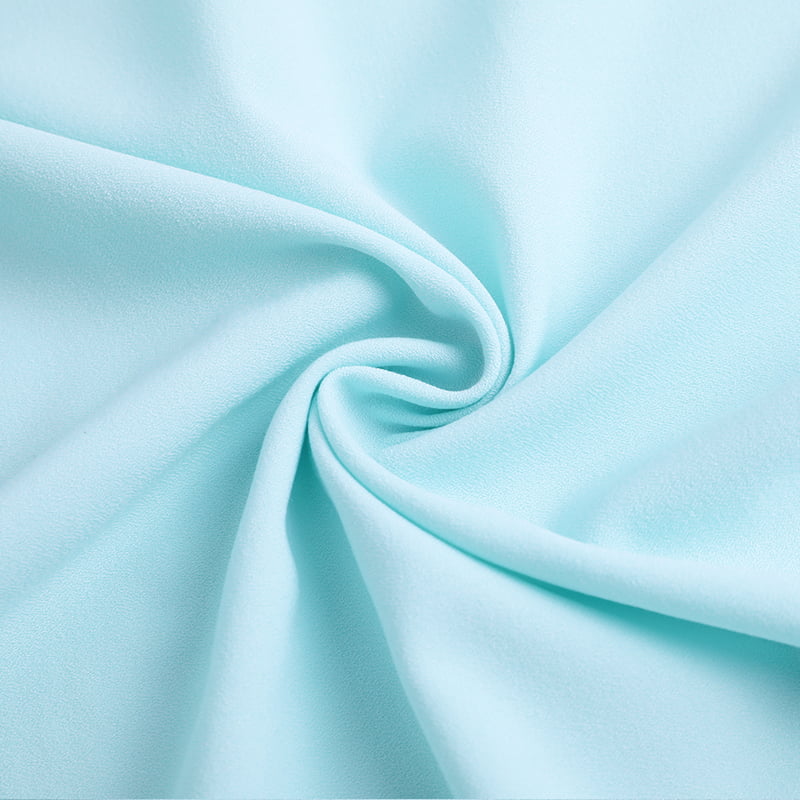
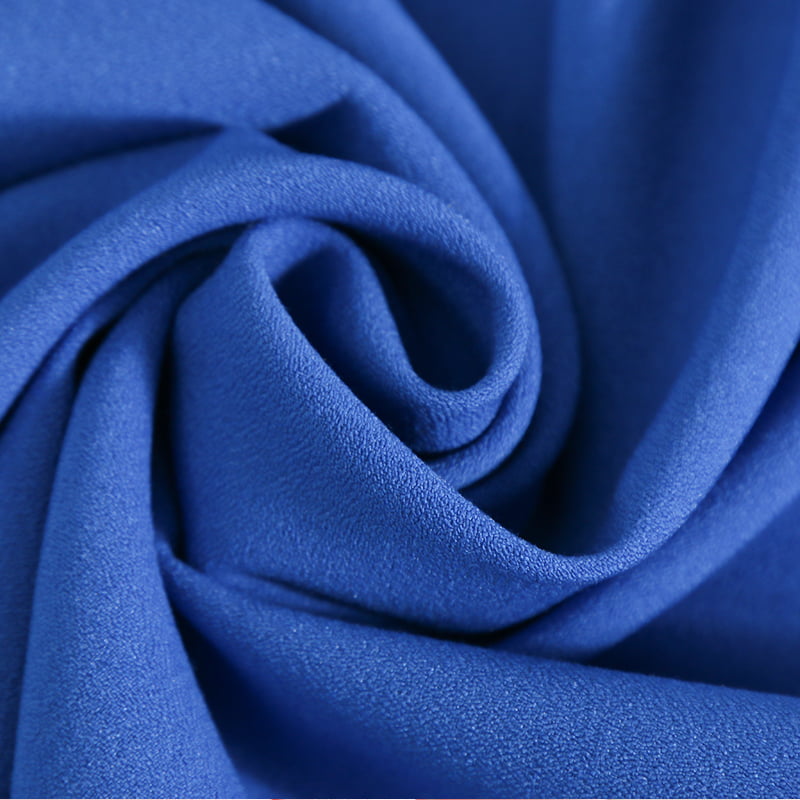
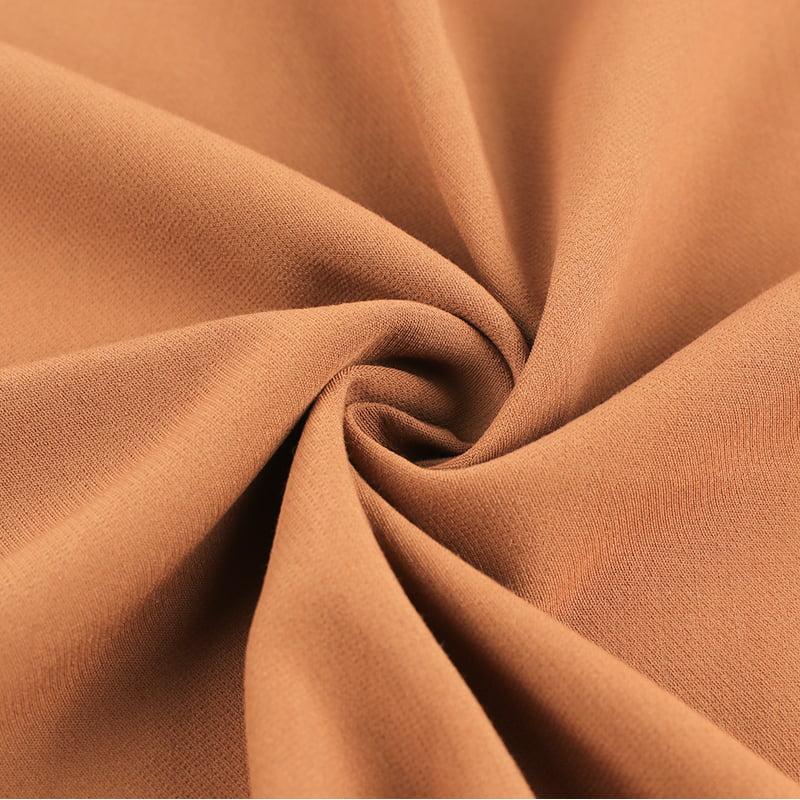
Crepe fabrics have a slightly rough, pebbled surface instead of a smooth one. Because the surface is already irregular, a new fold does not show up as sharply as it would on a flat satin or plain weave. Crepe also tends to drape softly, which is why it is used for women's suiting and outerwear.
Within the range, FX50226 is a reactive-dyed poly rayon crepe with 4-way stretch, listed at 200 GSM and described as soft and elastic with good drape. FX50182 is a plain-dyed TR suiting crepe at 220 GSM, with polyester, rayon and spandex, wrinkle resistant and easy to maintain. The product pages name crepe but do not describe the yarn twist, so treat the texture notes above as general crepe behavior.
How Twill Builds Body and Holds a Crease Line
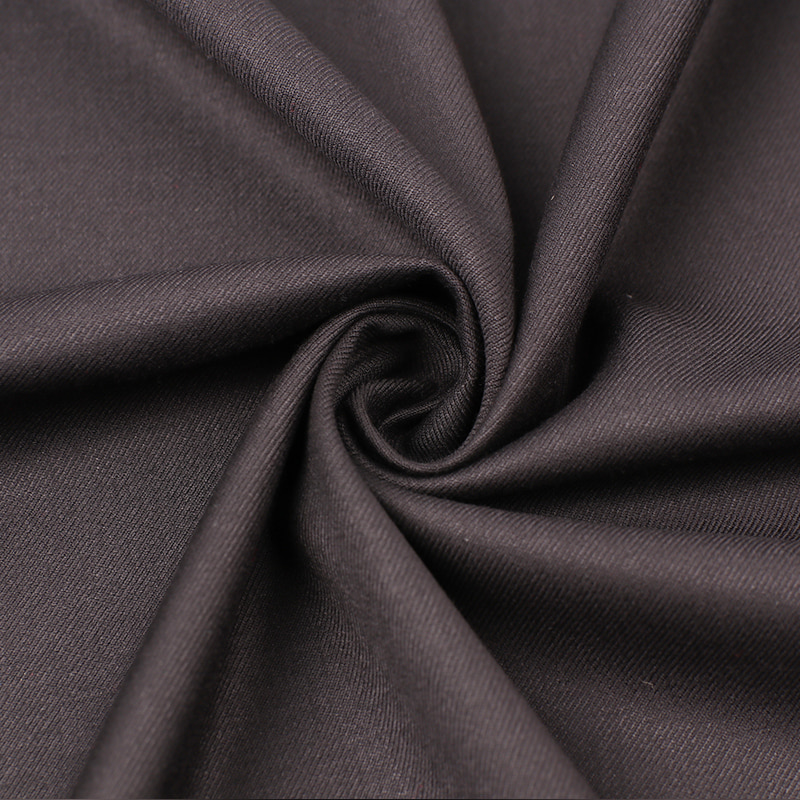
Twill is made by passing the weft over one warp yarn and under two or more, then stepping the pattern across to form a diagonal line. That diagonal makes a fabric that is dense, supple and resistant to wear, and it gives suits and trousers a clean, structured look.
Two twill fabrics in the range show how weight changes the effect. FX50388 is a polyester viscose twill at 265 GSM, described as moderate body and suited to garments needing structure, such as pants and blazers. FX54218 is a double-weave polyester rayon 4-way stretch twill at 280 GSM, with a double-layered organization that the page says gives more visual body and structural integrity than single-layer fabrics of the same weight.
Wrinkle-Resistant Suiting Fabrics at a Glance
| Product | Structure | Composition | Weight | Notes |
| FX50226 | Crepe | 75% polyester, 20% rayon, 5% SP | 200 GSM | 4-way stretch, soft and elastic |
| FX50182 | Crepe | 65% polyester, 30% rayon, 5% spandex | 220 GSM | Light and balanced, good drape |
| FX50388 | Twill | 65% polyester, 32% rayon, 3% spandex | 265 GSM | Moderate body, wrinkle-resistant finish |
| FX54218 | Double-weave twill | 74% polyester, 20% rayon, 6% SP | 280 GSM | 4-way stretch, good breathability |
Which Fabric Suits Which Garment
Lighter crepe for flowing pieces
At 200 to 220 GSM, the crepe fabrics suit outerwear, blazers and year-round indoor professional wear. FX50182 is described as suited to spring and autumn outerwear.
Mid-weight twill for structure
At 265 to 280 GSM, the twills give pants, blazers and trousers more body and a firmer line, which is what buyers want from tailored pieces.
For colder seasons, the wool-blend suiting options add warmth and weight. See our women's suiting range for the full list, and our guide on how to choose suit fabric by season.
Fabric Weight and Wrinkle Behavior
Weight changes how a fabric folds as well as how it looks. Lighter fabrics drape and flow, but a fold can sit in the surface more easily. Heavier fabrics resist sharp creasing because the yarns are thicker, but they feel firmer and warmer.
| Weight Range | Typical Behavior | Fits From the Range |
| 200 to 220 GSM | Light and flowing, softer drape | FX50226, FX50182 |
| 265 GSM | Moderate body, holds structure | FX50388 |
| 280 GSM | More body and visual structure | FX54218 |
| 310 GSM | Heavier, warmer, for autumn and winter | Wool-blend suiting such as FX55642 and FX54869 |
The 310 GSM options are polyester-rayon-wool blends with a wrinkle-resistant finish and a sense of drape, aimed at autumn and winter suiting.
Wrinkle Resistant, Wrinkle Free and Easy Care: What the Terms Mean
Labels are used loosely in the trade, so ask what each one means for your order.
- Wrinkle resistant: the fabric resists creasing and recovers well. The product pages use this term for FX50226, FX50388 and others.
- Easy to maintain: the fabric needs little ironing or special care. The pages use this phrase alongside the wrinkle-resistant claim.
- Shape stability: the garment keeps its cut over long wear, which the FX50226 page ties to its polyester content.
None of these terms replaces testing. If wrinkle performance is critical to your program, ask for a test result on your own color and weight.
Browse the Crepe and Twill Fabrics
What to Specify When You Order
- Composition and weight: pick the blend and GSM that fit your garment and season.
- Width: the four fabrics here are 57/58 inches.
- Dyeing: plain dyed or reactive dyed. Reactive dyeing gives depth in dark colors and stable batch-to-batch color on FX50226.
- Lead time: the four fabrics list 25 days on their product pages.
- Colors and customization: the crepe and double-weave twill pages mention customizable colors.
- Order quantity: MOQ varies by item, so confirm per color and per order before you plan.
Send a swatch or a reference garment with your request so the supplier can match the weave, weight and color.
Common Suiting Problems and How Fabric Choice Helps
| Problem | Why It Happens | What Helps |
| Hard creases after sitting | Low polyester content, flat smooth surface | Higher polyester blends, crepe texture |
| Garment loses shape at the knees and elbows | Low recovery in the yarns | Spandex content and resilient polyester |
| Looks flat and limp | Fabric too light for the cut | Mid-weight twill with body |
| Color fades or varies between lots | Weak dyeing control | Reactive dyeing for stable batch-to-batch color |
| Feels stiff or hot | Heavy synthetic fabric without breathability | Rayon content for breathability and moisture absorption |
Rayon in the blend is credited on the FX54218 page with good breathability and moisture absorption, which balances the polyester that does most of the wrinkle work.
How to Check Wrinkle Resistance on a Swatch
Before you commit to a bulk order, test the swatch yourself. A simple hand test shows how the fabric recovers.
Hold a swatch in your fist and squeeze firmly for about 30 seconds.
Open your hand and watch how many creases remain and how sharp they are.
Wait a minute and look again. A good fabric relaxes noticeably without ironing.
Fold the swatch sharply and press it, then check whether the crease line fades or stays.
Compare your result against a standard TR sample from the same supplier.
Request samples before ordering. The site lists regular sample lead times of 5 to 12 days and the first sample as free, with shipping collect.
Care Tips That Keep Suiting Looking Sharp
- Hang soon after wear. Let the fabric relax on a hanger instead of folding it.
- Steam, do not press hard. Light steaming relaxes any remaining creases.
- Follow the care label. Polyester-rayon blends with spandex are best treated gently.
- Store without crushing. Give the garment room in the wardrobe.
For uniform and workwear programs, easy maintenance is a selling point on its own. The FX50388 page notes that a wrinkle-resistant finish that is easy to maintain reduces care costs, which matters when hundreds of garments are laundered on a schedule. Choose the blend with that cost in mind, not only the look on the hanger.
Frequently Asked Questions
What makes suiting fabric wrinkle resistant?
A mix of resilient polyester fiber, a woven structure such as crepe or twill, and a wrinkle-resistant finish. The three work together.
Is crepe or twill better at resisting wrinkles?
Neither wins every time. Crepe hides creases with its textured surface, and twill holds shape through its dense diagonal structure. Polyester content and finish matter as much as the weave.
Does stretch help wrinkle resistance?
Spandex helps a garment recover its shape in wear. Several of these fabrics include spandex, though the product pages do not give stretch percentages for each item.
Where can I see these fabrics?
The wrinkle-resistant crepe and twill options are in the women's suiting range, and you can request swatches for testing.
- Why Choose Woven Polyester Rayon Spandex Blend Stretch Suiting Fabric?
- Why has Colorful Houndstooth Yarn Dyed Customize Design Tr Spandex Fabric become a shining star in the textile industry?
- How does Reactive Dyed Wrinkle Resistant Poly Rayon Wool Blend Fabric achieve durability, softness and fashion?
- Why Is Dyed Poly Rayon Woven Fabric With Stretch Becoming a Preferred Choice for Activewear?

Choose Us, Contact Us
-

Tel: +86-575-81176657
+86-18857538666 -
 E-mail: martin@fuxing-tex.com
-
 Xindian Village, Qianqing Street, Keqiao District, Shaoxing City, Zhejiang Province, China.
Copyright © Shaoxing Fuxing Textile Technology Co., Ltd. All rights reserved.
