
 English
 中文简体
中文简体 日本語
日本語 한국어
한국어 Español
 русский
Content
A tailoring workshop that receives a striped suiting order faces an immediate question: is the stripe a design detail or a construction risk? Stripes are the most visible element of a suit, but their real quality is decided before the cloth reaches the cutting table. The practical answer for most suit, trouser and uniform programmes is yarn-dyed stripe suiting fabric with stretch, because the pattern is woven from pre-dyed yarns and the polyester viscose spandex base gives both comfort and shape recovery. What follows is a buyer's guide to selecting that fabric without guesswork.
How Stripes Are Made in Suiting Fabric
There are three commercial ways to produce a stripe on suiting cloth, and the method sets the visual sharpness, the durability and the price. Yarn-dyed stripes are woven from yarns that are coloured before weaving, so the stripe runs through the full thickness of the cloth and keeps a clean edge on both sides. Piece-dyed structural stripes rely on weave texture or yarn contraction to create a shadow stripe effect; they look elegant but stay tonal and low in contrast. Printed stripes are applied to the finished surface and are mainly used for cost-driven fashion jackets, where price matters more than lifespan.
| Method | How the stripe is created | Visual sharpness | Durability | Best suited to |
|---|---|---|---|---|
| Yarn-dyed | Yarns are dyed first, then woven into the pattern | High, clean on both sides | High | Suits, trousers, uniforms, blazers |
| Piece-dyed structural | Weave texture or yarn contraction forms a shadow stripe | Subtle and tonal | Moderate | Contemporary formalwear |
| Printed | Pattern printed on the finished cloth surface | Surface only | Low to moderate | Fast fashion, low-cost garments |
For tailored garments, yarn-dyed construction is the default. A polyester viscose base with spandex is the workhorse choice for suits and blazers, which is why the popular poly viscose stripe suiting fabric in our yarn-dyed series has become a standard option for both menswear and womenswear. The stripe stays sharp because it is woven in, and the stretch keeps the garment close without pulling the pattern out of shape.
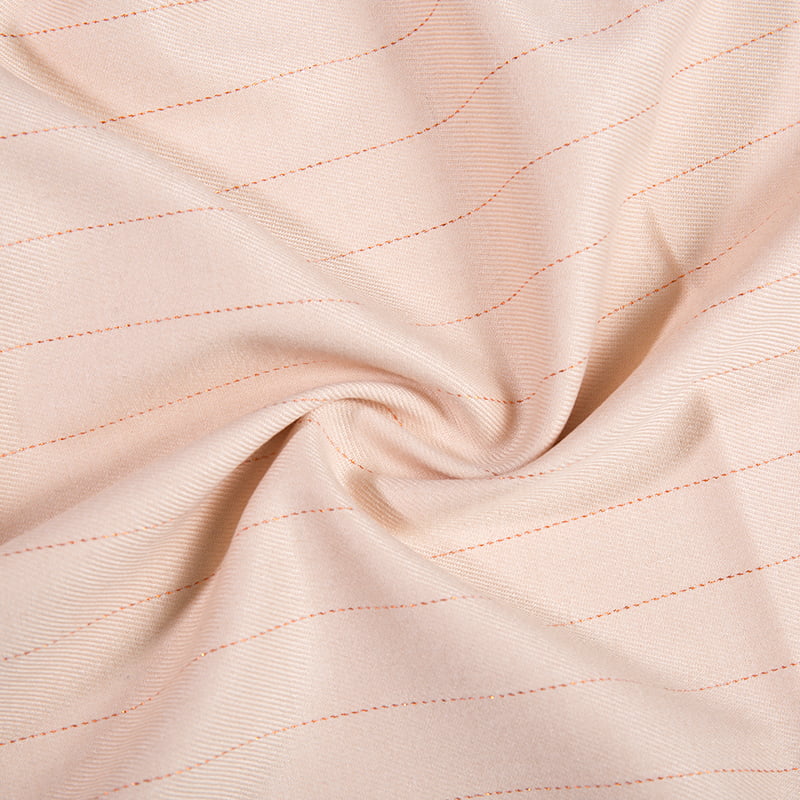 FX55478 Popular Stripe Design Customize Poly Viscose With Stretch Fabric For SuiShaoxing Fuxing Textile Technology Co., Ltd is a China OEM FX55478 Popular Stripe Design Customize Poly Viscose With Stretch Fabric For S...View Product →
Match the Stripe to the Garment and the Buyer
Stripes are not interchangeable. The width, contrast and rhythm of the stripe define the personality of the garment and the cutting behaviour of the fabric. The four styles below cover the majority of commercial orders.
Pinstripe
A thin, low-contrast vertical line. Reads formal and lengthens the silhouette; suits boardroom tailoring and corporate sales teams.
Chalkstripe
A broad, broken line with more presence. Used for executive looks and statement suits; needs careful matching at the back vent.
Tonal stripe
A same-colour or near-same-colour stripe. Gives texture without noise; works for contemporary fits and travel suiting.
Multicolour stripe
Two or more contrasting colours. Common for blazers, school uniforms and workwear; budget extra fabric for matching.
Stripe spacing also affects body proportions and fabric yield. Tight, fine stripes make a silhouette look longer, while wide, bold stripes add presence but can make a short jacket appear heavier. From a production viewpoint, a strongly contrasting stripe increases fabric consumption because every panel must be matched at the side seams, pockets and back vents. When the stripe is dominant, plan for 10 to 15 percent extra yardage compared with a plain or tonal fabric.
Stretch, Recovery and Fibre Blend: What Actually Matters
A striped suiting fabric can look perfect on the roll and still fail in a garment if the stretch is wrong. The typical blend is polyester, viscose and spandex. Polyester holds the line and resists creasing; viscose gives the soft, dry hand that tailors expect; spandex provides comfort and return. The two key specifications to discuss with the mill are the direction of stretch and the recovery rate.
Two-way stretch, usually in the weft, is enough for most tailored trousers and classic suits. Four-way stretch, in both warp and weft, is preferred for women's fitted jackets, riding-style trousers and uniforms that need full freedom of movement. Recovery matters more than the stretch percentage: a fabric that stretches 20 percent but returns only halfway will bag at the elbows and knees. Most mills quote residual set in the 2 to 3 percent range, and a well-finished suiting should return almost completely within minutes of a moderate stretch.
For a house stripe or a signature colourway, the development route matters as much as the stripe itself. A custom yarn-dyed stripe TR stretch fabric can be developed from a drawing, a Pantone reference or the customer's own swatch, which is how most brand uniform programmes end up with a stripe that no competitor can copy directly.
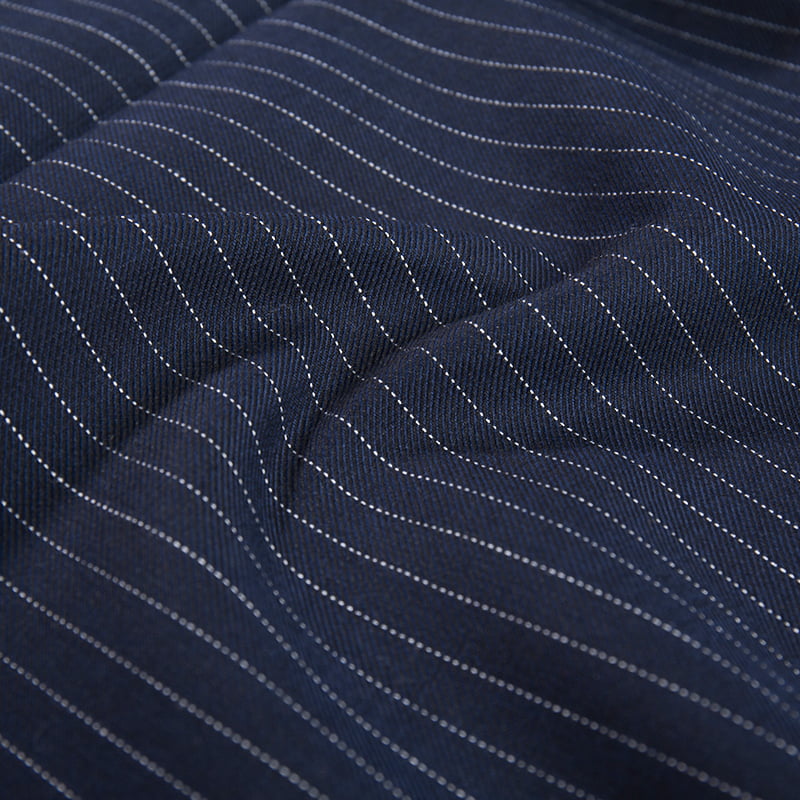 FX55051 Custom Design Yarn Dyed Stripe Design Tr Stretch Woven Fabric For Suit AShaoxing Fuxing Textile Technology Co., Ltd is a China OEM FX55051 Custom Design Yarn Dyed Stripe Design Tr Stretch Woven Fabric For Suit...View Product →
If the order is for tailored trousers, the yarn-dyed polyester rayon spandex suiting fabric offers a mid-weight base with good drape and enough two-way stretch for all-day wear.
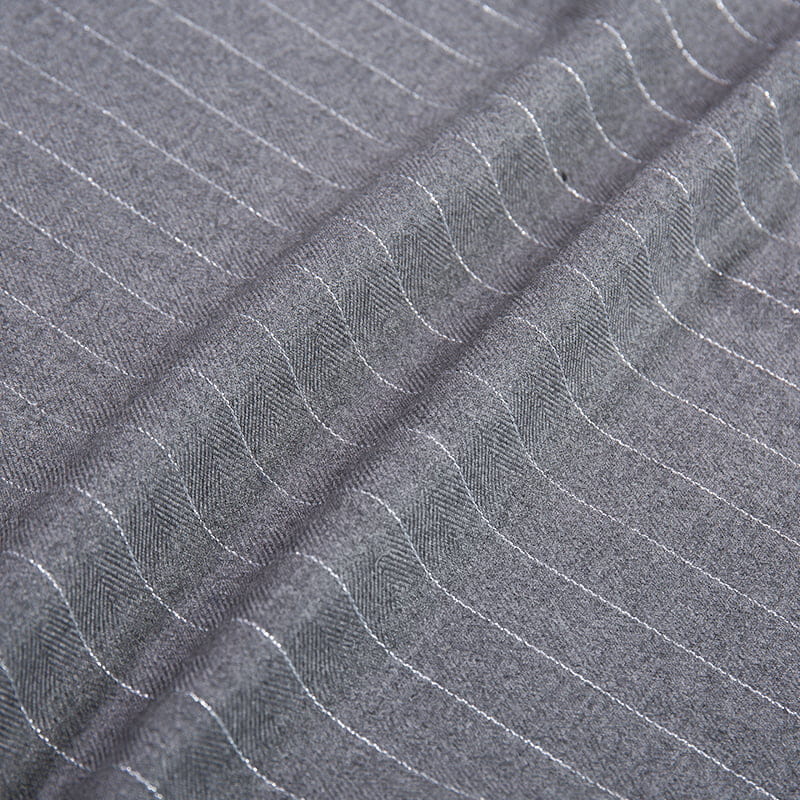 FX55936 Yarn Dyed Stripe Design Polyester Rayon Spandex Suiting Fabric SuppliersShaoxing Fuxing Textile Technology Co., Ltd is a China OEM FX55936 Yarn Dyed Stripe Design Polyester Rayon Spandex Suiting Fabric supplie...View Product →
Four Checks Before You Commit to a Stripe Fabric
No matter how convincing the sample card looks, verify these four points before bulk production. Each one targets the most common reason a striped order gets rejected.
Check stripe registration
Measure the distance between identical stripes across the fabric width. If spacing varies by more than two millimetres between repeats, matching at side seams will be messy and the garment will look off.
Test stretch recovery
Stretch a 20 centimetre width to 25 centimetres, hold for ten seconds, then release. After five minutes, a quality T/R stretch suiting should return within three percent of its original size. Anything higher will show as baggy knees and loose elbows.
Confirm fastness and shrinkage
Ask for wash, rub and light fastness values, and check shrinkage after a standard launder cycle. For dyed poly rayon stretch fabrics, most mills hold garment shrinkage at three percent or below, and high contrast stripes need good fastness to stay clean.
Sew a full trial garment
A seam sample is not enough. Sew one complete trouser or jacket panel, then inspect the stripe at the side seam, the pocket and the vent. This step also reveals how the stretch behaves under a lockstitch and whether the interlining is compatible.
If this is your first time working with stretch wovens, reviewing the sewing challenges with stretch suiting fabrics before sampling can save a rejected production lot.
Frequently Asked Questions About Stripe Suiting Fabric
Can striped suiting fabric have stretch without the stripe distorting?
Yes, if the stripe is yarn-dyed and the stretch is placed in the weft while the stripe runs with the warp. The vertical line stays straight, and the horizontal elasticity comes from the spandex in the filling. Four-way stretch also works, but the mill should finish the fabric under tension control so the pattern is not skewed.
How much extra fabric do stripes need?
With a dominant stripe, plan for 10 to 15 percent more than a plain fabric order because every panel must be matched at the seams. Subtle tonal stripes need less allowance. Confirm the stripe repeat and the cutting direction with the factory before purchasing.
What is the difference between a pinstripe and a tonal stripe?
A pinstripe is a thin, clearly visible line, usually one to three millimetres wide, with noticeable contrast. A tonal stripe uses a colour close to the ground shade, so it reads as texture rather than pattern. Pinstripes suit formal tailoring; tonal stripes suit contemporary and travel suiting.
Is yarn-dyed stripe fabric more expensive than printed?
Yes, because every yarn is coloured before weaving and the process needs more setup and quality control. In exchange you get a stripe that stays sharp after washing and looks the same on both sides of the cloth. For suits, uniforms and any garment that will be cleaned and worn repeatedly, the extra cost is usually lower than the rejection risk of printed stripes.
Striped suiting is one of those products where the visible design and the hidden engineering are equally important. The pattern has to suit the market, but the fabric also has to recover, hold its shape and cut cleanly for the tailor. If you are sourcing for a brand, a uniform programme or a private label, sending the stripe specification to a stretch suiting fabric mill with its own weaving production and long-term dyeing partners is the fastest route to a consistent lot.